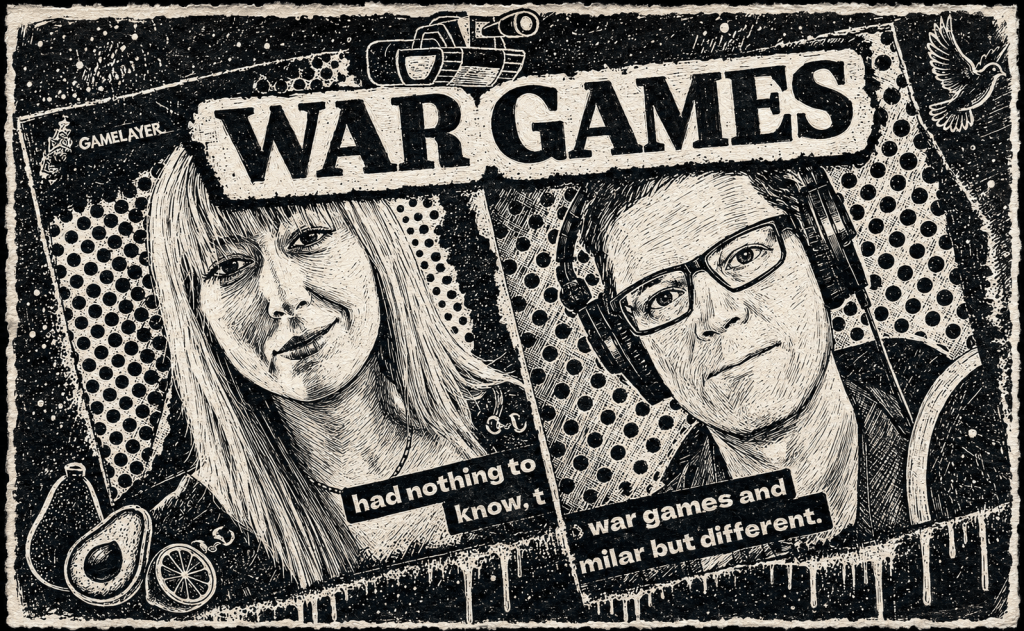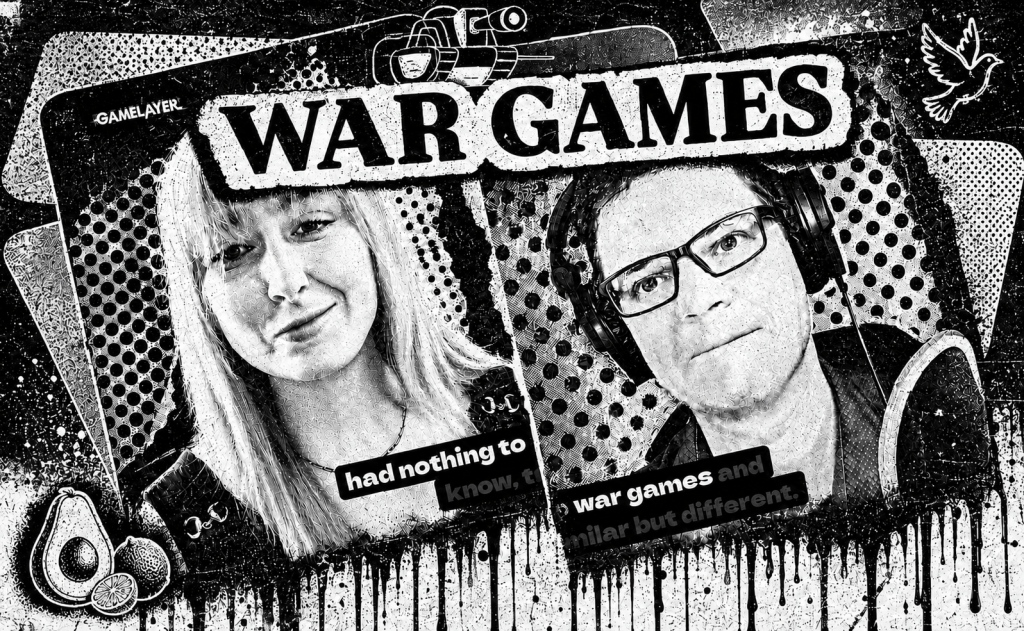

LOCAL EXPERTS DISCUSS THE NATURE OF GLOBAL CONFLICT IN RADIO BROADCAST

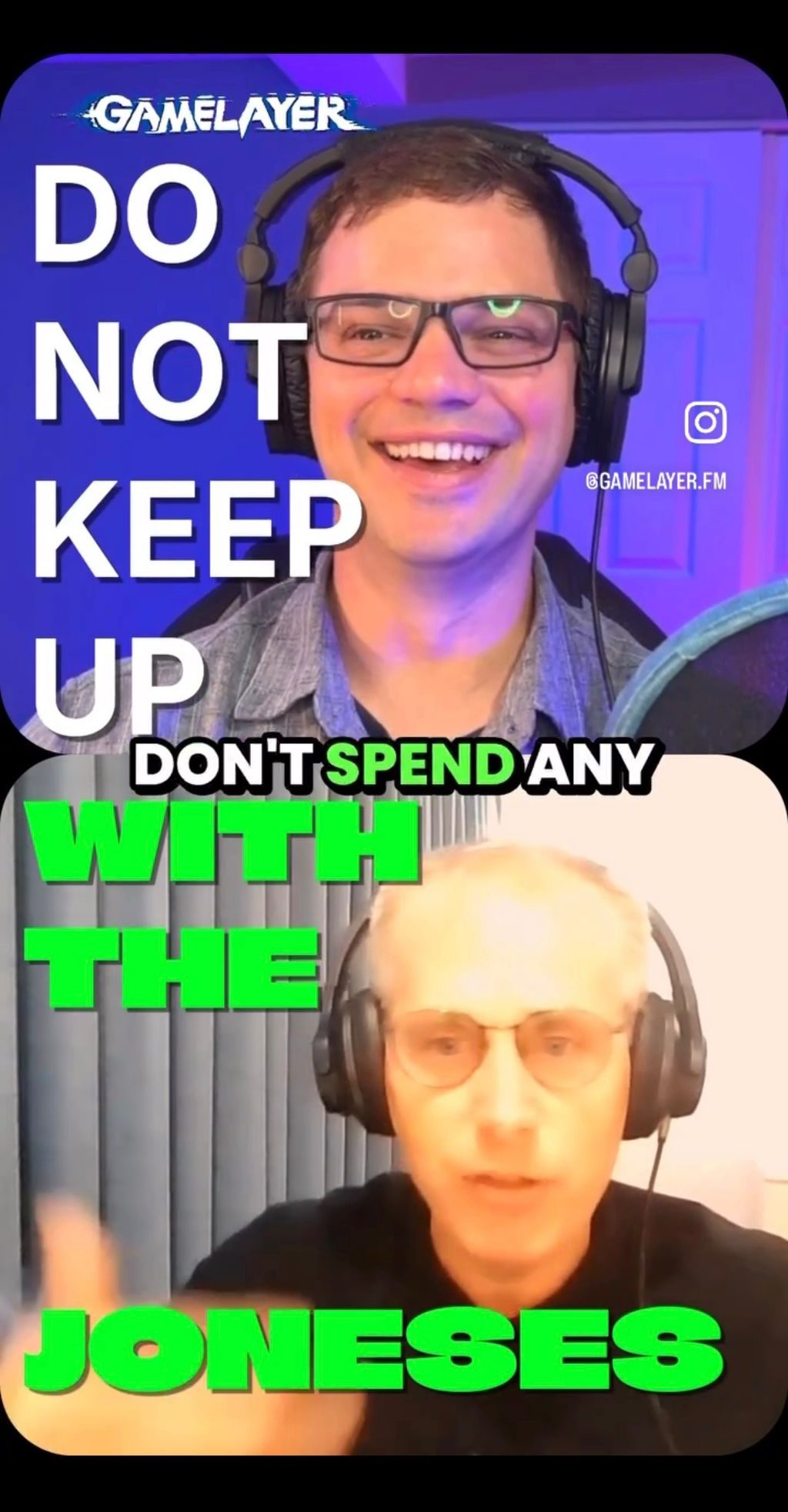
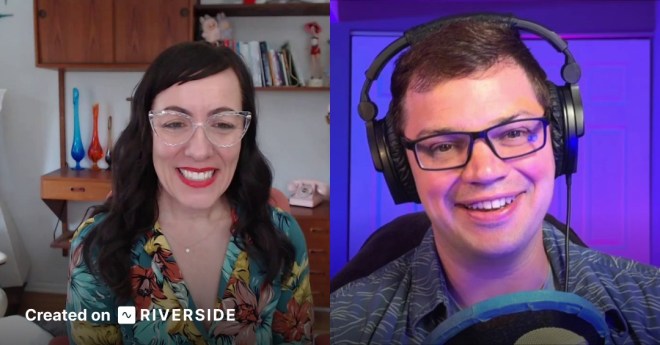
RIVERSIDE.AI – on July 22nd 2026, there was a broadcast recording of a discussion between a one Eleanor Ross, [Globally Celebrated War-Game Expert, avocado record-breaking up-seller, Middle-East linguist], and a one David Kolmer [Radio curator, Lemon Drinker, and Learning Artifact Craftor] The two discussed the complete trajectory of human experience, including various fermented vegetables, citrus-based breakfast beverages/baked goods, and the philosophical underpinnings of international diplomacy.

The conversation opened with cordial inquiries into the current state of affairs, specifically regarding Eleanor Ross’s state-of-the-art lime situation. According to sources present at the broadcast, Ms. Ross had acquired “forty limes” — a figure she emphasized she was “not exaggerating” — following an overambitious Fourth of July key lime pie initiative approximately three weeks prior.

“I squeezed all of them while watching Jeopardy,” Ms. Ross reported to Mr. Kolmer, who appeared to take the statement seriously and without judgment.

The limes were subsequently transformed into a lime loaf cake, which Ms. Ross paired with scrambled eggs for dinner the previous evening. When asked about the cake by an apparently foodie-enthusiast Mr. Kolmer, she confirmed she would be consuming additional servings as part of her lunch routine.

Mr. Kolmer, for his part, disclosed that he had consumed a Thai omelette that morning, featuring “cut up broccoli and carrots and Thai basil of all things,” cultivated in his Missouri residence. He noted that while Thai basil is technically a perennial in Thailand, it becomes merely an annual in the continental United States, though seeds do occasionally persist with what he termed “just keeps happening” frequency.

The conversation then pivoted to Mr. Kolmer’s personal relationship with intermittent fasting, a regimen he has pursued with the intensity of a man determined to squeeze lemons into a blender.

“I got into fasting for a while, intermittent fasting,” Mr. Kolmer explained. “What I did with the lemons, I know that sounds kinda scary, but I’ll drop a whole lemon in the blender with some stevia, like the sweetener, and just blend that up and drink it.”

Ms. Ross countered this assertion with what sources identified as “impeccable logic,” noting that “we all interminute fast. It’s called sleep.”

The two appeared to reach consensus on this matter. Still, Kolmer was processing in the back mind of his lizard brain that Autophagy (Greek for self-eating comes from two Greek words: autos (meaning “self”) and phagein (meaning “to eat”). Translated literally, it means “self-eating” or “self-devouring”. [1, 2, ]) really doesn’t start until at least 16 hours into the fast. Hence, he keeps his fasts to around 20 hours or up to 48 long once a month.

Kolmer declined to verbalize this opinion at the time of recording, but later was cited by those on the scene as saying, “I didn’t really want to mess up the vibe and flow of the convo Yo Ya’know? I just wanted to roll wit dat shit, but really I wanted to share my pseudo-science opinion on autophagy that has only been proven in lab rats.” Kolmer also added a 1-minute aside in post-production on the topic that, in retrospect, he felt did not make a solid scientific claim on his position, and he fears may cast him into the endless pit of being perceived as believing pseudo-science and as he put it “Cruncheeyee Gronala @$$ woo-woo bull-sh!t”.

The broadcast subsequently traced Ms. Ross’s remarkable career arc, beginning in Charleston, South Carolina, where she grew up “surrounded by good Southern food” and politically engaged family members. Her civic involvement continued through her work as an absentee ballot clerk during the 2020 election, a position she maintained for the entire summer after “hang[ing] around” past her shift’s conclusion.

Before becoming recognized as an authority on war gaming, Ms. Ross held several positions in customer-facing service, including front-of-house responsibilities at Co-op Gourmet Sandwiches at age fifteen. During this period, she established what may be an unbreakable record: “I won the person who upsold the most avocado when I was like fifteen,” she stated with apparent finality.

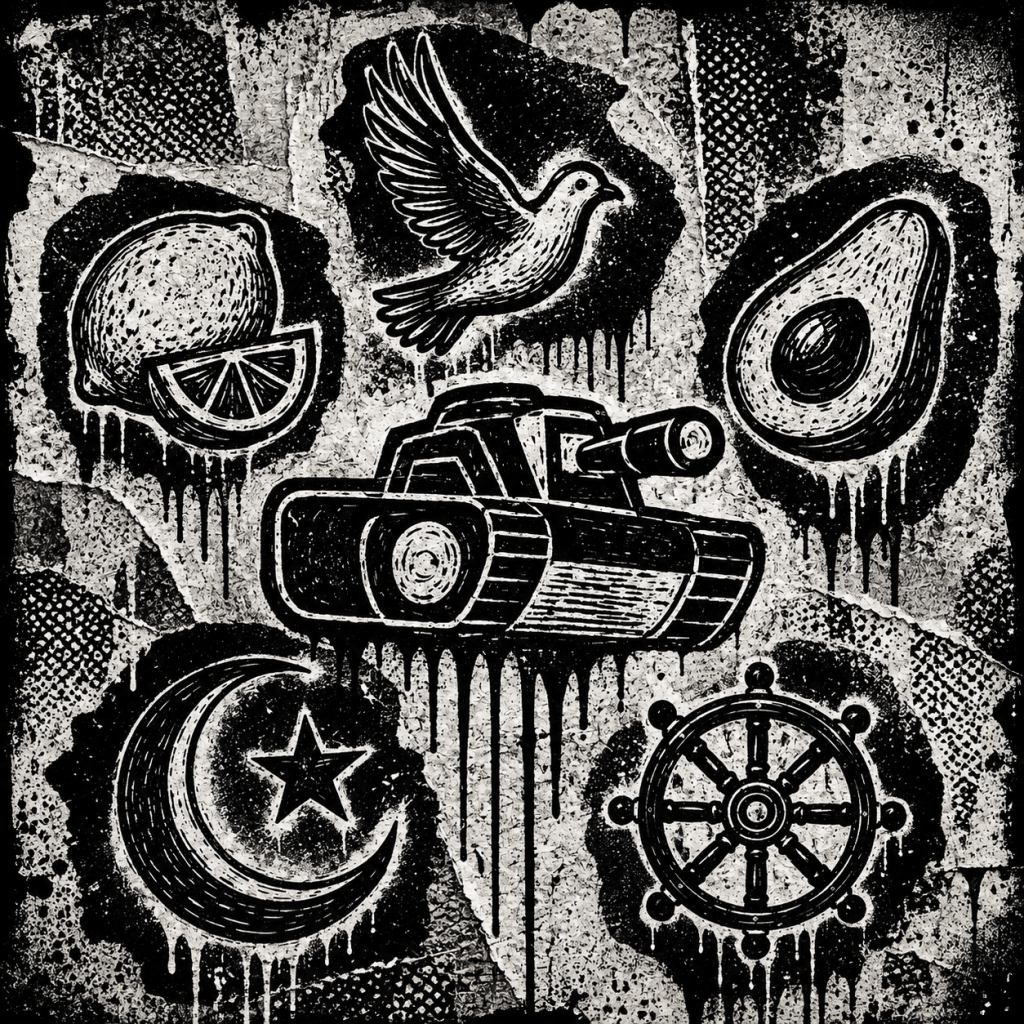
The Tank of War, The Dove of Peace and Love of the Other, The Avocado of Achievement,
The Citrus of Whimsy and Belief, The Crescent Moon and Dharma Wheel of Faith.

When pressed for details, Ms. Ross revealed that the avocados in question were offered as sandwich additions, and that her sales prowess earned her “like a hundred-dollar bonus.” Mr. Kolmer assured her that this figure was indeed “a lot” when one is merely fifteen years old.

Additional professional experience included employment at a bed and breakfast in France and a hostel in Morocco, where she served both as a yoga teacher and breakfast server, thereby establishing a pattern of multifaceted employment that would become her trademark.

The discussion then escalated into more sophisticated territory. Ms. Ross is a war game designer, a professional who manufactures complex simulations in which participants navigate geopolitical crises that may or may not include realistic-looking social media.

These games, she explained, typically involve written materials, injected breaking news, and role-player interactions. Participants submit “moves” that alter the simulated world, creating what Ms. Ross described as “zero-turn gameplay where it’s continuous” or turn-based alternatives with “short breaks for adjudication” and “expert discussions.”

The creation of these fake social media artifacts serves what Peter Perla — identified as “one of the grandfathers of war gaming” — would approve of: the creation of the alternate reality in the magic circle of the game. Or as Mr. Kolmer, apparently comfortable cross-disciplining, noted: “In theater we call that the suspension of disbelief.”

“Making media look real, that’s the way you can do it,” Ms. Ross affirmed.

Despite the sophisticated technological apparatus supporting these simulations, Ms. Ross reported that things sometimes break. During one of their games, a third-party platform failed entirely. The response was swift: the entire operation pivoted to email, with materials printed and distributed by hand.

“You need to be able to adapt, right?” Ms. Ross explained, suggesting that knowledge of “the old ways too” remains strategically valuable in the twenty-first century.

In her closing remarks, Ms. Ross articulated what appeared to be the ultimate purpose of her work: “Games show other people that people do have the bestest of intentions.”

Well-designed games, she suggested, push participants to recognize that their opponents are “working towards what they think their best interests are,” thereby creating opportunities for humanization. “The humanization of the other and even defining them as the other in the first place” — these are matters currently undervalued in contemporary discourse, according to her assessment.

Mr. Kolmer appeared moved by this statement, noting that “it feels like your closer is gonna work really well as your opener.”

As the broadcast concluded, Ms. Ross extended an invitation for audience members to contact her through her Expert Theory website or via LinkedIn, where she promises to respond to messages “within the week.” Mr. Kolmer expressed hope that he might someday participate in one of her games, a request to which Ms. Ross agreed enthusiastically.

The broadcast ended with expressions of mutual professional appreciation, leaving open the possibility that Mr. Kolmer may one day engage in a simulated international crisis while remembering the tactical advantages of the analog world and the personal integrity of his opponent. 🥑🍞


🦆


215 War Games for Humanity: Using Simulation to Understand the Other Side | Eleanor Ross GameLayer Radio

War games can be about more than conflict. They can be laboratories for understanding humanity. In this episode, David Kolmer sits down with Eleanor Ross – Creative Director @ExpertTheory to explore a different side of simulations and war gaming—one centered on people, perspective, empathy, and understanding.Eleanor works in simulation and war-game design, creating immersive role-playing experiences that help participants prepare for complex situations. Unlike traditional war games focused on weapons and battlefield movements, much of her work examines the human side of crisis: diplomacy, economics, information, culture, relationships, and decision-making.At the center of Eleanor's philosophy is a simple idea: people need to talk to each other more.A well-designed simulation can put participants inside perspectives they might normally dismiss or misunderstand. Instead of reducing another country, organization, or group to “the enemy,” players encounter people with motivations, histories, pressures, and beliefs of their own.David and Eleanor discuss how that process can challenge bias, encourage critical thinking, and help people understand why others make the choices they do.They also explore the craft behind making simulations feel real—from creative writing and realistic media to role-playing, facilitation, storytelling, and the suspension of disbelief.Eleanor shares stories from simulations involving Taiwan, agricultural warfare, resilience, diplomacy, government, industry, and national security. She explains why bringing people with very different backgrounds into the same room can be one of the most valuable outcomes of the game.The conversation also gets into an unexpected ingredient in serious learning: fun.Eleanor argues for bringing back “whimsy” and creating experiences people actually want to participate in. Creativity, storytelling, and play can be part of what makes learning memorable.In This EpisodeWhat war games and simulations actually areKinetic vs. non-kinetic war gamingWhy writing and storytelling matter in simulation designHow games can challenge assumptions and biasesHumanizing an adversary instead of demonizing themUsing simulations to prepare for diplomacy and negotiationCreating emotional stakes that make scenarios feel realWhat agricultural warfare simulations teach us about local consequencesWhy bringing diverse stakeholders together mattersThe role of AI in modern simulation designWhy realistic media helps create a suspension of disbeliefThe importance of the after-action review and debriefWhy work should include more fun and whimsyHow games might help us rediscover the humanity of “the other”A Central QuestionCan putting ourselves inside another person's decisions—even temporarily—change the way we understand them?For Eleanor, that's one of the most powerful possibilities of simulation.People on opposing sides rarely see themselves as villains. They have histories, incentives, cultural assumptions, fears, responsibilities, and their own ideas about the right decision.A thoughtfully designed game gives participants an opportunity to encounter that complexity.Perhaps the greatest value of a war game isn't learning how to defeat someone.Perhaps it's learning how to understand them.About Eleanor RossEleanor Ross works in simulation and war-game design with Expert Theory, where she helps develop and facilitate role-playing simulations across government, universities, businesses, and other organizations.Her background in languages, writing, theater, facilitation, civic engagement, and international experience informs an approach built around creativity, human behavior, and engagement.
  1. 215 War Games for Humanity: Using Simulation to Understand the Other Side | Eleanor Ross
  2. 214 Please Stay Human: Writing, AI, and the Magic of the Unscripted | Nicole Papaioannou Lugara, PhD
  3. 213 Be Where Your Feet Are: Outdoor Learning, Leadership, and the Power of the Pause | Mike Dowell of Babler Outdoor Education Center Parkway / Rockwood
  4. 212 Learning Is Play | Dr. Kevin Thorn
  5. 211 Games as Systems | Moe Ash

Walking Out Before the Sunrise

Hey, It’s me, Dave. You may not have heard from me in a while. I promised I would have a Year of FOCUS, and then I fell off the map. Where did I go? Well, I have been working on my podcast, but also… I think the Muse left town for a while. and that’s OK. that is how the Muse do.

I have been making recordings on GAMELAYER RADIO, as I mentioned above, and the last two have included creative writing. Here is a player with the episode that has been published:

I think that put a bug under me a bit… but then I got a nudge from a thought leader named David Kelly because I commented on one of his posts. Then he shared that he started a thing called Amplify. I read his opening statement, and it resonated so well that the article below just fell off my fingers. So now, I want to share both of them.

Now more than ever, we are flooded with too much information and too many buzzwords. But it is still the same game. If you find a way to really help someone do something better—if you find them a solution worth sharing—then you are in the game. I really like the concept of curating content that is high on value and low on noise.

Just yesterday, I had a meeting with the VP of Member Engagement of the company I work for, and we were discussing my career path. Sales? Nope. Marketing? Warmer… Creating videos at live events for the marketing and conferences team? Now… that could work!

Wait… but do I still get to keep my Learning and Development hat? Will I ever have time to wear it? It feels like our industry is built on shifting sands, and AI is shaking things up. It is the MP3/Napster phase of learning—the democratization of the learning industry; And yet, just as having a sword doesn’t make you a warrior, having a shiny new automatic content-creation tool doesn’t make you a seasoned learning artifact designer.

I love working in Learning and Development, and I dare say I’ve been doing it long enough that I know what I’m doing. A master’s degree doesn’t hurt, but the time in the trenches is where the real value comes from. The hours spent standing on stage with a live group of learners. That is the secret sauce. A new tool or an LLM cannot replace that.

We can beat that drum all we want, but the fact of the matter is that the deck space on our boat is shrinking. Organizations are cutting their learning teams because we have traditionally been the first to go. We are the amphibians of the workforce—the indicator species. When the frogs die, you know your water has gone bad.

So what is the solution? Are you looking at me? Are you still reading? The answer is in the AGILE. The solution is in being nimble. Or to be fatalist… adapt or die.

If I can still add value (and draw a paycheck) by traveling to conferences and generating high-quality video content organized by secretive learning objects and edited against a learning goal… then that’s what I will do. Work begets work, and action brings good fortune. The only ones in Learning and Development who will be thrown out with the bathwater are those who latch on to what the learning industry was. Those of us who survive will embrace the new sunrise. My plan is to be walking out in the cold dew before it arrives.

~Pablo Picasso

headshot of David Kolmer.

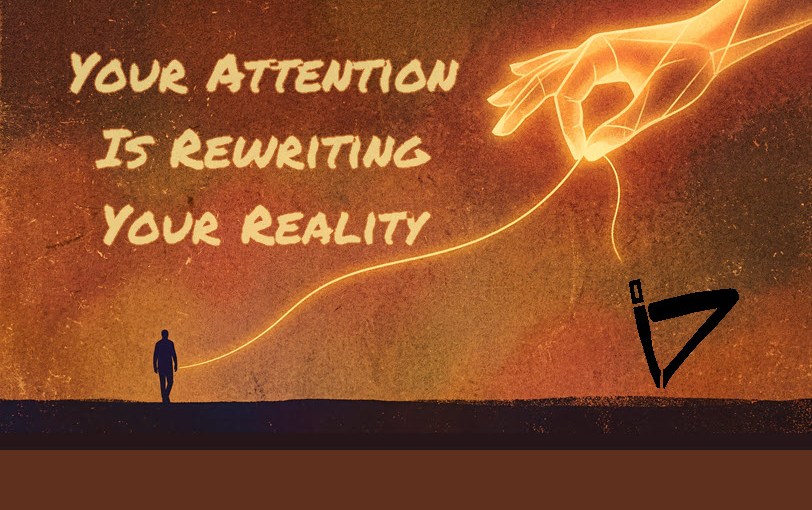
Your Brain Is Curating Your World

Synchronized Synchronicity (Or Maybe Just Paying Attention)
Today is Cinco de Mayo:
A holiday many United States of Americans treat like Mexico’s Independence Day.

Cinco de Mayo. or, what it really is “5th of March.”

It marks a single battle in 1862, but here in the U.S., it’s been repackaged into something else entirely: a reason to drink.
I’m not drinking right now —
And I’m not sure I ever want to again.

This post is about synchronicity. At times in my life, I perceived this phenomenon in an overzealous or spiritual way. I like the idea of mysterious forces working behind the scenes, and I’m sure that plays a big part in our experience. But I don’t want to delve too deep into that side of this here—not because I don’t believe it, but because I don’t want to waste energy trying to prove something that isn’t provable.

My point here is that we all live in the same universe, and that universe is connected to itself. As much as we would like to perceive ourselves as individual participants in the ecosystem, the truth is that through our surroundings, we are all connected to each other.

What got me thinking about this was a series of events that happened to me over the past month. Actually, all of it happened in the last week.

Let me start by just saying my family loves to go to Babler State Park, just southwest of St. Louis city in Missouri. We go there at least a few times a year.

I’ve gotten fully involved in my local chapter of ATD. (That is the Association of Talent Development in St. Louis.) The local chapter has been very supportive of my trying to grow as a professional into being a better instructional designer and training facilitator. The relationship has grown to the point where I’m now serving on the board as the Director of Educational Technology. Being on the board means that I know a lot more about what’s going on and what’s being offered by the chapter.

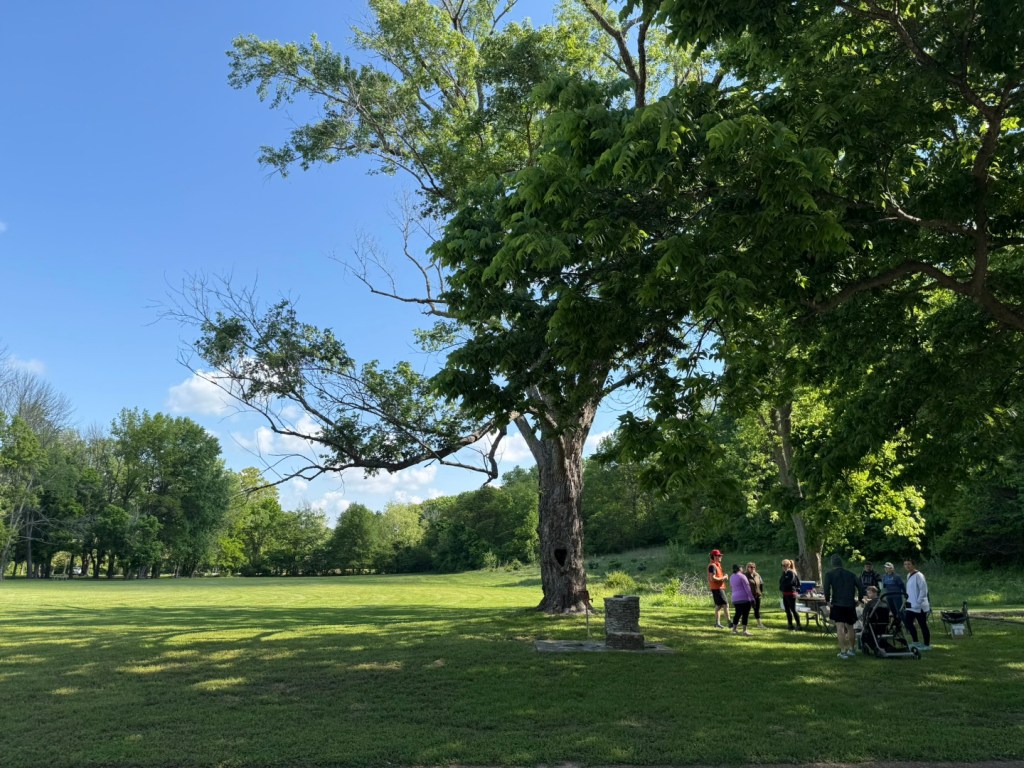
ALT="Wide Angle of ATD members standing under tree at Babler State Park."

So when something came up about networking in nature, I raised my hand right away and said I’m there, whatever you need me to do. I think there were some discussions about what parks we all liked in the area, so I probably mentioned that I like Castlewood, Babler, and Creve Coeur Park. So this event ended up happening in Babler.

As we were preparing for the event, I was talking with Sarah Garner, who is organizing the whole thing, and I was joking with her. I said, I’m going on a field trip next week—guess where it is? It’s at Babler. She responded with a 😆.

So I went to that event last week at Babler, and our meeting spot was right next to the pavilion that our family always goes to.

Then, a couple of days later, I was recording a podcast with Dave Smiderle – from Burlington, Ontario, Canada; and since this is GameLayer, we were talking about games and learning. Out of the blue, Dave brought up geocaching. Where you use GPS to find specific coordinates on a map. Someone leaves you a treasure, you fill out the log, put in a new treasure, and then continue on your hike.

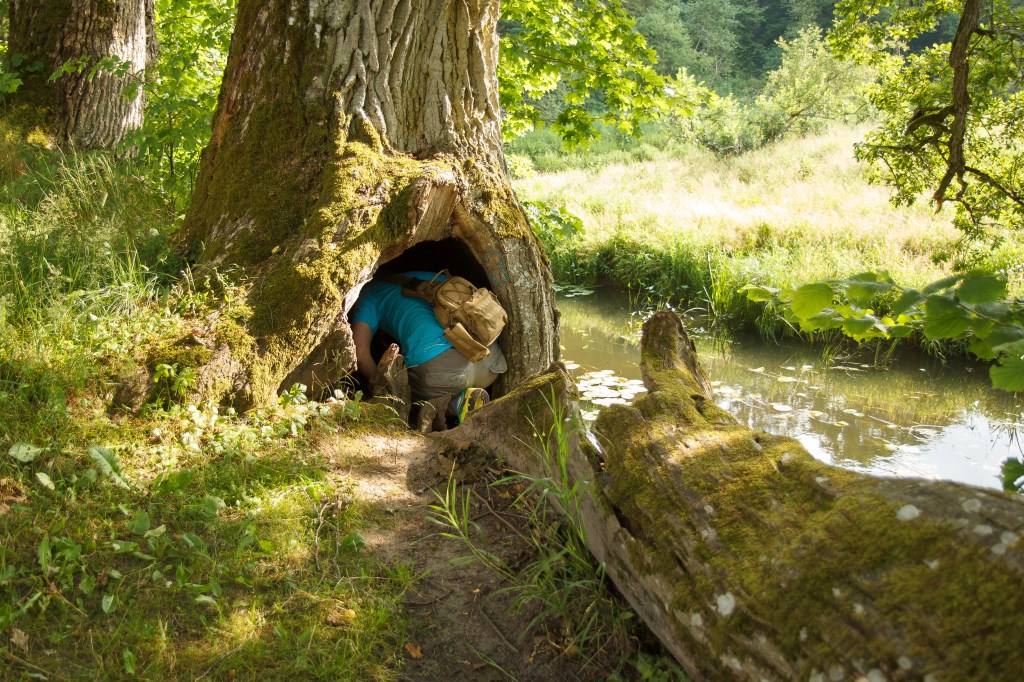
Geocaching, a man looking for a hide in a wooden cavity
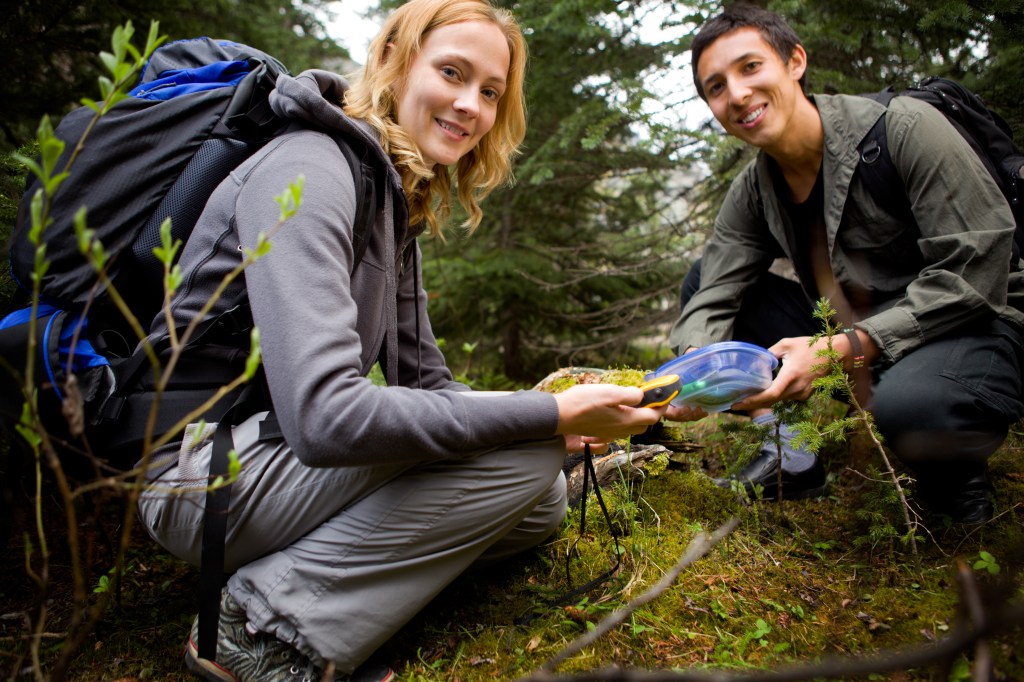
Two people finding a geocache in the forest. Shallow depth of field with sharp focus on woman.

I mentioned to Dave S. that I’ve heard about geocaching from some art friends in college who loved the adventure of the whole thing.

That episode is dropping soon, and you can hear more about it there.

Just yesterday, I received a text message on an app called ClassDojo from my child’s teacher. She shared that we will be traveling to Babler State Park and partaking in a geocaching activity. Now, in my inner self, I sensed the synchronicity of everything that was happening in my life. In the podcast with Dave, I expressed a deep interest in getting into geocaching, and I meant it. And it feels to me like my sincere interest is what caused the activity at the field trip I’ll be at next Thursday to be geocaching.

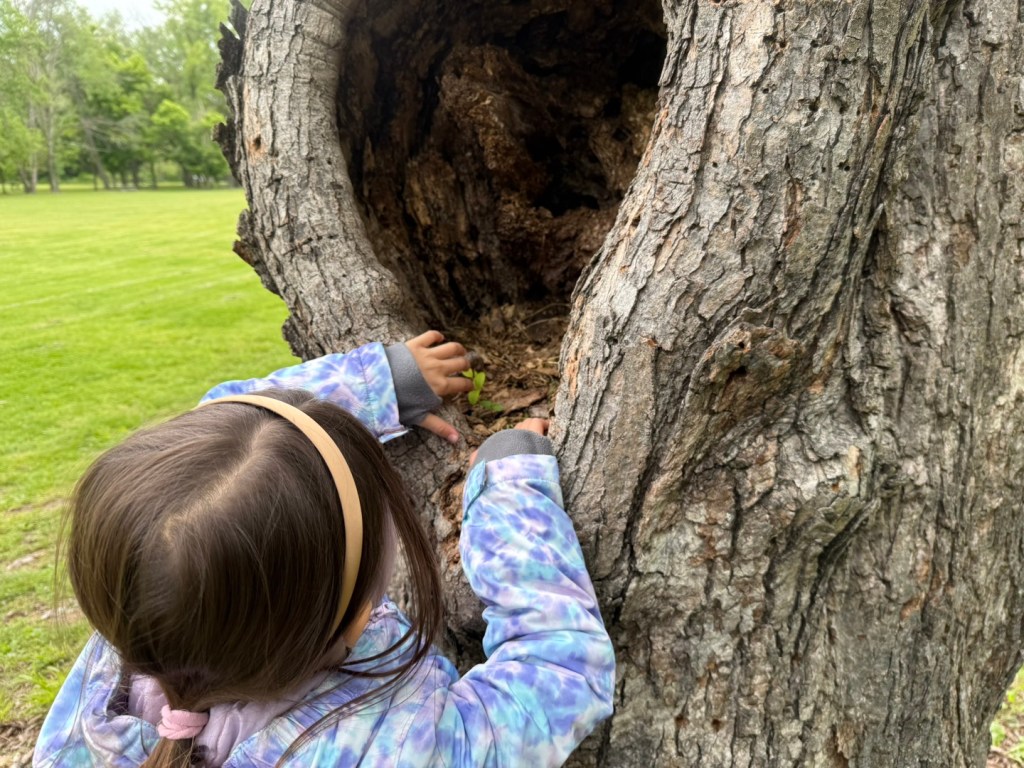
ALT="Picture of a young girl exploring the hollow inside a tree."

One could easily argue that I’m making this all up, and I think that is a perfectly rational stance. Here’s why: now I’ve been talking about geocaching more, and a colleague at work named Karen said, “Oh, geocaching—I used to do that with my kids.” Now I’m learning more about the process from her. I’m not arguing that there’s some underground magic happening behind the scenes.

It’s coming up more because I’m thinking about it and talking about it more. …right?

So, what’s my point in all of this, you ask?

My point here is that if you seek something out and set your intention on something, then that thing will find you. Half because you’re looking for it, and half just because you notice it more. It might be a bit of a stretch to argue that the universe is going to rearrange itself around your intentions and desires, but after a while, it really does sort of feel like that.

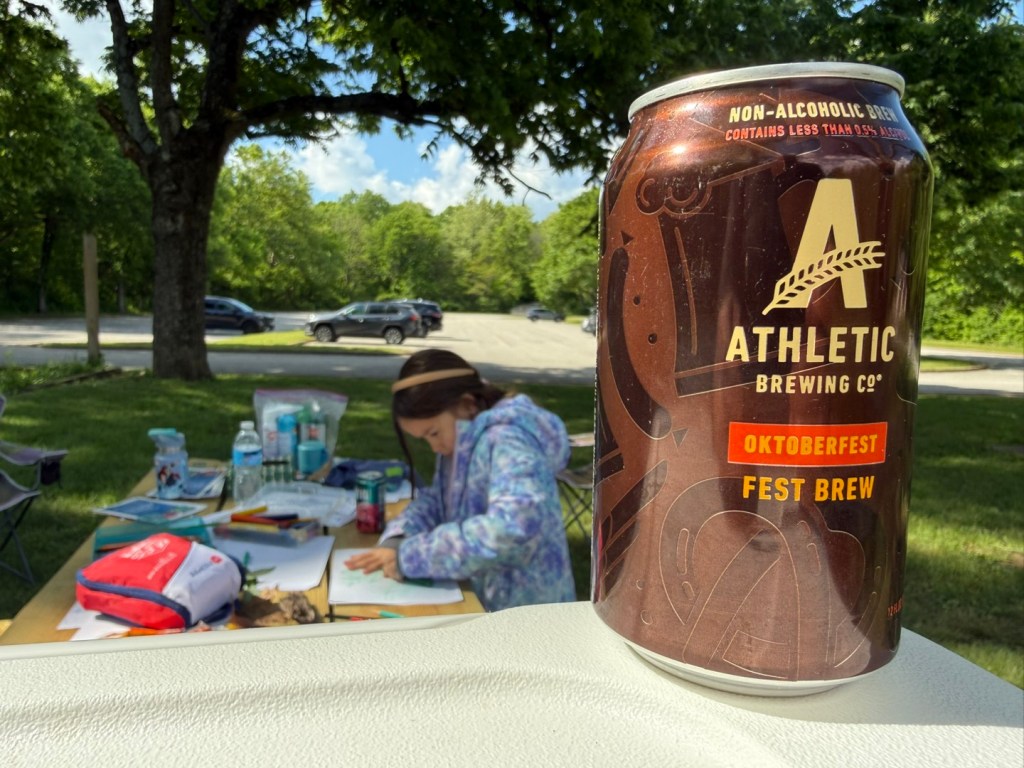
Let me tie it back into drinking—or not drinking alcohol—Or drinking NA—for Cinco de Mayo. While I was at Babler State Park for the ATD networking-in-nature event, I looked in the cooler and saw my favorite non-alcoholic (NA) beer. It is Athletic. It’s a beer that’s brewed to be nonalcoholic. They are NOT trying to reproduce some other famous beers without the alcohol.

This results in an incredibly delicious beer-like beverage, which just happens to not have alcohol in it. If I hadn’t made the conscious decision over the last couple of years to cut alcohol out of my life, I wouldn’t have known about this beer, and it wouldn’t have been a noticable.

alt="Picture of Athletic beer at Babler State Park"

But because I have done that, and because I’ve grown very fond of Athletic brand beer, I brought it up and asked Sarah if she brought that. She said, “I’m an advocate!”

I called out, “Me too!” over the picnic table, and several people looked at us, getting excited about some beer that doesn’t even have alcohol in it. Now, these people are probably concerned about my mental well-being, and that’s fair from their vantage point.

The fact of the matter remains: if you start to pursue a certain thought, object, or culture, then those thoughts, those objects, and that culture will start to seek you out as well. Why is that? Because the entire universe really is a single item. It is all connected, and the flap of a butterfly’s wing can cause a wind that in turn leads to a series of events that topple a mountain.

If you’ve made it this far, then I implore you: the next time something seems to find you, let yourself believe that magic is real. Just trust for a minute that the universe itself is consciously providing you with what you desire. Give it a shot—not because it is an entirely provable thought process, but because it enriches your experiences and provides meaning beyond language. And from my perspective, enriching experiences are all that matter.

It very well may not be the case that the universe is out to conspire for or against you. …But I know one thing to be true: human perception is always colored by our previous experience, and when things don’t make sense, the human mind fills in the gaps without us even knowing. Our perception of the world is provably inaccurate. Also, the human mind is an infinitely creative machine, and it feeds on what you give it. So be mindful of what you’re feeding it, because it literally shapes your perception of the world around you. And in turn, your perception recreates the world you live in.

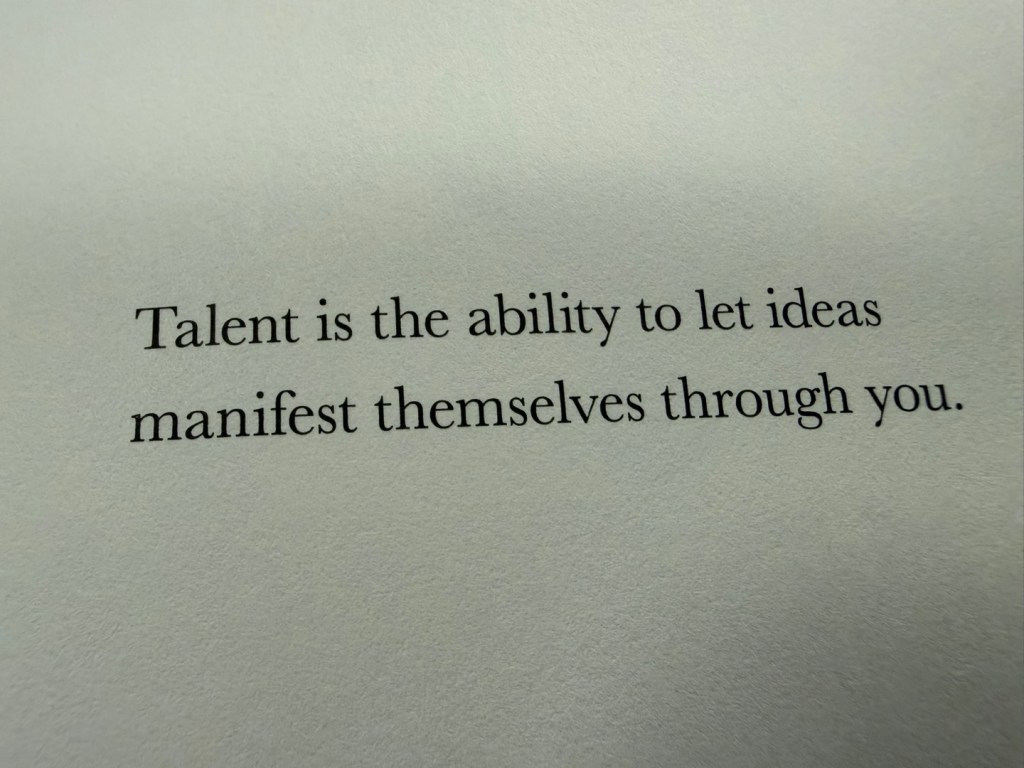
ALT="Quote from Rick Rubin"

~ Rick Ruben

When You Stop Listening to Your Self

It’s always bizarre to me when people post pictures of themselves lying in a hospital bed, all connected to wires, on social media. This is not one of those posts, although the image is of me in a hospital office.

I admitted myself—or rather, scheduled an appointment—with the nurse practitioner at my primary care physician’s practice. I was experiencing the symptoms of sciatica. I’ve done some research, and everyone explains that sciatica is caused by a twisted vertebra or a bulging disc between vertebrae—what chiropractors call a subluxation.

I went to the appointment and labeled the visit “exploration into sciatica.” This way, the medical professionals already knew why I was there. I followed their line of questioning and relied on all the research I had done.

“Yes, I think that I have something wrong with a vertebra because I have shooting pain in the back of my leg, the back of my calf, and the top of my ankle. It’s worse when I sit for long periods or when I climb stairs, and it’s better after I do some stretching and take a mild walk.”

Here’s where the story gets interesting. If I really think about it, I’ve never had any pain in my lower back. It really doesn’t hurt there. It hurts below that, in the muscle deep inside my gluteus maximus—aka my butt cheek.

Afterward, I was chatting with my neighbor, we shall call him “Dr. J.”, although that is not the real name of this Dr. The Doctor became a pathologist because the doctor is sick of dealing with people, and I don’t blame the Doctor for this. I think it’s the same reason I became an instructional designer.

Anyway, he explained that there’s a syndrome that has the exact same symptoms as a lumbar vertebra out of place. Piriformis syndrome is when you pull a muscle that’s connected from your hip down into your leg. It’s often confused with a disrupted vertebra, causing the pinched nerve and shooting pain.

If I had just listened to my body, I would’ve known this. While I was in the doctor’s office, I relied on the knowledge I had gained from my research online. I was using that to inform my answers to the nurse practitioner’s questions.

It’s easy to judge myself on this in hindsight. After all, my logical brain is what I allow to drive my consciousness. However, if I had paused and listened, there would’ve been much less stress around this entire experience. Instead of having a messed-up back, I simply would’ve had a pulled muscle in my butt!

Either way, it is a total pain in the ass! But it didn’t need to cause me such alarm. It would not have caused me such alarm if I had slowed down long enough to listen to my self.

David Kolmer writes for Improvementdave.com.

David Kolmer also hosts and produces at podcast at GAMELAYER

Finding Your Tribe by Embracing Differences

Learning who your tribe isn’t can be just as valuable as learning who it is.

In my last post, I wrote about choosing yourself. I intended to go deeper into personal identity and the idea of pursuing multiple ideas to see which ones “choose you back,” but I didn’t quite get there. Those are threads I’ll come back to.

For now, I want to explore a related concept: focusing on the 33% of your audience who truly resonate with you.

That recent post was inspired by the song “Choose Yourself“.

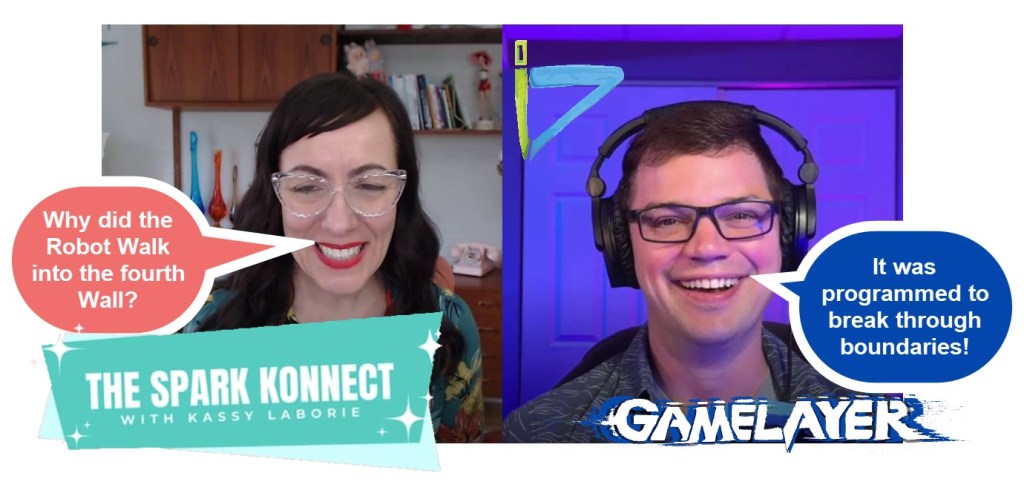
This post was inspired by a recent podcast conversation with my friend Kassy LaBorie that will drop this week on The Spark Konnect – Podcast.

I’ve written about Kassy before—she wears red pants as a bold expression of her personality. (I’ve also written about occasionally wearing blue pants myself.) These small choices act as signals of identity.

Kassy shared something interesting with me. The guest she had on before our episode was nothing like either of us. The guest was bold, outspoken, highly analytical, competitively athletic, and focused professionally on detecting deception through body language.

Her energy didn’t match Kassy’s at all. Kassy was candid—she found the interview difficult. So much so that she questioned whether she should publish it at all.

I argued that she should, and I want to explain why.

Let me go back to where this idea started for me.

In high school, I had an uncomfortable realization: if I truly valued thoughtful conversation—Socratic debate, the kind that leads to truth—then I would have to engage with people I didn’t agree with… or even like.

That’s not easy.

It requires accepting that your worldview might not be perfect. And that’s uncomfortable for anyone.

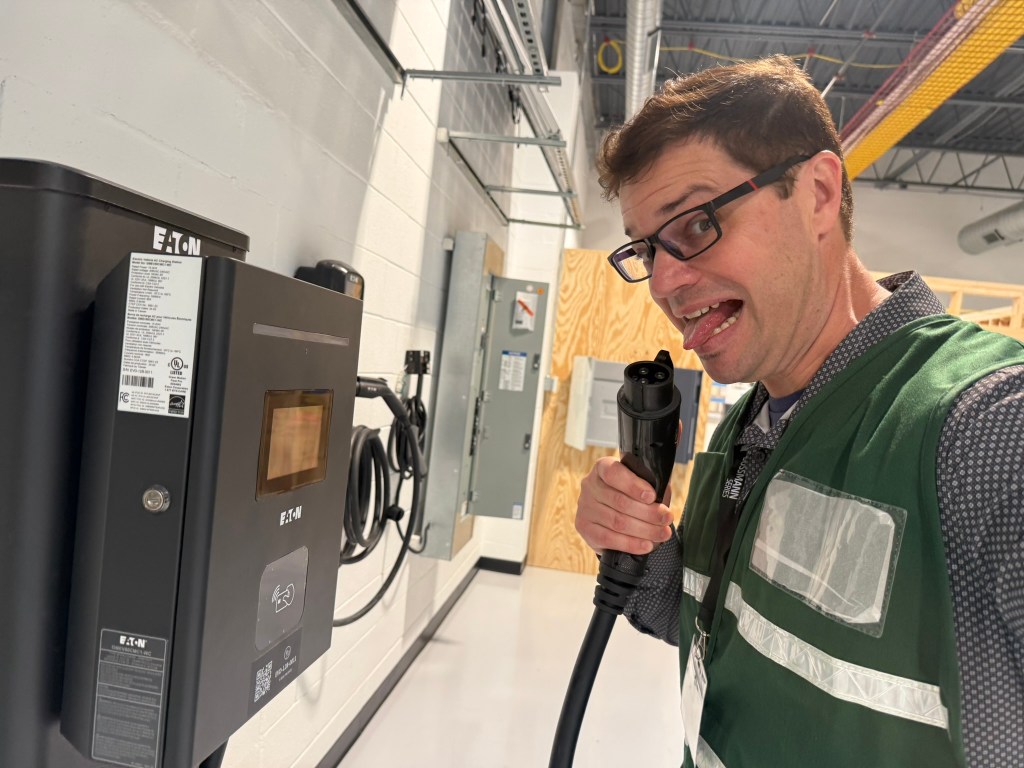
At a recent tour of an electrical manufacturing plant, the presenter said the equipment was not electrified. As a person of learning, I had to test his hypothesis.

Now fast forward to today, where many of us are creating content—podcasts, blogs, conversations—with friends, acquaintances, or even strangers. Some we agree with, some we partially understand, and some we fundamentally disagree with.

That spectrum matters.

If I only interview people who think, talk, and act like me, I’m doing a disservice to my audience.

If everyone on the Game Layer Podcast metaphorically “wears blue pants,” then the idea of blue pants as individuality loses meaning. It becomes uniform. It fades into sameness.

Truth doesn’t emerge from agreement—it emerges from challenge.

We grow by engaging with people who think differently. Not just people who prefer a different brand of peanut butter, but people whose perspectives fundamentally challenge our beliefs.

Of course, there’s a valid concern: what if the differences are too great?

What if someone’s worldview feels incompatible with your own?

That’s worth considering.

Maybe Kassy’s previous guest lives in a world neither of us would choose to inhabit. That’s okay. We can decide what we allow into our lives.

But even then, there’s still value.

We can learn from people we don’t understand. From people we don’t like. From people we don’t want to become.

Exposure expands our understanding of the human experience.

I experienced this firsthand in a podcast micro-episode I recorded a few months ago.
I do a show on Game Learning and Creativity called GAMELAYER.

I spoke with someone whose industry doesn’t allow time for creativity or game-based learning. He said it plainly: he doesn’t have time for that.

Instead of pushing back, I listened.

Really listened.

By the end of the conversation, I found myself agreeing with him—even though his perspective challenged the core theme of my podcast: that life and work should include joy, creativity, and play.

So how can both be true?

My goal is to be in an environment where my creative strengths are used. That’s how I thrive.

People who thrive in that same way—those are my people.

But that doesn’t mean everyone needs to think like me. …and it definitely doesn’t mean every guest on my podcast should agree with my perspective.

In fact, the opposite is true. The show becomes stronger when it includes voices that challenge the premise.

New Office DIGS!

Because those are the same challenges these ideas will face in the real world.

When I listened to Kassy’s episode, I noticed something important.

She didn’t shut down.

She stayed open.

She listened to the perspective, asked questions, and acknowledged that the conversation stretched her—and would likely stretch her audience too.

That’s exactly the point.

Why did both of us approach it this way?

Part of it comes from our backgrounds in theater.

In theatre, listening isn’t passive. You listen with your whole body. You’re not analyzing someone to judge them—you’re trying to feel what they feel and understand their emotional state.

The other part comes from our work as facilitators.

Good facilitators seek first to understand, and then help others understand.

That’s the skill.

You don’t build a meaningful platform by only surrounding yourself with agreement.

You build it by engaging with difference—thoughtfully, intentionally, and with curiosity.

Because the goal isn’t just to find your tribe.

It’s to understand the full landscape of people—especially the ones who challenge you.

To Link-Out or NOT Link-Out: on LinkedIn

Welcome to Improvement Dave, I am Dave. I will be your guide on your journey to “Choose to Improve.”

I recently wrote a post on Linked In about how it is not beneficial [for the health of you post] to link to something outside of LinkedIn. That sounds confusing and after you finally process it counterintuitive:

Here is a link to that post.

I chose to link to that post instead of linking this post to that post. Explain that to your grandparents!

image links to LinkedIN post.

A recent connection, and dare I say new friend, called Christian Gossan, had a beer last week, Outback on the other side of the world, with a friend I don’t know. A friend who posts on LinkedIn and gets millions of views. (Something I have never done but now aspire to…) He had some advice after seeing one of my posts about a podcast I recorded last year with Christian. “Don’t link outside of thah platform, ya NOOB! The algorithm dudn’t like that, MATE!” Here I was… sitting around thinking that linking to an outside learning artifact I created looks cool, when in reality, it was hindering my reach!

What is the outcome? I have begun discussions with my digital colleague at work, “Copilot.ai.” We are cooking up a convo titled: “Strategic LinkedIn Growth Plan.” and it has already resulted in a new tagline and about me section. Something even more accurate, AND also more compelling. We are not in a binary experience. We are in a spectrum of shades. A vast sea of grey.

This brings up a deeper question. “Why do I create anything?” …am I trying to help others learn from my experience (or even my mistakes), OR, am I trying to reach a broader audience? Is this therapy, Lisa? Should I also get real therapy, Betty?

Well, the answer to all of that is “YES.” This might not have to be a this-or-that dichotomy. What’s the point of helping only a few when you can help many? If the algorithm likes it, then that is where I find myself. Those are my “Given Circumstances” to plug a theater gem. To go deeper still, things are not inherently good or bad. It is the labels we put on them that make them blessed or evil.

What is the outcome? I have begun discussions with my digital colleague at work, “Copilot.ai.” We are cooking up a convo titled: “Strategic LinkedIn Growth Plan.” and it has already resulted in a new tagline and about me section. Something even more accurate, AND also more compelling.

After a long discussion with Copilot.AI (which uses a slow work deep dive of ChatGPT) I had a plan. The plan included a better about me section on linked in. I used the same conversation channel and came up with a new about me for Linked in, and it contained twice the number of allowed spaces. So I worked on removing inaccuracies and used Copilot to cut it down even further until it read more like a story:

“If you’re here, you’re probably curious about the space where creativity, learning, and community meet—and how a little play can change the way we grow and work. That’s the space I live in.

I’m David Kolmer, a creative strategist, instructional designer, professional learner, and community builder. My path has taken me from theater stages to podcast studios, from SCUBA-beach classrooms in Thailand to boardrooms in St. Louis. Through all of it, one belief has stayed constant: learning should be memorable, meaningful, and, whenever possible, fun.

At the National Association of Electrical Distributors (NAED), I design and support learning experiences that help professionals thrive in a rapidly changing industry. Whether I’m building microlearning, shaping a curriculum, or crafting a multimedia story, I focus on curiosity, clarity, and real‑world application. I want learners to feel engaged, not obligated.

Storytelling sits at the center of my work. My theater roots taught me that people don’t remember information—they remember experiences. Every learning journey has a narrative arc, and every learner is the hero of their own story. That mindset shapes everything from my instructional design to my podcasting.

I’m also a lifelong experimenter with tools and frameworks. From Articulate 360 and 7TAPS to Photoshop, video, and podcasting platforms, I love exploring new ways to bring ideas to life. My portfolio spans eLearning, video, audio, and live facilitation, each project a chance to test, iterate, and improve.

Community fuels me. I’ve presented at ATD events, supported GamiCon, facilitated workshops, and connected with countless learners and creators. I believe professional growth is a shared adventure — one built on curiosity, generosity, and a willingness to try new things even at the risk of initial failure.

If you’re passionate about reimagining learning, exploring the power of play, or building communities of practice, I’d love to connect. Let’s see what we can create together. ~~~

Portfolio: DavidKolmer.com/portfolio
Blog: ImprovementDave.com
Podcast: GAMELAYER.fm

We are not in a binary experience. We are in a spectrum of shades. A vast sea of grey.

IF we move toward the singularity where machines and humans grow together, we will have the same problems we have always had. The new Generative AI we have built is now based on the human mind. Why are we so surprised it has shortcomings? It is just becoming more human.

Listen to David Kolmer on GAMELAYER RADIO

Why Focus is My Word of the Year

Every year, I pick a word. The first one was at the end of 2022; I picked “honesty” retroactively. Because I wasn’t really being honest with myself about my personal and professional development. As I continue using these words, I’m realizing that both of those forms of development help each other. It’s a symbiotic relationship. When I develop myself professionally, my personal life benefits and vice versa.

You can review previous posts that I created in January to read up on my path. Others were “Consistency“, “Integrated“, and last year was “Novelty“. This year I will FOCUS.

I’ve got to the point where I realize that I’m not choosing these words. It’s not really accurate to say that these words choose me, either. Seeing as they’re just a verbal representation of ideas. It’s more like the ideas have found me, and I’m allowing them to shape me. (If you can subscribe to the ideas of Elizabeth Gilbert and Rick Rubin, that ideas exist separately from the humans that find them.)

Last year, I spent time remaining mostly sober and seeking out novelty. Novelty is about saying yes to experiences, seeking out new opportunities, and doing as much as you can. Then those experiences leave impressions or memories on your mental timeline. This, in turn, expands your perception of time. Since time is a construct of the mind anyway, our perception of it is all that matters. Broadening our experiences in the name of making our lives feel longer may be the closest thing we will ever get to time travel.🧘

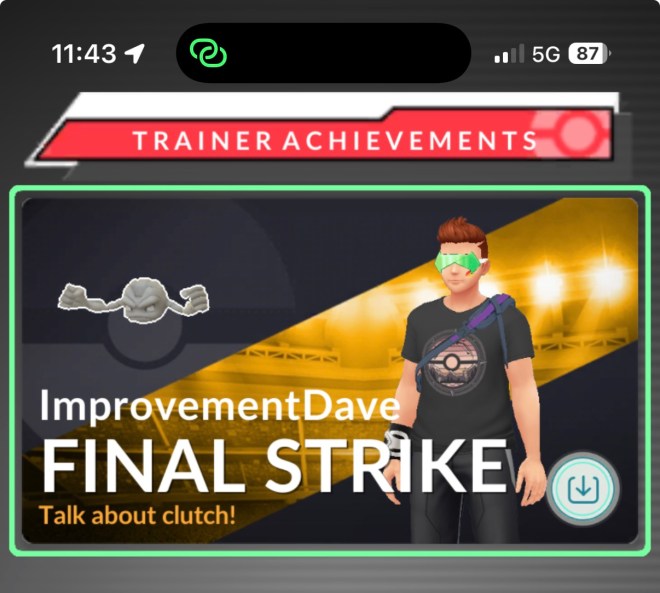
I: spoke at conferences, pretended I started my own conference, started a podcast, recorded live podcasts, continued certifications in Game Learning, and developed a card game about my industry… …all while spending time with my family, updating a rental propery and learning how to play Pokémon Go.

Screenshot

You can read my post from 2025 if you want to learn about novelty.

I have noticed my “words of the year” tend to expand and then contract. Go out, try new things, and then reel it back in. Like an ebb and flow, like an inhale in an exhale. Like contrasting values to create a physical form on a two-dimensional surface.

Novelty was about expanding, saying yes to new things, whereas Focus is about contracting. I selected focus, and then the word opportunity came to me; something about that didn’t feel right. Having a year of novelty and then a year of seeking out opportunity. Somehow it seemed to distort the balance like a double yin and not enough yang.

I need more focus. I need to focus more on what really matters. Spending time with my kids while they are still young and still need me. I need to focus on opportunities that provide a return. In this way, it’s all connected anyway, but this is a better way to frame it.

Was it not enough that my wife shared, “You need to focus, David.”

My mom also said, “You are always running somewhere lately. You are always in a hurry.”

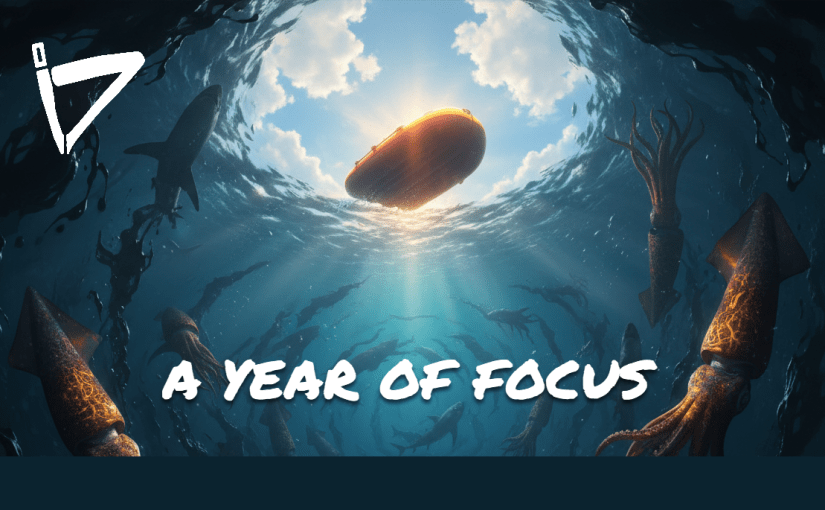
That’s not like me. That’s not how I naturally am. The year of Novelty turned me into a scattered runner. Trying to do more novel things, and I need to round that off. This morning I had a realization after an early set of yoga with some black coffee. I had a good feeling, and it came to me as a visual… I tried to recreate it with Adobe Firefly, and it isn’t half bad…

A yellow raft floats in a dark oily water filled with sharks and squid. It floats effortlessly below the clear blue sky with puffy white clouds.

This morning, I had a realization. This place I am visualizing has a certain mental buoyancy. You effortlessly float above all the sludge. All the worry, all the dread, all the ignorance, and all the drunkenness. Like a small raft floating over an ocean of beasts, poison, and misdirection. Not hydroplaning over the ocean, and not sinking either. Between the layer of dark oily liquids and the thick air, hovering, balanced.

I was listening to the first episode of 10% happier, the podcast by Dan Harris. He had his master instructor, Joseph Goldstein, on the show. They were talking about a new book. They’re writing where they’re using. Dr. Goldstein‘s catch phrases on how to be better at meditating… things like “When you are sitting, realize you are sitting.” Or “Just try again, just keep trying.” Or “Mara, I see you.” Mara here being the embodiment or physical representation of ignorance or temptation.

The part of the discussion that really stood out to me was absolutely fundamental. The idea of being both relaxed and aware. That really is the goal of meditation, isn’t it? It’s the goal of all religions. If you’re too relaxed to get all spaced out. If you’re too aware, you start to get too deep and start worrying about things. Things that don’t matter or that you can’t control. It is obvious, and it is easier said than done.

I wanted to find a single word that represented both of these things: being relaxed and aware. I’m not 100% certain that when I went back to the word, focus, I hit the mark. I do feel it fits the bill. I really don’t feel like I’m forcing a square peg into a round hole. Feels more like I loosely inserted a round peg into a square hole. It fits, but there’s some empty space around it. It doesn’t wiggle, there’s still room for improvement, and if you’ve read any of my stuff you kind of know that that’s my thang.

ID = Improvement dave A year of focus. a Yellow raft floats above a sea filled with giant squid shooting out vision blocking ink.

CASTIN’ PODS – Step 4: Broadcast

Hosting determines where your podcast lives, but broadcasting determines where people listen. All you do is copy the RSS feed link from your host. Then you can paste it into as many podcast aggregation sites as you want, and they will play your show!

Apps like Apple Podcasts, Pocket Casts, or Amazon Music etc. will offer your show on their platform.

In the image above, the data is sent back to Podbean via RSS feed too.

Spotify will host video, but RSS feeds generally distribute audio only. That’s fine—most podcast listeners expect audio.

If you need to edit an episode after publishing, then upload a new version to your host. The new file will replace the old one across platforms.

Well, you can sit back and relax. Focus on finding your next show topic or person to have on your show.

Get it Out There

Now that you have the show, you can also create some buzz around it. Be sure to mention that you have a Podcast so people know about it. The easiest way to do this is to mention it to potential guests on your show.

REELS

When you use Riverside or Descript, they automatically generate 1-minute reels for you. You can download these and share them on Social Media. While you are at it you can start social media pages for your show. It won’t hurt!

Write About Your Show

Another way to get the news out is to write about your show. A simple way to do this is to use the Newsletter function on LinkedIn. If that is not your vibe, then create a blog on WordPress.com or a Newsletter on something like Substack or Ghost. These are good places to paste your show notes and your transcripts. They also provide a vehicle for releasing paid content after you get the show off the ground.

Speaking of sharing your show, I would like to introduce my Podcast. GAMELAYER is a series of personal interviews. I interview a wide variety of professionals who have used Gamification both inside and outside of the learning industry. Season 1 opens asking, “What is Play?” “What are Games and why do we love them?” Season 2 is widening to the Game of the Entrepreneur.

Check it out! www.GAMELAYER.fm

Go build your Podcast!

CASTIN’ PODS – Step 2: Edit

Editing video or audio isn’t fun for most people. Unfortunately, it’s also where you’ll spend most of your time if you want a high-quality podcast. Some podcasts skip editing, relying on the value of the conversation or the novelty of the guests. If there is one optional step, this is it, but these days, it really isn’t optional. Now that celebrities are involved, and the word PODCAST has become a common household word, professional editing has become essential.

Most online platforms will record and then allow you to edit on the web. These web-based editors are always limited by nature. Having all of the options that a computer-based editor will have is not practical for bandwidth reasons. That being said, they have enough for a podcast.

Here are some tips and tricks:

  • Use a dog whistle (or another signal) to mark sections that need cutting. The microphone picks it up, even if listeners don’t hear it. (Dogs will hate your show if you don’t take it out in post-production.)
  • Accept silence—don’t feel the need to fill every moment with talking. Keep it natural.
  • Use AI enhancement. Platforms like Riverside.com offer AI-enhanced audio, remove pauses, analyze content, and even suggest edits.

In fact, now that AI is getting better at thinking on its own, it can:

  • Remove dead air automatically with one click.
  • Adjust sensitivity for removing filler words like “um” or “uh.”
  • Generate transcripts
  • Highlight off-topic sections, letting you decide whether to keep or cut them.

Having a prerecorded introduction and outro (Conclusion) to your show is a huge time saver in editing. An additional benefit is the repeated content forms branding around the show. The listener remembers the opener, and it sets the stage and creates a memorable experience.

Once you’re satisfied, Riverside lets you upload directly to Spotify or other platforms. You can also download the files to add branding or for backup purposes. Direct upload is faster. Spotify will take a video file and host it as a video. Then it “broadcasts” the audio to Podcast apps (which is the next step).

CASTIN’ PODS – Step 1: Record

There is no single best way to create audio for a podcast. Every path has pros and cons. The main difference comes down to your comfort level with cost versus quality. Generally speaking, a higher cost should offer a higher-quality output, but don’t pay for more than you need.

Another topic I want to bring up at the start of creating a podcast is ownership and rights. You don’t want to create a podcast with a song or recording you don’t own. If that podcast gets popular, you will get sued and lose a lot of money. Or even worse, your show would be taken down! 🤣

Here is some free music that is searchable by tempo, mood, genre etc: https://www.sessions.blue/

Phones

The most readily available (and free because you already have it) option is recording a phone conversation. Smartphones now allow you to record audio or even video calls. If you go this route, invest in a quality microphone that connects to your mobile phone. If the person you’re interviewing isn’t with you, they will have a lower-quality microphone, and that’s OK. Filters available on Adobe and iPhone use artificial intelligence to enhance recordings, making them sound more professional. This technology is not perfect, but it does sound better than a thin, condensed sound.

Online Meeting Apps

Another free option for long-distance conversations is letting Zoom, Facebook Messenger, or Google Hangouts record your call. This is convenient because it’s free and widely accessible. However, it comes with quality concerns. If someone has lag or poor internet, Zoom will “bake” that bad audio and video incident directly into the recording. There’s no way to separate or filter it out later. You’d have to cut parts of the conversation or settle for low-resolution footage, which I don’t recommend.

Another take on this idea is something I like. If part of the recording gets damaged, then take it out. That part was not meant to be; the universe didn’t like that part. This will work up to a certain point. As soon as the flow of the conversation is severely damaged, this lovely idea falls apart. Maybe your guest is very proud of a very important point, which gets edited out because of bad audio.

Sound Recording Software

I am just going to say it. I LOVE AUDACITY for sound editing…

https://www.audacityteam.org/

A technical but free option is if everyone records audio locally on their computer using freeware like Audacity. The challenge here is that you’ll end up with separate audio files that aren’t synced. You’ll need to collect the files, align them in Audacity, and mix them down to a single track. This takes more time and effort. There’s frustration with logistics—waiting for files, losing files, or struggling to sync audio correctly. So, this is what quality looks like in the Free space.

This is where I landed, because paying a little bit of money saves time and frustration.

My first attempt was Adobe Podcast. At the time, it was still in testing, and I lost audio due to connection issues. It was frustrating, though I understand the platform has improved since then. Adobe Podcast is audio-only, which is good for low-bandwidth situations. However, in today’s podcasting world, video clips for reels and social media are often expected.

The option I use now is Riverside. I pay for the basic plan—$29 a month, or $24 if billed annually. I think of it as paying for time back. https://riverside.com/

The Benefits

  • Audio is recorded locally on each participant’s computer, then uploaded to the cloud and synced.
  • High-resolution WAV and MP4 files are stored online, so you never lose access.
  • AI-powered editing tools isolate audio issues (like barking dogs or mic placement problems).
  • Automated post-production includes one-minute reels highlighting the most engaging parts of your conversation.

Riverside works for me, but it is definitely not the only option; others on the market include:

  • StreamYard.com
  • Descript.com
  • Exemplary.ai

The options presented here for Step 1 Recording will also work for Editing, which is the next step. You can edit audio on a smartphone, but I wouldn’t wish that on even my enemies.