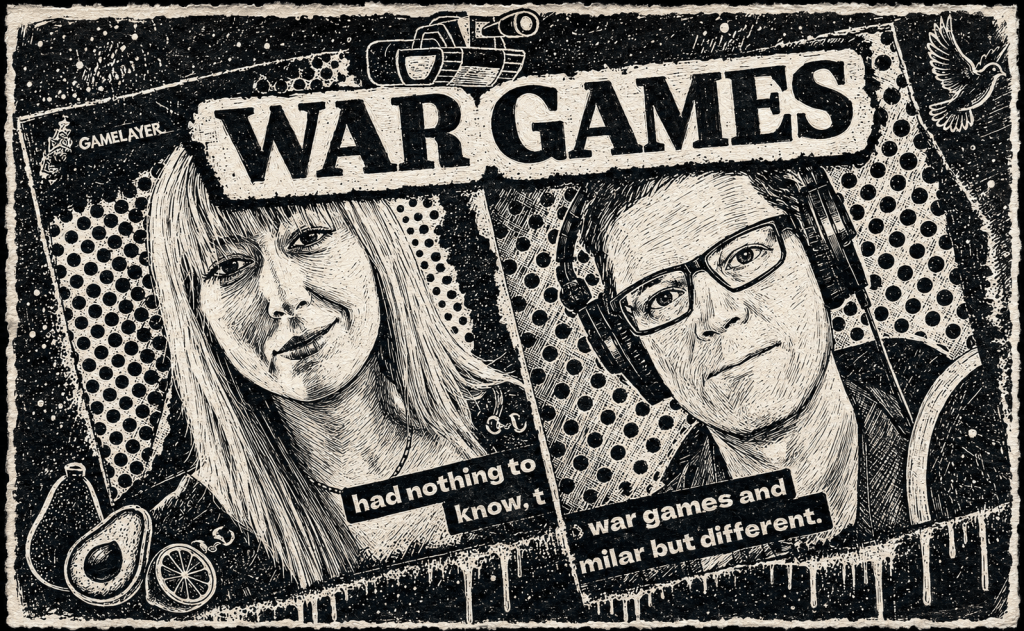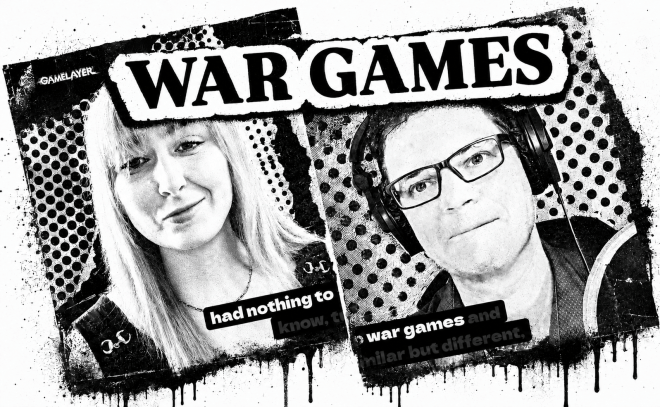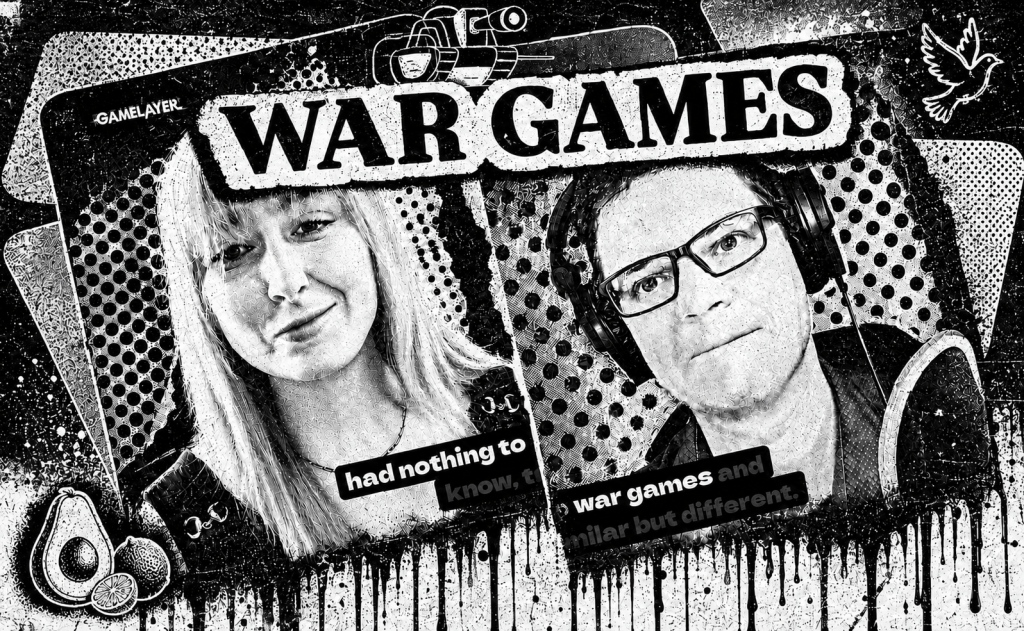

LOCAL EXPERTS DISCUSS THE NATURE OF GLOBAL CONFLICT IN RADIO BROADCAST

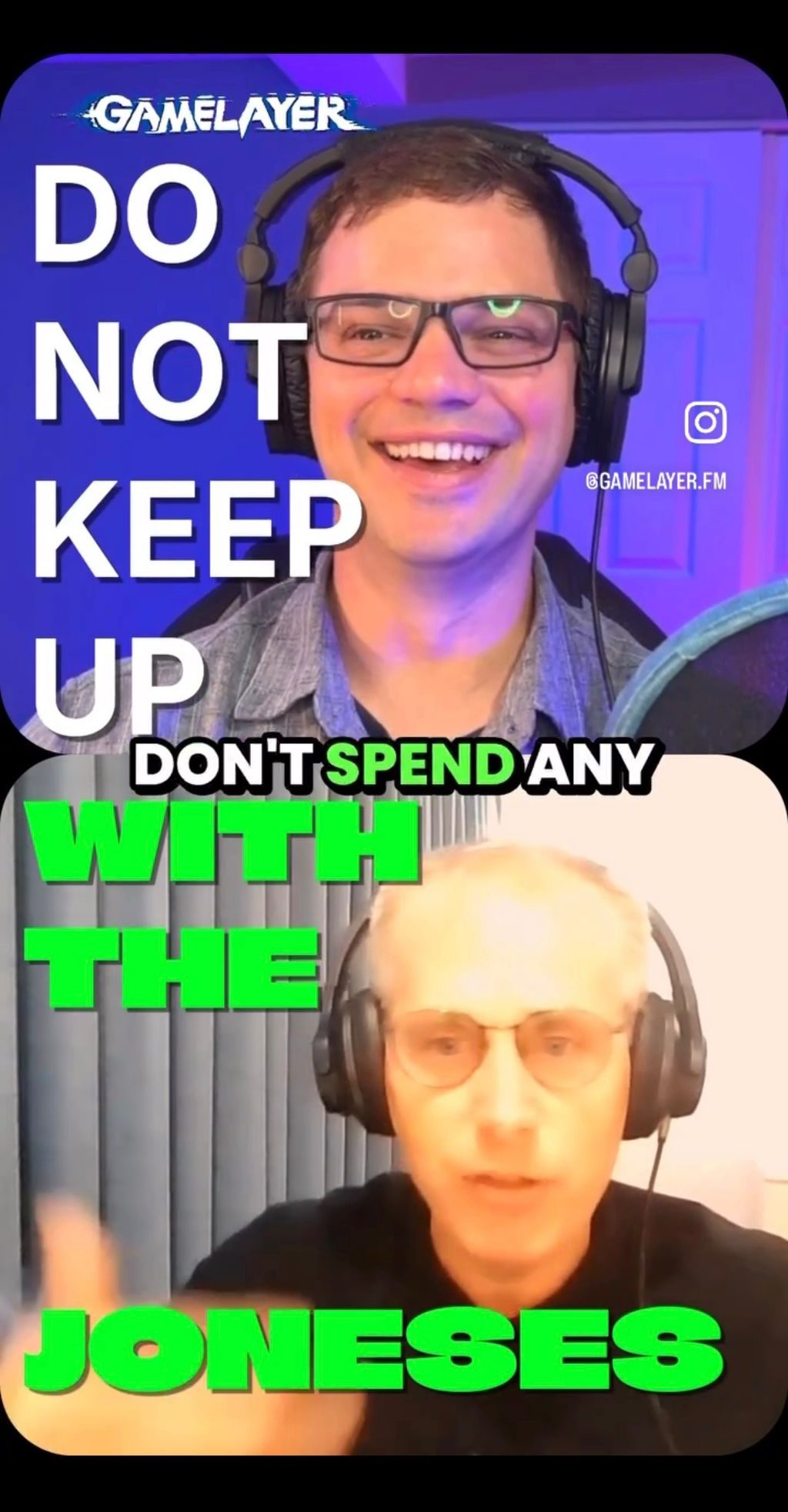
RIVERSIDE.AI – on July 22nd 2026, there was a broadcast recording of a discussion between a one Eleanor Ross, [Globally Celebrated War-Game Expert, avocado record-breaking up-seller, Middle-East linguist], and a one David Kolmer [Radio curator, Lemon Drinker, and Learning Artifact Craftor] The two discussed the complete trajectory of human experience, including various fermented vegetables, citrus-based breakfast beverages/baked goods, and the philosophical underpinnings of international diplomacy.

The conversation opened with cordial inquiries into the current state of affairs, specifically regarding Eleanor Ross’s state-of-the-art lime situation. According to sources present at the broadcast, Ms. Ross had acquired “forty limes” — a figure she emphasized she was “not exaggerating” — following an overambitious Fourth of July key lime pie initiative approximately three weeks prior.

“I squeezed all of them while watching Jeopardy,” Ms. Ross reported to Mr. Kolmer, who appeared to take the statement seriously and without judgment.

The limes were subsequently transformed into a lime loaf cake, which Ms. Ross paired with scrambled eggs for dinner the previous evening. When asked about the cake by an apparently foodie-enthusiast Mr. Kolmer, she confirmed she would be consuming additional servings as part of her lunch routine.

Mr. Kolmer, for his part, disclosed that he had consumed a Thai omelette that morning, featuring “cut up broccoli and carrots and Thai basil of all things,” cultivated in his Missouri residence. He noted that while Thai basil is technically a perennial in Thailand, it becomes merely an annual in the continental United States, though seeds do occasionally persist with what he termed “just keeps happening” frequency.

The conversation then pivoted to Mr. Kolmer’s personal relationship with intermittent fasting, a regimen he has pursued with the intensity of a man determined to squeeze lemons into a blender.

“I got into fasting for a while, intermittent fasting,” Mr. Kolmer explained. “What I did with the lemons, I know that sounds kinda scary, but I’ll drop a whole lemon in the blender with some stevia, like the sweetener, and just blend that up and drink it.”

Ms. Ross countered this assertion with what sources identified as “impeccable logic,” noting that “we all interminute fast. It’s called sleep.”

The two appeared to reach consensus on this matter. Still, Kolmer was processing in the back mind of his lizard brain that Autophagy (Greek for self-eating comes from two Greek words: autos (meaning “self”) and phagein (meaning “to eat”). Translated literally, it means “self-eating” or “self-devouring”. [1, 2, ]) really doesn’t start until at least 16 hours into the fast. Hence, he keeps his fasts to around 20 hours or up to 48 long once a month.

Kolmer declined to verbalize this opinion at the time of recording, but later was cited by those on the scene as saying, “I didn’t really want to mess up the vibe and flow of the convo Yo Ya’know? I just wanted to roll wit dat shit, but really I wanted to share my pseudo-science opinion on autophagy that has only been proven in lab rats.” Kolmer also added a 1-minute aside in post-production on the topic that, in retrospect, he felt did not make a solid scientific claim on his position, and he fears may cast him into the endless pit of being perceived as believing pseudo-science and as he put it “Cruncheeyee Gronala @$$ woo-woo bull-sh!t”.

The broadcast subsequently traced Ms. Ross’s remarkable career arc, beginning in Charleston, South Carolina, where she grew up “surrounded by good Southern food” and politically engaged family members. Her civic involvement continued through her work as an absentee ballot clerk during the 2020 election, a position she maintained for the entire summer after “hang[ing] around” past her shift’s conclusion.

Before becoming recognized as an authority on war gaming, Ms. Ross held several positions in customer-facing service, including front-of-house responsibilities at Co-op Gourmet Sandwiches at age fifteen. During this period, she established what may be an unbreakable record: “I won the person who upsold the most avocado when I was like fifteen,” she stated with apparent finality.

The Tank of War, The Dove of Peace and Love of the Other, The Avocado of Achievement,
The Citrus of Whimsy and Belief, The Crescent Moon and Dharma Wheel of Faith.

When pressed for details, Ms. Ross revealed that the avocados in question were offered as sandwich additions, and that her sales prowess earned her “like a hundred-dollar bonus.” Mr. Kolmer assured her that this figure was indeed “a lot” when one is merely fifteen years old.

Additional professional experience included employment at a bed and breakfast in France and a hostel in Morocco, where she served both as a yoga teacher and breakfast server, thereby establishing a pattern of multifaceted employment that would become her trademark.

The discussion then escalated into more sophisticated territory. Ms. Ross is a war game designer, a professional who manufactures complex simulations in which participants navigate geopolitical crises that may or may not include realistic-looking social media.

These games, she explained, typically involve written materials, injected breaking news, and role-player interactions. Participants submit “moves” that alter the simulated world, creating what Ms. Ross described as “zero-turn gameplay where it’s continuous” or turn-based alternatives with “short breaks for adjudication” and “expert discussions.”

The creation of these fake social media artifacts serves what Peter Perla — identified as “one of the grandfathers of war gaming” — would approve of: the creation of the alternate reality in the magic circle of the game. Or as Mr. Kolmer, apparently comfortable cross-disciplining, noted: “In theater we call that the suspension of disbelief.”

“Making media look real, that’s the way you can do it,” Ms. Ross affirmed.

Despite the sophisticated technological apparatus supporting these simulations, Ms. Ross reported that things sometimes break. During one of their games, a third-party platform failed entirely. The response was swift: the entire operation pivoted to email, with materials printed and distributed by hand.

“You need to be able to adapt, right?” Ms. Ross explained, suggesting that knowledge of “the old ways too” remains strategically valuable in the twenty-first century.

In her closing remarks, Ms. Ross articulated what appeared to be the ultimate purpose of her work: “Games show other people that people do have the bestest of intentions.”

Well-designed games, she suggested, push participants to recognize that their opponents are “working towards what they think their best interests are,” thereby creating opportunities for humanization. “The humanization of the other and even defining them as the other in the first place” — these are matters currently undervalued in contemporary discourse, according to her assessment.

Mr. Kolmer appeared moved by this statement, noting that “it feels like your closer is gonna work really well as your opener.”

As the broadcast concluded, Ms. Ross extended an invitation for audience members to contact her through her Expert Theory website or via LinkedIn, where she promises to respond to messages “within the week.” Mr. Kolmer expressed hope that he might someday participate in one of her games, a request to which Ms. Ross agreed enthusiastically.

The broadcast ended with expressions of mutual professional appreciation, leaving open the possibility that Mr. Kolmer may one day engage in a simulated international crisis while remembering the tactical advantages of the analog world and the personal integrity of his opponent. 🥑🍞


🦆


215 War Games for Humanity: Using Simulation to Understand the Other Side | Eleanor Ross GameLayer Radio

War games can be about more than conflict. They can be laboratories for understanding humanity. In this episode, David Kolmer sits down with Eleanor Ross – Creative Director @ExpertTheory to explore a different side of simulations and war gaming—one centered on people, perspective, empathy, and understanding.Eleanor works in simulation and war-game design, creating immersive role-playing experiences that help participants prepare for complex situations. Unlike traditional war games focused on weapons and battlefield movements, much of her work examines the human side of crisis: diplomacy, economics, information, culture, relationships, and decision-making.At the center of Eleanor's philosophy is a simple idea: people need to talk to each other more.A well-designed simulation can put participants inside perspectives they might normally dismiss or misunderstand. Instead of reducing another country, organization, or group to “the enemy,” players encounter people with motivations, histories, pressures, and beliefs of their own.David and Eleanor discuss how that process can challenge bias, encourage critical thinking, and help people understand why others make the choices they do.They also explore the craft behind making simulations feel real—from creative writing and realistic media to role-playing, facilitation, storytelling, and the suspension of disbelief.Eleanor shares stories from simulations involving Taiwan, agricultural warfare, resilience, diplomacy, government, industry, and national security. She explains why bringing people with very different backgrounds into the same room can be one of the most valuable outcomes of the game.The conversation also gets into an unexpected ingredient in serious learning: fun.Eleanor argues for bringing back “whimsy” and creating experiences people actually want to participate in. Creativity, storytelling, and play can be part of what makes learning memorable.In This EpisodeWhat war games and simulations actually areKinetic vs. non-kinetic war gamingWhy writing and storytelling matter in simulation designHow games can challenge assumptions and biasesHumanizing an adversary instead of demonizing themUsing simulations to prepare for diplomacy and negotiationCreating emotional stakes that make scenarios feel realWhat agricultural warfare simulations teach us about local consequencesWhy bringing diverse stakeholders together mattersThe role of AI in modern simulation designWhy realistic media helps create a suspension of disbeliefThe importance of the after-action review and debriefWhy work should include more fun and whimsyHow games might help us rediscover the humanity of “the other”A Central QuestionCan putting ourselves inside another person's decisions—even temporarily—change the way we understand them?For Eleanor, that's one of the most powerful possibilities of simulation.People on opposing sides rarely see themselves as villains. They have histories, incentives, cultural assumptions, fears, responsibilities, and their own ideas about the right decision.A thoughtfully designed game gives participants an opportunity to encounter that complexity.Perhaps the greatest value of a war game isn't learning how to defeat someone.Perhaps it's learning how to understand them.About Eleanor RossEleanor Ross works in simulation and war-game design with Expert Theory, where she helps develop and facilitate role-playing simulations across government, universities, businesses, and other organizations.Her background in languages, writing, theater, facilitation, civic engagement, and international experience informs an approach built around creativity, human behavior, and engagement.
  1. 215 War Games for Humanity: Using Simulation to Understand the Other Side | Eleanor Ross
  2. 214 Please Stay Human: Writing, AI, and the Magic of the Unscripted | Nicole Papaioannou Lugara, PhD
  3. 213 Be Where Your Feet Are: Outdoor Learning, Leadership, and the Power of the Pause | Mike Dowell of Babler Outdoor Education Center Parkway / Rockwood
  4. 212 Learning Is Play | Dr. Kevin Thorn
  5. 211 Games as Systems | Moe Ash

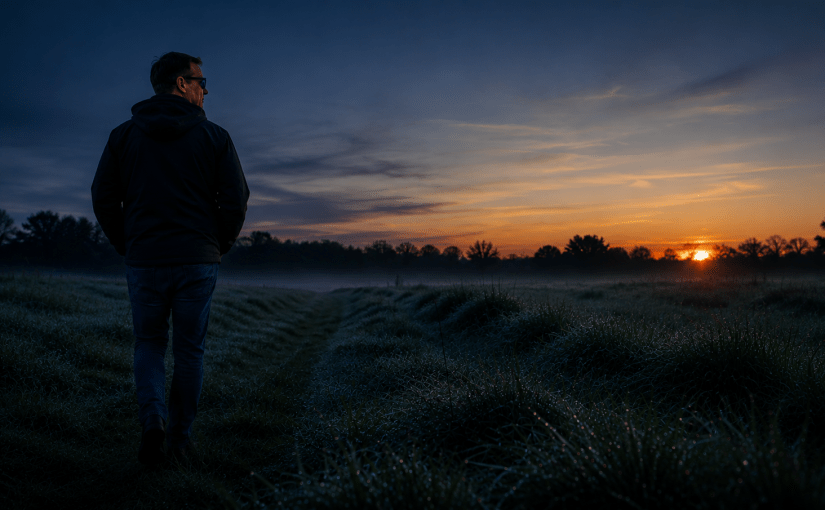
Walking Out Before the Sunrise

Hey, It’s me, Dave. You may not have heard from me in a while. I promised I would have a Year of FOCUS, and then I fell off the map. Where did I go? Well, I have been working on my podcast, but also… I think the Muse left town for a while. and that’s OK. that is how the Muse do.

I have been making recordings on GAMELAYER RADIO, as I mentioned above, and the last two have included creative writing. Here is a player with the episode that has been published:

I think that put a bug under me a bit… but then I got a nudge from a thought leader named David Kelly because I commented on one of his posts. Then he shared that he started a thing called Amplify. I read his opening statement, and it resonated so well that the article below just fell off my fingers. So now, I want to share both of them.

Now more than ever, we are flooded with too much information and too many buzzwords. But it is still the same game. If you find a way to really help someone do something better—if you find them a solution worth sharing—then you are in the game. I really like the concept of curating content that is high on value and low on noise.

Just yesterday, I had a meeting with the VP of Member Engagement of the company I work for, and we were discussing my career path. Sales? Nope. Marketing? Warmer… Creating videos at live events for the marketing and conferences team? Now… that could work!

Wait… but do I still get to keep my Learning and Development hat? Will I ever have time to wear it? It feels like our industry is built on shifting sands, and AI is shaking things up. It is the MP3/Napster phase of learning—the democratization of the learning industry; And yet, just as having a sword doesn’t make you a warrior, having a shiny new automatic content-creation tool doesn’t make you a seasoned learning artifact designer.

I love working in Learning and Development, and I dare say I’ve been doing it long enough that I know what I’m doing. A master’s degree doesn’t hurt, but the time in the trenches is where the real value comes from. The hours spent standing on stage with a live group of learners. That is the secret sauce. A new tool or an LLM cannot replace that.

We can beat that drum all we want, but the fact of the matter is that the deck space on our boat is shrinking. Organizations are cutting their learning teams because we have traditionally been the first to go. We are the amphibians of the workforce—the indicator species. When the frogs die, you know your water has gone bad.

So what is the solution? Are you looking at me? Are you still reading? The answer is in the AGILE. The solution is in being nimble. Or to be fatalist… adapt or die.

If I can still add value (and draw a paycheck) by traveling to conferences and generating high-quality video content organized by secretive learning objects and edited against a learning goal… then that’s what I will do. Work begets work, and action brings good fortune. The only ones in Learning and Development who will be thrown out with the bathwater are those who latch on to what the learning industry was. Those of us who survive will embrace the new sunrise. My plan is to be walking out in the cold dew before it arrives.

~Pablo Picasso

headshot of David Kolmer.

Your Brain Is Curating Your World

Synchronized Synchronicity (Or Maybe Just Paying Attention)
Today is Cinco de Mayo:
A holiday many United States of Americans treat like Mexico’s Independence Day.

Cinco de Mayo. or, what it really is “5th of March.”

It marks a single battle in 1862, but here in the U.S., it’s been repackaged into something else entirely: a reason to drink.
I’m not drinking right now —
And I’m not sure I ever want to again.

This post is about synchronicity. At times in my life, I perceived this phenomenon in an overzealous or spiritual way. I like the idea of mysterious forces working behind the scenes, and I’m sure that plays a big part in our experience. But I don’t want to delve too deep into that side of this here—not because I don’t believe it, but because I don’t want to waste energy trying to prove something that isn’t provable.

My point here is that we all live in the same universe, and that universe is connected to itself. As much as we would like to perceive ourselves as individual participants in the ecosystem, the truth is that through our surroundings, we are all connected to each other.

What got me thinking about this was a series of events that happened to me over the past month. Actually, all of it happened in the last week.

Let me start by just saying my family loves to go to Babler State Park, just southwest of St. Louis city in Missouri. We go there at least a few times a year.

I’ve gotten fully involved in my local chapter of ATD. (That is the Association of Talent Development in St. Louis.) The local chapter has been very supportive of my trying to grow as a professional into being a better instructional designer and training facilitator. The relationship has grown to the point where I’m now serving on the board as the Director of Educational Technology. Being on the board means that I know a lot more about what’s going on and what’s being offered by the chapter.

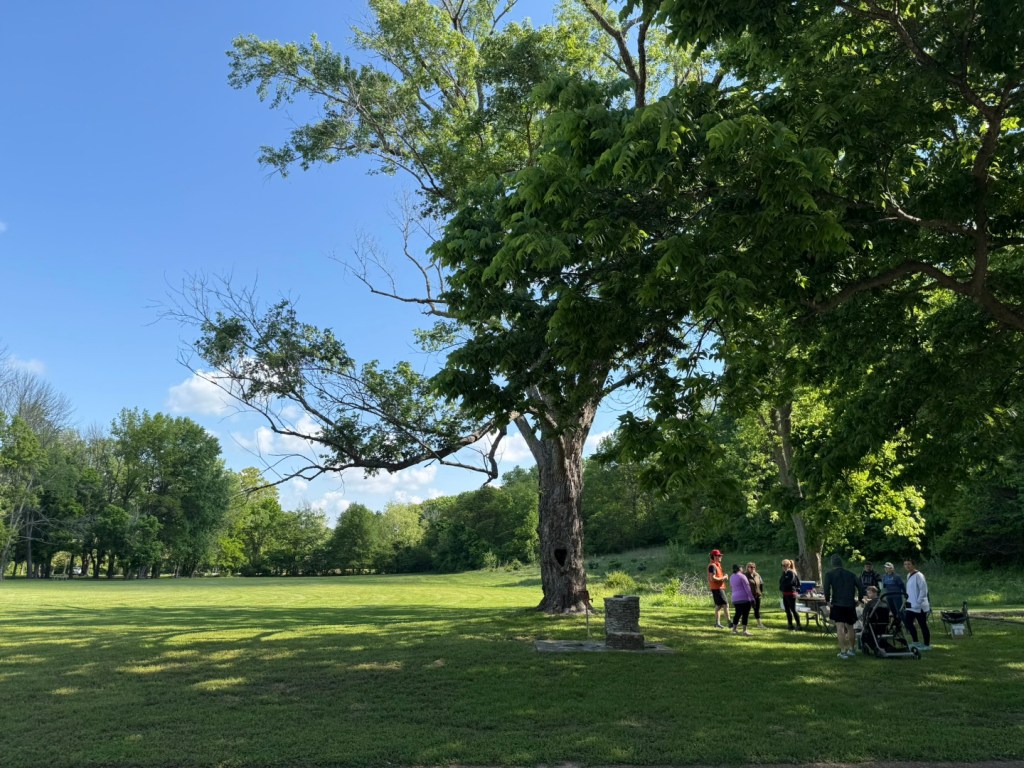
ALT="Wide Angle of ATD members standing under tree at Babler State Park."

So when something came up about networking in nature, I raised my hand right away and said I’m there, whatever you need me to do. I think there were some discussions about what parks we all liked in the area, so I probably mentioned that I like Castlewood, Babler, and Creve Coeur Park. So this event ended up happening in Babler.

As we were preparing for the event, I was talking with Sarah Garner, who is organizing the whole thing, and I was joking with her. I said, I’m going on a field trip next week—guess where it is? It’s at Babler. She responded with a 😆.

So I went to that event last week at Babler, and our meeting spot was right next to the pavilion that our family always goes to.

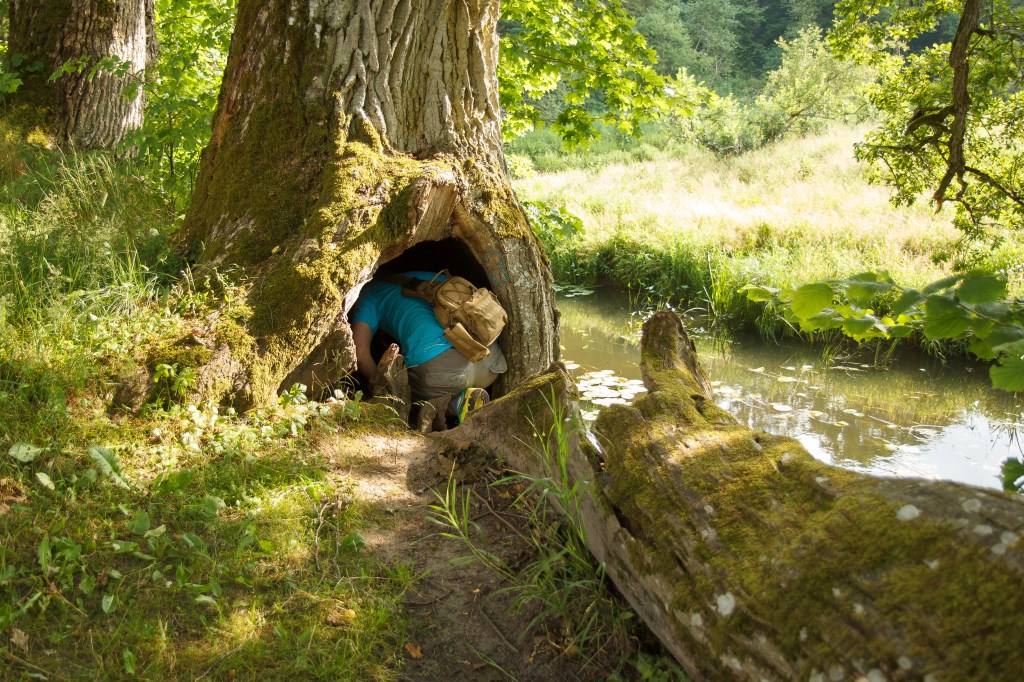
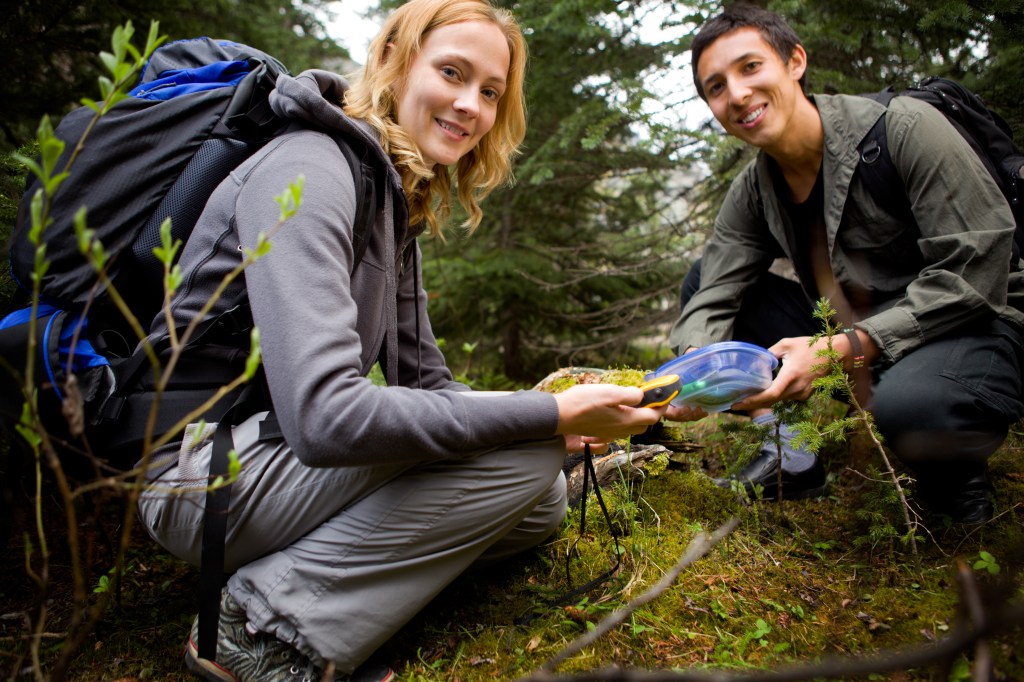
Then, a couple of days later, I was recording a podcast with Dave Smiderle – from Burlington, Ontario, Canada; and since this is GameLayer, we were talking about games and learning. Out of the blue, Dave brought up geocaching. Where you use GPS to find specific coordinates on a map. Someone leaves you a treasure, you fill out the log, put in a new treasure, and then continue on your hike.

Geocaching, a man looking for a hide in a wooden cavity
Two people finding a geocache in the forest. Shallow depth of field with sharp focus on woman.

I mentioned to Dave S. that I’ve heard about geocaching from some art friends in college who loved the adventure of the whole thing.

That episode is dropping soon, and you can hear more about it there.

Just yesterday, I received a text message on an app called ClassDojo from my child’s teacher. She shared that we will be traveling to Babler State Park and partaking in a geocaching activity. Now, in my inner self, I sensed the synchronicity of everything that was happening in my life. In the podcast with Dave, I expressed a deep interest in getting into geocaching, and I meant it. And it feels to me like my sincere interest is what caused the activity at the field trip I’ll be at next Thursday to be geocaching.

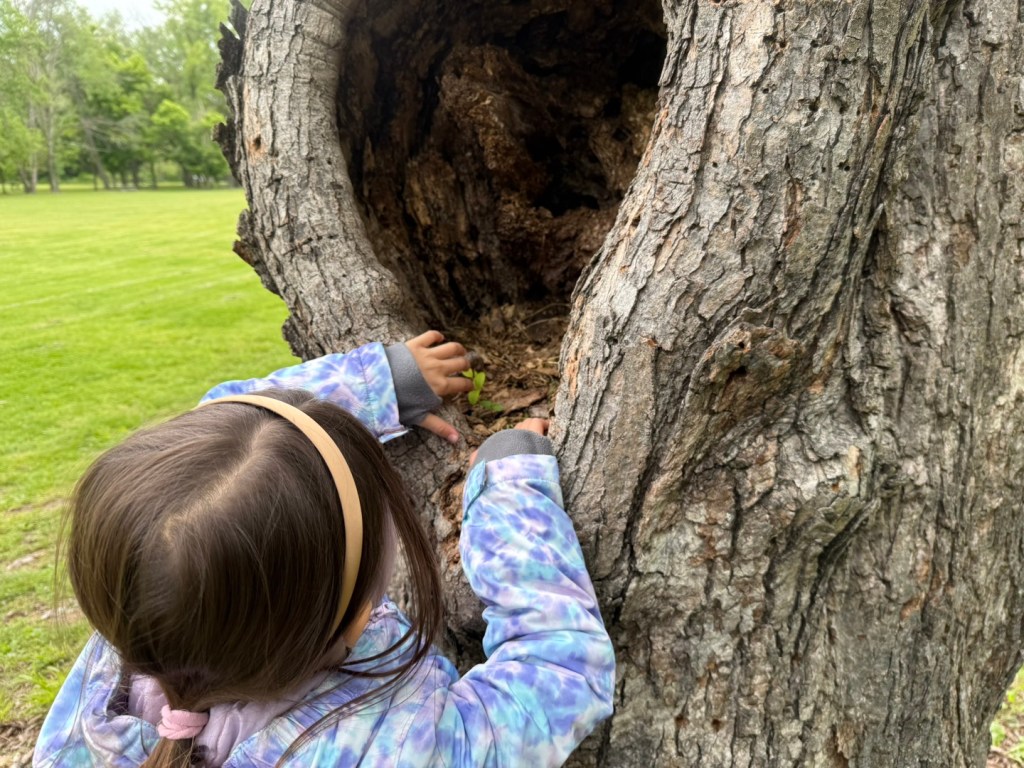
ALT="Picture of a young girl exploring the hollow inside a tree."

One could easily argue that I’m making this all up, and I think that is a perfectly rational stance. Here’s why: now I’ve been talking about geocaching more, and a colleague at work named Karen said, “Oh, geocaching—I used to do that with my kids.” Now I’m learning more about the process from her. I’m not arguing that there’s some underground magic happening behind the scenes.

It’s coming up more because I’m thinking about it and talking about it more. …right?

So, what’s my point in all of this, you ask?

My point here is that if you seek something out and set your intention on something, then that thing will find you. Half because you’re looking for it, and half just because you notice it more. It might be a bit of a stretch to argue that the universe is going to rearrange itself around your intentions and desires, but after a while, it really does sort of feel like that.

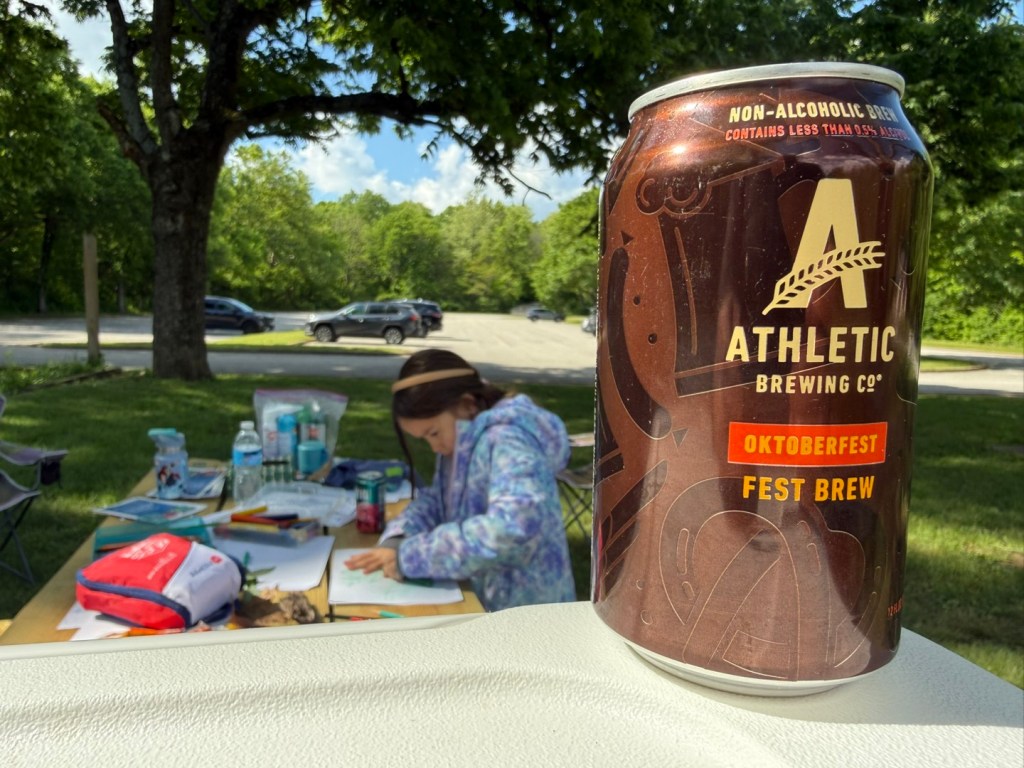
Let me tie it back into drinking—or not drinking alcohol—Or drinking NA—for Cinco de Mayo. While I was at Babler State Park for the ATD networking-in-nature event, I looked in the cooler and saw my favorite non-alcoholic (NA) beer. It is Athletic. It’s a beer that’s brewed to be nonalcoholic. They are NOT trying to reproduce some other famous beers without the alcohol.

This results in an incredibly delicious beer-like beverage, which just happens to not have alcohol in it. If I hadn’t made the conscious decision over the last couple of years to cut alcohol out of my life, I wouldn’t have known about this beer, and it wouldn’t have been a noticable.

alt="Picture of Athletic beer at Babler State Park"

But because I have done that, and because I’ve grown very fond of Athletic brand beer, I brought it up and asked Sarah if she brought that. She said, “I’m an advocate!”

I called out, “Me too!” over the picnic table, and several people looked at us, getting excited about some beer that doesn’t even have alcohol in it. Now, these people are probably concerned about my mental well-being, and that’s fair from their vantage point.

The fact of the matter remains: if you start to pursue a certain thought, object, or culture, then those thoughts, those objects, and that culture will start to seek you out as well. Why is that? Because the entire universe really is a single item. It is all connected, and the flap of a butterfly’s wing can cause a wind that in turn leads to a series of events that topple a mountain.

If you’ve made it this far, then I implore you: the next time something seems to find you, let yourself believe that magic is real. Just trust for a minute that the universe itself is consciously providing you with what you desire. Give it a shot—not because it is an entirely provable thought process, but because it enriches your experiences and provides meaning beyond language. And from my perspective, enriching experiences are all that matter.

It very well may not be the case that the universe is out to conspire for or against you. …But I know one thing to be true: human perception is always colored by our previous experience, and when things don’t make sense, the human mind fills in the gaps without us even knowing. Our perception of the world is provably inaccurate. Also, the human mind is an infinitely creative machine, and it feeds on what you give it. So be mindful of what you’re feeding it, because it literally shapes your perception of the world around you. And in turn, your perception recreates the world you live in.

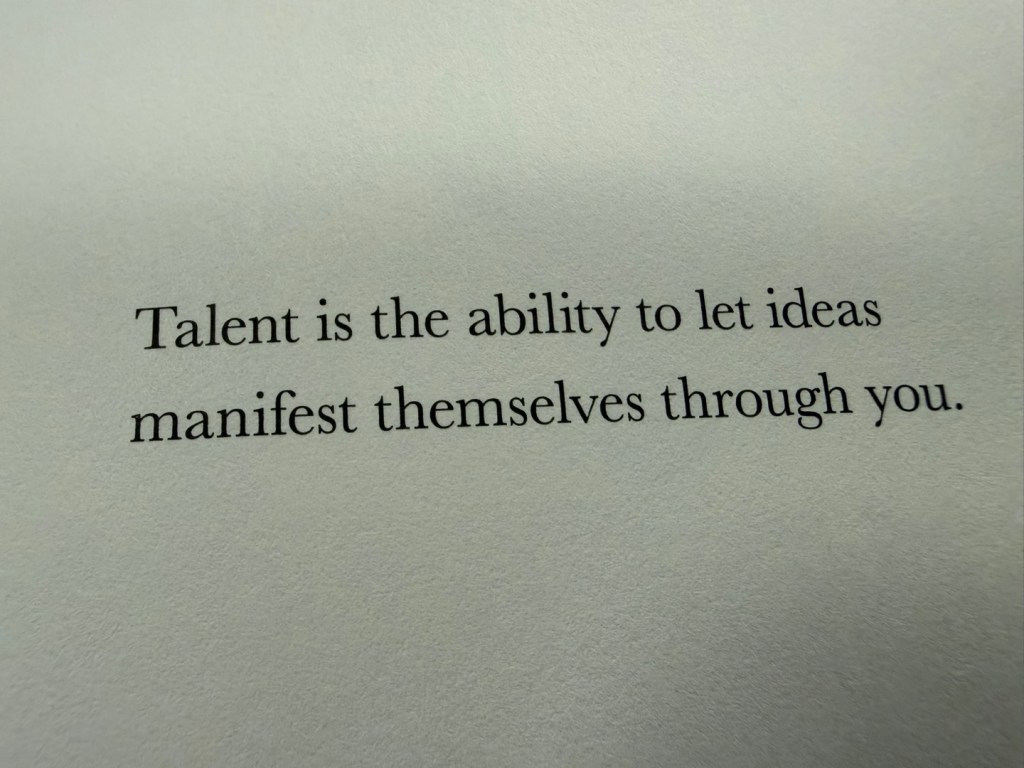
ALT="Quote from Rick Rubin"

~ Rick Ruben

To Link-Out or NOT Link-Out: on LinkedIn

Welcome to Improvement Dave, I am Dave. I will be your guide on your journey to “Choose to Improve.”

I recently wrote a post on Linked In about how it is not beneficial [for the health of you post] to link to something outside of LinkedIn. That sounds confusing and after you finally process it counterintuitive:

Here is a link to that post.

I chose to link to that post instead of linking this post to that post. Explain that to your grandparents!

image links to LinkedIN post.

A recent connection, and dare I say new friend, called Christian Gossan, had a beer last week, Outback on the other side of the world, with a friend I don’t know. A friend who posts on LinkedIn and gets millions of views. (Something I have never done but now aspire to…) He had some advice after seeing one of my posts about a podcast I recorded last year with Christian. “Don’t link outside of thah platform, ya NOOB! The algorithm dudn’t like that, MATE!” Here I was… sitting around thinking that linking to an outside learning artifact I created looks cool, when in reality, it was hindering my reach!

What is the outcome? I have begun discussions with my digital colleague at work, “Copilot.ai.” We are cooking up a convo titled: “Strategic LinkedIn Growth Plan.” and it has already resulted in a new tagline and about me section. Something even more accurate, AND also more compelling. We are not in a binary experience. We are in a spectrum of shades. A vast sea of grey.

This brings up a deeper question. “Why do I create anything?” …am I trying to help others learn from my experience (or even my mistakes), OR, am I trying to reach a broader audience? Is this therapy, Lisa? Should I also get real therapy, Betty?

Well, the answer to all of that is “YES.” This might not have to be a this-or-that dichotomy. What’s the point of helping only a few when you can help many? If the algorithm likes it, then that is where I find myself. Those are my “Given Circumstances” to plug a theater gem. To go deeper still, things are not inherently good or bad. It is the labels we put on them that make them blessed or evil.

What is the outcome? I have begun discussions with my digital colleague at work, “Copilot.ai.” We are cooking up a convo titled: “Strategic LinkedIn Growth Plan.” and it has already resulted in a new tagline and about me section. Something even more accurate, AND also more compelling.

After a long discussion with Copilot.AI (which uses a slow work deep dive of ChatGPT) I had a plan. The plan included a better about me section on linked in. I used the same conversation channel and came up with a new about me for Linked in, and it contained twice the number of allowed spaces. So I worked on removing inaccuracies and used Copilot to cut it down even further until it read more like a story:

“If you’re here, you’re probably curious about the space where creativity, learning, and community meet—and how a little play can change the way we grow and work. That’s the space I live in.

I’m David Kolmer, a creative strategist, instructional designer, professional learner, and community builder. My path has taken me from theater stages to podcast studios, from SCUBA-beach classrooms in Thailand to boardrooms in St. Louis. Through all of it, one belief has stayed constant: learning should be memorable, meaningful, and, whenever possible, fun.

At the National Association of Electrical Distributors (NAED), I design and support learning experiences that help professionals thrive in a rapidly changing industry. Whether I’m building microlearning, shaping a curriculum, or crafting a multimedia story, I focus on curiosity, clarity, and real‑world application. I want learners to feel engaged, not obligated.

Storytelling sits at the center of my work. My theater roots taught me that people don’t remember information—they remember experiences. Every learning journey has a narrative arc, and every learner is the hero of their own story. That mindset shapes everything from my instructional design to my podcasting.

I’m also a lifelong experimenter with tools and frameworks. From Articulate 360 and 7TAPS to Photoshop, video, and podcasting platforms, I love exploring new ways to bring ideas to life. My portfolio spans eLearning, video, audio, and live facilitation, each project a chance to test, iterate, and improve.

Community fuels me. I’ve presented at ATD events, supported GamiCon, facilitated workshops, and connected with countless learners and creators. I believe professional growth is a shared adventure — one built on curiosity, generosity, and a willingness to try new things even at the risk of initial failure.

If you’re passionate about reimagining learning, exploring the power of play, or building communities of practice, I’d love to connect. Let’s see what we can create together. ~~~

Portfolio: DavidKolmer.com/portfolio
Blog: ImprovementDave.com
Podcast: GAMELAYER.fm

We are not in a binary experience. We are in a spectrum of shades. A vast sea of grey.

IF we move toward the singularity where machines and humans grow together, we will have the same problems we have always had. The new Generative AI we have built is now based on the human mind. Why are we so surprised it has shortcomings? It is just becoming more human.

Listen to David Kolmer on GAMELAYER RADIO

CASTIN’ PODS – Step 3: Hosting

You want to select the host with the most. Hosting is a very important decision, but for the most part, it’s a backend function.

I had three perks that I was focused on when I was searching for a host:

  1. Free to use
  2. Unlimited storage
  3. IAB certification, (Interactive Advertising Bureau Tech Lab)

IAB certification is useful for having paid advertisements on your show. It is an independent organization that has set standards around play and download data collection.

I wanted unlimited storage, so I looked at Podbean, RedCircle, and Anchor. RedCircle offered free unlimited storage but lacked strong analytics. Podbean was listed as very easy to use, but unlimited storage was a paid feature. Anchor, however, was free, had unlimited storage and robust analytics—but then I found it had been acquired by Spotify.

Host on Spotify. It’s free, has strong analytics, and integrates seamlessly with podcast distribution. (In April of 2024, Spotify left the IAB Certification. There is speculation that they are so big that they don’t “feel they need it.” This has not helped their image.) The analytics at Spotify are great, and some say they are starting their own standard. If Spotify goes away, we have bigger problems than our Podcasts not playing anymore.

How to Host

  1. Go to https://creators.spotify.com/
  2. Set up a free “Creators” account with an email
  3. Enter basic show information
  4. Click the upload file button

People do not know, and they do not care where you host.

Make sure you pick a host that you are happy with. Try to find one you feel you will remain happy with. It is possible to switch, but you will need a backup of your episodes. You will lose the original post date if you ever switch to a new host.

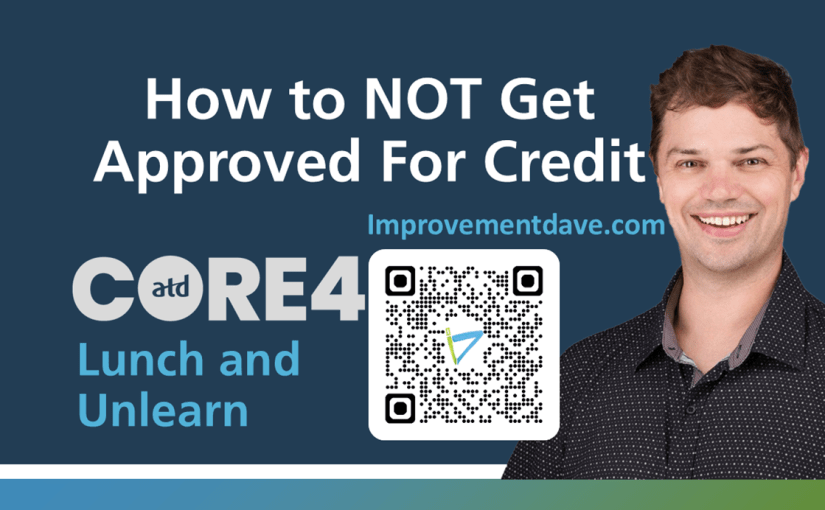
How to NOT get Credit

I was honored to present at the first-ever (and I pray not the last) Lunch and Unlearn at:

I was asked to contribute to an event with ATD CORE4. The Lunch and Unlearn is a simple and UN-SERIOUS take on the traditional Lunch and Learn, and I am honored that Bianca Woods thought of me. I did my best to not take it too seriously. This is my first dry run through to get a time for my part. I went a bit over on time in the prep recordings. I added some timers at the bottom of my PowerPoint slides, and I was right on time at the virtual LUNCH AND UNLEARN event!

To prepare for the sessions, I made recordings of myself presenting. The nice thing about these is that they are over 4 minutes (my allotted time to speak). So, they add more context.

I took this as a challenge to view my presentation in the same way. To not see it as a small thing, even though I only had 4 minutes to present. It reminded me of a learning event that a friend, Kassy LaBorie, shared with me. She had to present her entire brand and purpose on a big stage in front of a live audience. She only got 1 minute to speak. If she could do all that in a minute, surely I can do an “unlearn” session in 4 minutes. I even created a social post around my SPEAK!

I wanted to start with a bit of my background, education, and work history. Then I shared a favorite TED talk for context.

Then I just had to do a mock-up of the old Learning Objective / 3-step process:

How to NOT get Credit

💥APPLY

💥BUY

💥DON’T PAY

To show how Instructional Design and Facilitation is a fluid and iterative process. I want to share the original Dry Run Recording. This was from when I was still developing this program.

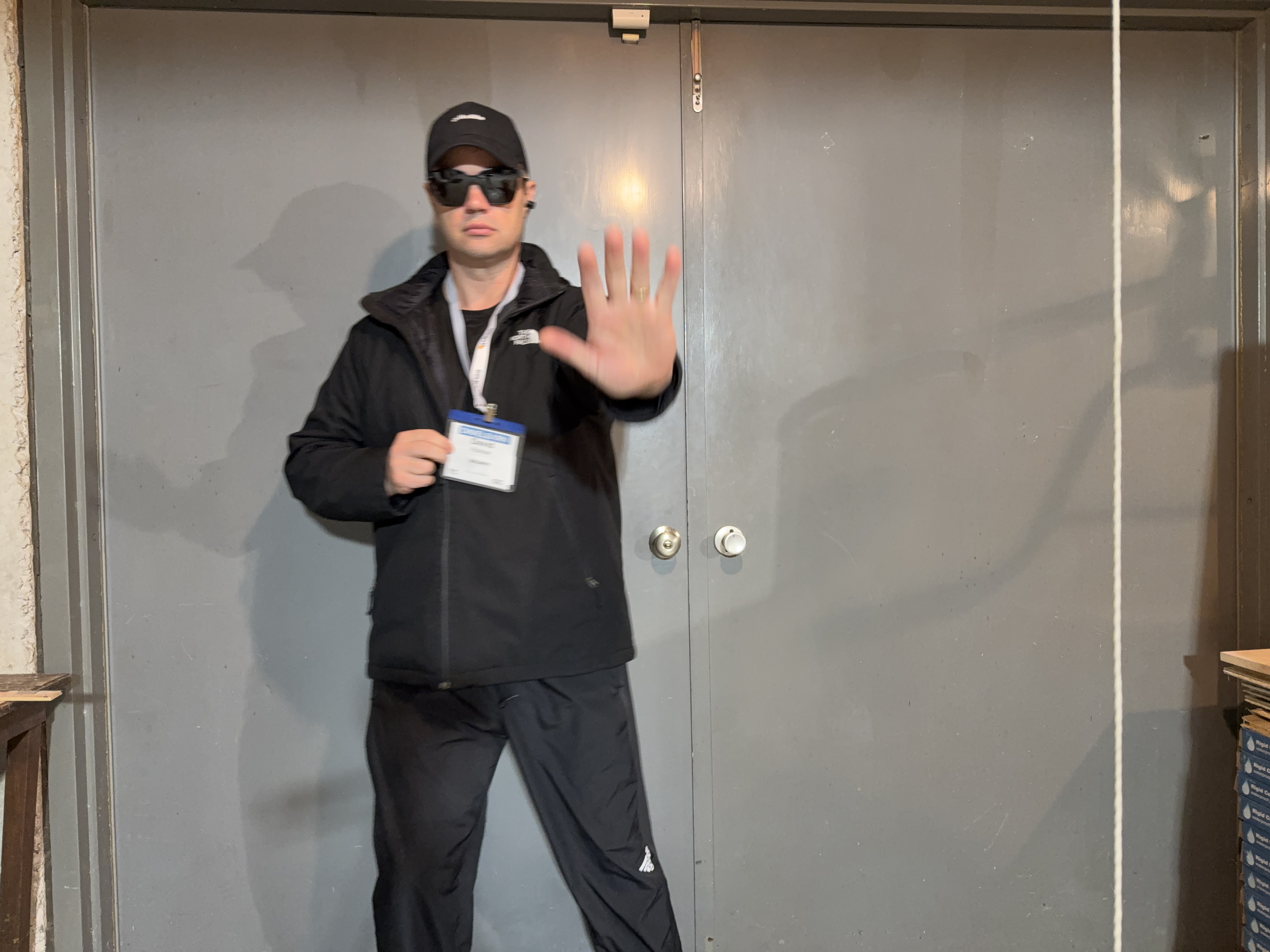
Event Security Blunder: DAVELEARN’s Overzealous Guard Incident

Overactive security led to negative participant experiences at the recent event DAVELEARN, a “smaller learning conference” which took place at the GAMELAYER.fm studios from November 10th to November 14th, 2025, in St. Louis, MO. Sources claim there was an overactive security guard on site, who reportedly refused entry to participants in the event that they could not present their badge.

CEO of the event, Dave, made a statement an hour ago from the mainstage at GAMELAYER STUDIOS:

“Team DAVELEARN apologizes for the actions of our overzealous security guard. We received some reports late last night, November 11th, 2025, that they were refused entry for having the wrong type of badge. We outsourced security for this event, and it appears that the proper vetting process for asset selection was not completed. Our sources indicate that this employee was dishonorably discharged from their local militia. We are releasing any more specifics at this point, but rest assured, this former employee was reprimanded and is no longer with us.”

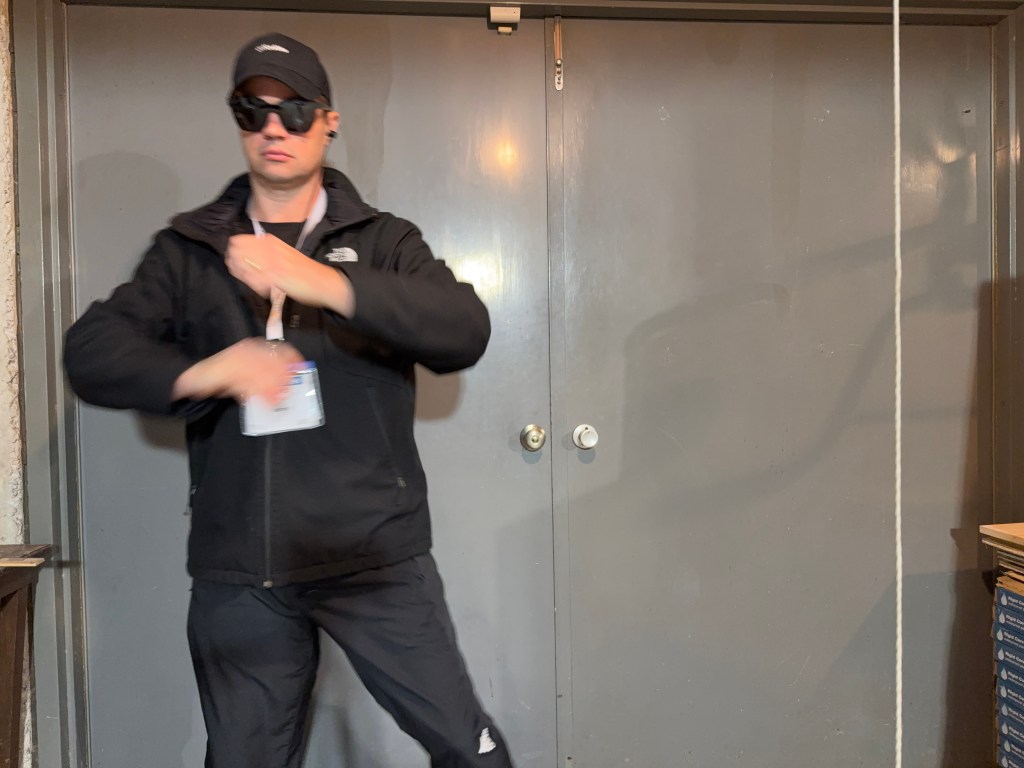
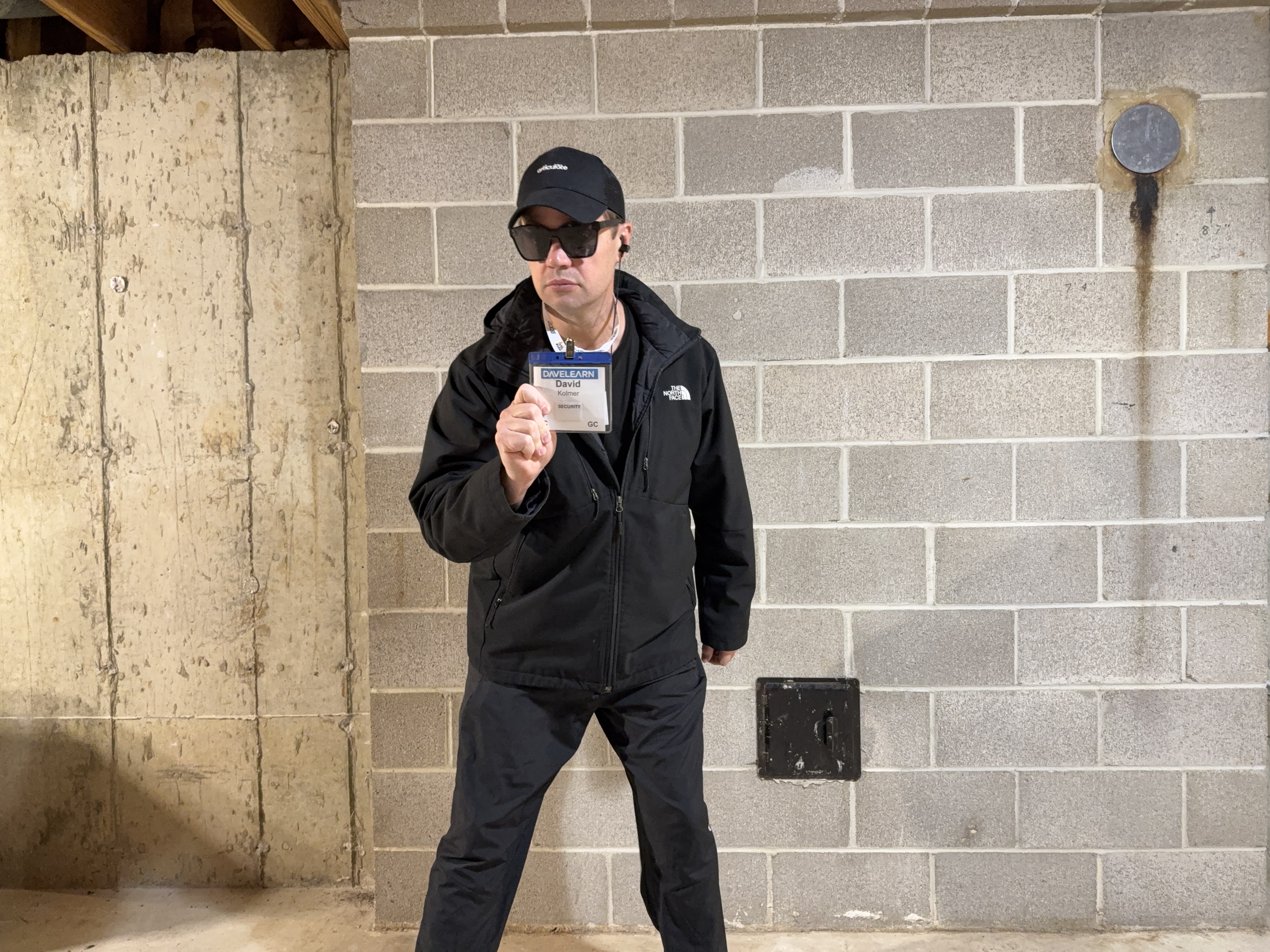
Images of the imposter have been recovered from HD security camera footage.

Sources earlier this morning (11:07 AM November 20, 2025), including potential DAVELEARN Conference attendee Sheila B. Robinson, revealed on the professional Social Media app LinkedIn that “[She] couldn’t get past security at the convention center without wearing [her] badge and lanyard. ([She] was holding it in [her] hand one day, and they hassled [her]).”

SOURCE: https://www.linkedin.com/feed/update/urn:li:activity:7396945595891998720?commentUrn=urn%3Ali%3Acomment%3A%28activity%3A7396945595891998720%2C7397153589778894848%29&dashCommentUrn=urn%3Ali%3Afsd_comment%3A%287397153589778894848%2Curn%3Ali%3Aactivity%3A7396945595891998720%29

A response to the post was delivered at the front doors of GAMELAYER STUDIOS by the DAVELEARN team’s Vice President of Human Resources, “Dave the HR guy,” to a sizable and eager press attendance. Due to a significant magnetic frequency disturbance in the area, there is no audio or video footage available for that official statement. However, text-based copies of the address were captured on pen and paper in real time.

“Thank you for attending this press update. Team DAVELEARN has received additional information regarding the previous employee on our security team, who is known only as ‘DAVE’, who we have confirmed entered into the position under a false identity. Our sources indicate he was only admitting attendies whose badge included the word ‘SECURITY’ on it at the South entrance. We would like to confirm that this was not the direction that was provided by team DAVELEARN, and in addition, we would like to apologize for any negative attendee experiences. This man was not of sound mind; he believed he was a reincarnation of Napoleon Bonaparte XIV, who recently passed away on the 10th of March, 2023. It is our promise that this will never happen again at any DAVELEARN event.”

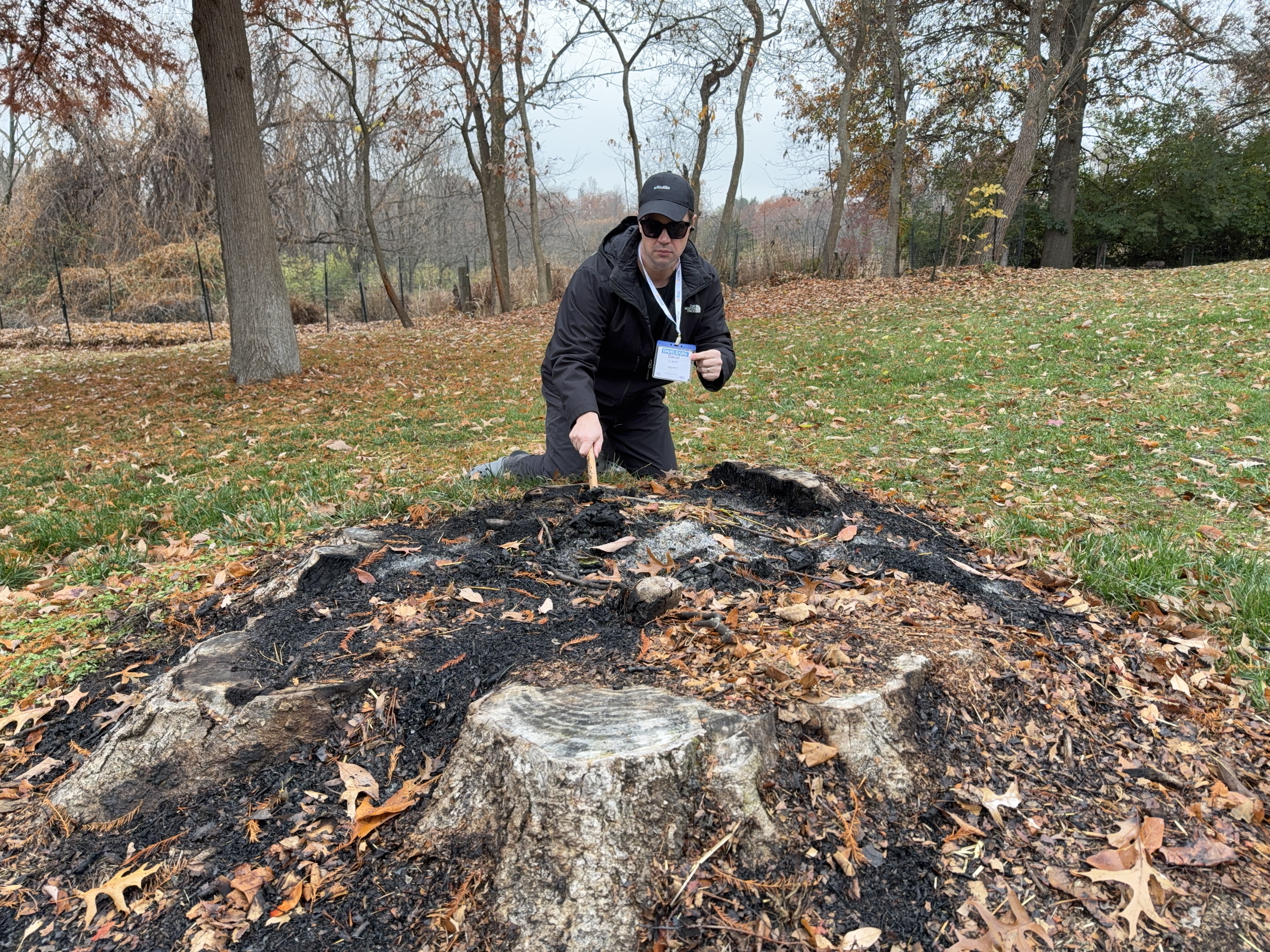
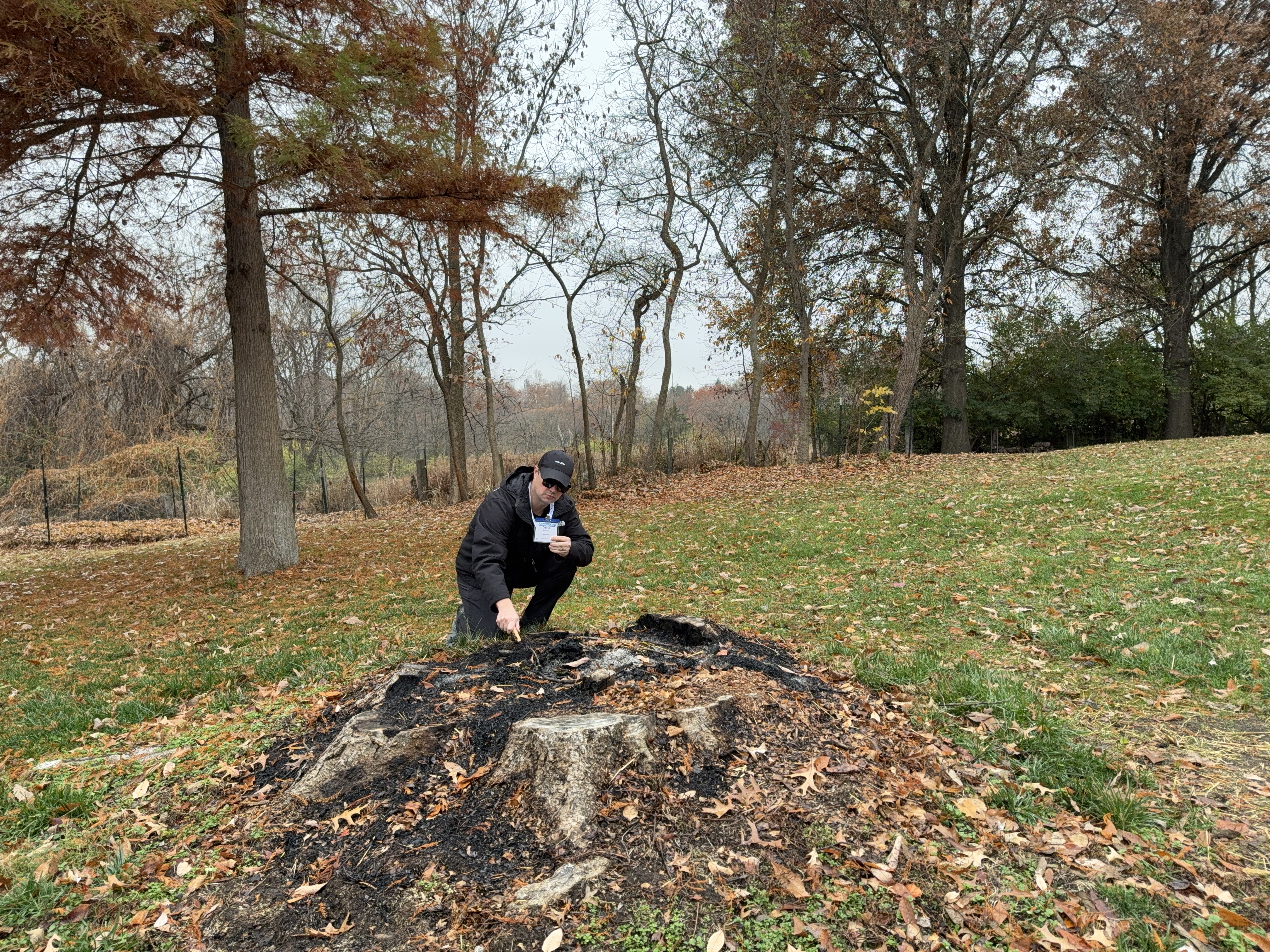
Sources on site who witnessed the apprehension of the Security Guard formerly known as “Dave” state that he was found digging through the ashes of the stump that was lit on fire during the DAVELEARN event. The man who self-identified as a reincarnation of Napoleon Bonaparte XIV began to yell that he was on a crucial and pivotal mission, collecting scientific samples of the remains of the fire that needed to be analyzed by the proper authorities in what he called the “MO cave-dweller community.”

A person walking down the street where GAMELAYER STUDIOS is located observed, “Why do all these DAVES look like clones. What sort of conspiracy is this?”

Designing for Discovery: The Role of Autonomy in Learning

Yesterday, my kids were playing in their sandbox. The weekend before, I had noticed that my daughter and her friend had shoveled all of the sand up to the slotted planked “walls” of the sandbox, and a lot of it had fallen out into the playground area. Yesterday, my kids filled that area with water, played on the slide, and got covered in mud. Now, I built that sandbox intending for my kids to sit in it, shovel sand into buckets, and play as if they were at the beach. How they chose to play in the sandbox doesn’t align with my original intention. And that’s completely alright.

When I first started exploring instructional design, I was working as a training facilitator at a call center for a popular credit card company. I reached out to an established instructional designer working at the flagship office in Ohio, to learn more about the🆔role. They shared a project addressing one of the most complicated phone call scenarios for credit granting—a situation where identifying the next course of action was particularly challenging, especially for newcomers who wanted to avoid legal missteps.

The designer’s solution was a basic e-learning module in a SCORM file. It featured a branching scenario that guided users through the call, complete with cute static cartoon characters. Intended as a classroom learning experience, it evolved into something more. Learners began using it as an interactive job aid during actual calls, asking clients for brief holds while they loaded up the e-learning module and then consulted the e-learning for guidance throughout the call. The instructional designer saw this as a complete success, as the artifact had transformed into a practical, continually used tool. The form of the learning artifact remained the same but the function or usage of the tool had pivoted.

In learning and development, we often focus on creating artifacts that suit our own learning preferences. This natural and selfish process has been coined “Self-Hugging.” That is making learning content that we ourselves would consume easily. However, it’s crucial to design learning experiences that work for everyone, regardless of their ability or learning preference. The function of a learning artifact should be left up to the learner. Too often, we dictate how learners should use these tools, limiting their potential.

Just as children might choose to shovel all the sand out of a sandbox—not the intended use, but still valid—learners should be free to explore and use learning artifacts in ways that work best for them. This exploration can lead to valuable realizations. For instance, children might learn why keeping sand in the sandbox is important through their own experiences, rather than being told arbitrary rules. So there is a connection here between the corporate learner and the child playing in the box of sand…

When learners have firsthand experience, they understand the reasons behind certain practices. This approach is far more effective than simply dictating rules without context. It leads to actual behavioral change and cultural alignment with policies. By allowing learners to explore, make mistakes, and come to their own unique realizations, we create more impactful and lasting learning experiences.

David Kolmer Avatar
David Kolmer

improvementdave.com

GAMELAYER: Behind the Scenes of a New Radio Show 📻

My Unexpected Experience with Riverside.FM

I recently conducted a test recording using Riverside.FM, and it exceeded my expectations. The platform asked dynamic, open-ended questions that really got me talking. Although it was just a demo, I had a blast creating it, and the end result provided a great description of my upcoming radio show, #GAMELAYER.

Initially, I had no plans to publish my first experience with Riverside.FM. However, I was pleasantly surprised by its capabilities. It offered high-definition recordings for multiple participants and provided a range of video editing tools and open-source music. While I couldn’t add transitions to images or videos, I could fade music in and out. Overall, it was impressive for a free platform. As someone who loves using free software (much to the dismay of my computer engineer friends), I was thrilled.

I’ve been working hard on editing the first episode of #GAMELAYER, which features a series of phone tag audio messages sent via text. I’m torn between using the original low-fi recordings to emphasize the casual nature of phone chats or enhancing the audio for a more professional sound. I think I’ll publish the high-quality version as a podcast and host the low-resolution version on the transcript page of my Substack newsletter.

I recently purchased the domain Gamelayer.fm but haven’t successfully linked it to my Substack account. Instead, it redirects to Substack’s main page, which isn’t very useful. I’m considering building a landing page with Parallax animations on Amazon AWS, but I’ve read that the process might be similar to linking to a Substack account, which could be just as challenging. For now, I have some ideas, but they’re still in development.

Currently, my focus is on recording the show. However, I might need to reach out to experts to help launch the webpage. Alternatively, I can let the podcast distribute across platforms via Red Circle for now and work on the webpage after the show’s official launch.

Introducing GAMELAYER: A New Play-Centric Podcast

I am getting warmed up to start a new project. The project is about play. It is a podcast that celebrates all the ways that we play. It focuses on the science of play and the quest of learning. It is about enjoyment, it is about deep learning, and it is about gamified learning environments. I basically stopped recording VLOG videos at some point. I basically stopped writing on this blog to complete the hall bathroom I was updating, and I plan on outlining that process on this blog.

This is A quick recap video that I captured with my updated Podcasting studio and then posted directly to Linked In with Minimal edits. A “fun Project” is what I called the file. I give thanks to the people who are helping me grow and announce my new show, GAMELAYER. I say that it will launch on Halloween of 2025, but it might launch sooner, maybe even as soon as Spring Break 2025. I also share another side project I have started with my dad around building financial independence through Real Estate. This will start as a video podcast that develops into eLearning coursework. MUSIC: ANI KUNI Polo and Pan

I had just got off an introductory call with a guest on the new show I am piecing together and I was fired up. So I decided to record a VLOG post. The radio show is called GAMELAYER.

I have had fun dipping back into my experience as a sound designer. I am feeling the creative process seeping back up like sap from my roots. It is really revving me up and by the end of the day wearing me out!

I have created iterations of the cover art in the web-based design app canva.com and I’d like to share what I had downloaded of those here:
[Click on the arrow on the right to scroll through the design iterations.]

I might just keep recording these short “Fun Project” videos where I dump out all the emotions and the thoughts I am having around putting together a Radio Show. They have been well received. I will keep posting them here as a means of tracking them. I am going to get busy making a Podcast now and I might be shownig less love to my VLOG newsletter here at Improvementdave.com, but I’ll be around.

Thanks for reading, I really appreciate your time and attention. Please reach out to me if you would like to be on my radio show. We all play and we all have a perspective to share. Leave a comment related to how you play. What do you play? Do you play music? Do you play games? Do you play with artmaking? How do you express yourself?

Dave