Finding Your Tribe by Embracing Differences

Learning who your tribe isn’t can be just as valuable as learning who it is.

In my last post, I wrote about choosing yourself. I intended to go deeper into personal identity and the idea of pursuing multiple ideas to see which ones “choose you back,” but I didn’t quite get there. Those are threads I’ll come back to.

For now, I want to explore a related concept: focusing on the 33% of your audience who truly resonate with you.

That recent post was inspired by the song “Choose Yourself“.

This post was inspired by a recent podcast conversation with my friend Kassy LaBorie that will drop this week on The Spark Konnect – Podcast.

I’ve written about Kassy before—she wears red pants as a bold expression of her personality. (I’ve also written about occasionally wearing blue pants myself.) These small choices act as signals of identity.

Kassy shared something interesting with me. The guest she had on before our episode was nothing like either of us. The guest was bold, outspoken, highly analytical, competitively athletic, and focused professionally on detecting deception through body language.
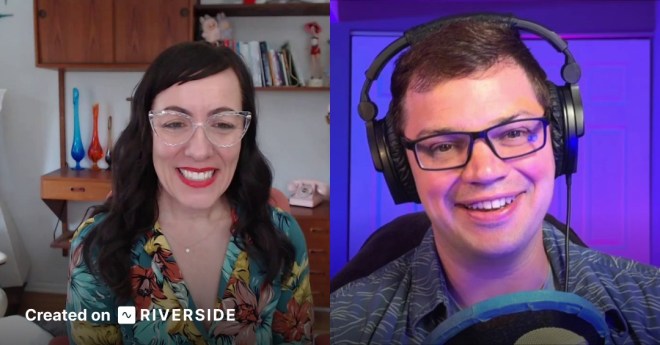
Her energy didn’t match Kassy’s at all. Kassy was candid—she found the interview difficult. So much so that she questioned whether she should publish it at all.

I argued that she should, and I want to explain why.

Let me go back to where this idea started for me.

In high school, I had an uncomfortable realization: if I truly valued thoughtful conversation—Socratic debate, the kind that leads to truth—then I would have to engage with people I didn’t agree with… or even like.

That’s not easy.

It requires accepting that your worldview might not be perfect. And that’s uncomfortable for anyone.
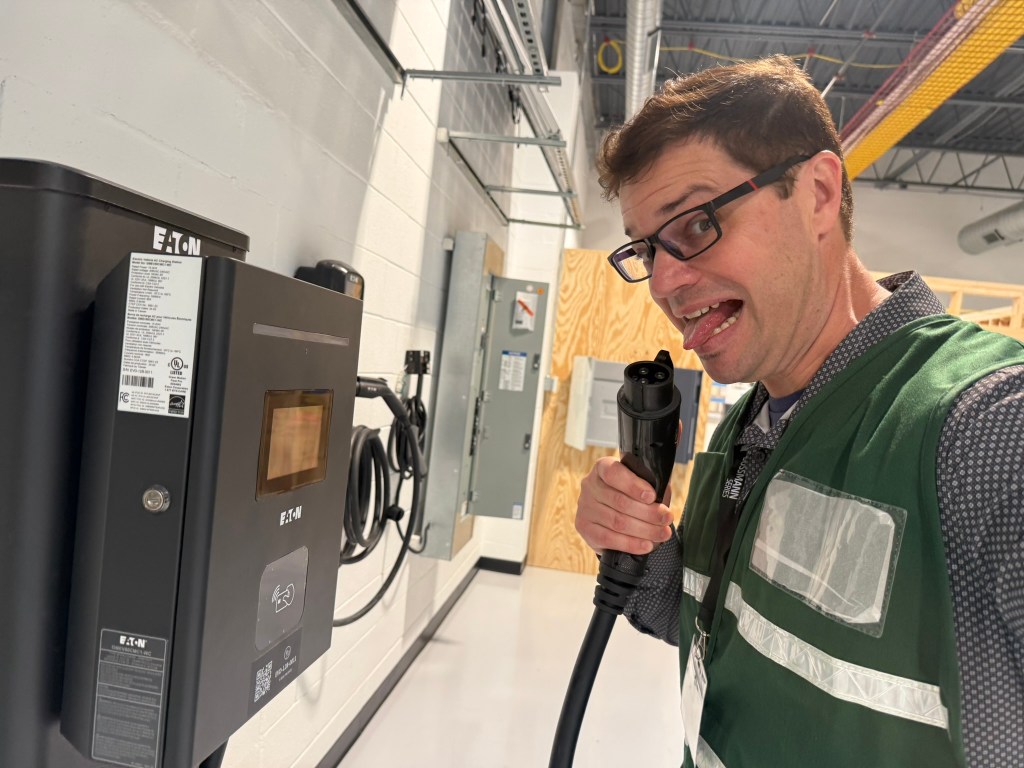
At a recent tour of an electrical manufacturing plant, the presenter said the equipment was not electrified. As a person of learning, I had to test his hypothesis.

Now fast forward to today, where many of us are creating content—podcasts, blogs, conversations—with friends, acquaintances, or even strangers. Some we agree with, some we partially understand, and some we fundamentally disagree with.

That spectrum matters.
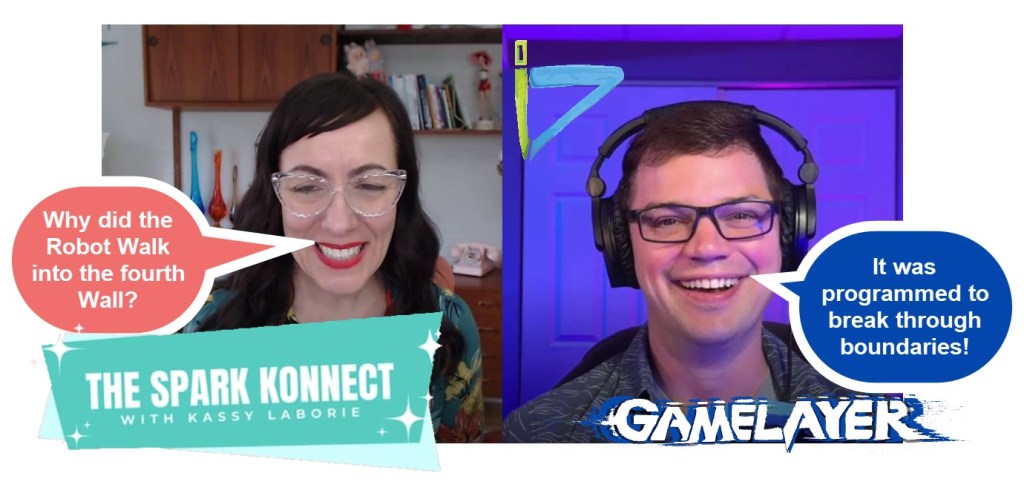
If I only interview people who think, talk, and act like me, I’m doing a disservice to my audience.

If everyone on the Game Layer Podcast metaphorically “wears blue pants,” then the idea of blue pants as individuality loses meaning. It becomes uniform. It fades into sameness.

Truth doesn’t emerge from agreement—it emerges from challenge.

We grow by engaging with people who think differently. Not just people who prefer a different brand of peanut butter, but people whose perspectives fundamentally challenge our beliefs.

Of course, there’s a valid concern: what if the differences are too great?

What if someone’s worldview feels incompatible with your own?

That’s worth considering.

Maybe Kassy’s previous guest lives in a world neither of us would choose to inhabit. That’s okay. We can decide what we allow into our lives.

But even then, there’s still value.

We can learn from people we don’t understand. From people we don’t like. From people we don’t want to become.

Exposure expands our understanding of the human experience.

I experienced this firsthand in a podcast micro-episode I recorded a few months ago.
I do a show on Game Learning and Creativity called GAMELAYER.

I spoke with someone whose industry doesn’t allow time for creativity or game-based learning. He said it plainly: he doesn’t have time for that.

Instead of pushing back, I listened.

Really listened.

By the end of the conversation, I found myself agreeing with him—even though his perspective challenged the core theme of my podcast: that life and work should include joy, creativity, and play.

So how can both be true?

My goal is to be in an environment where my creative strengths are used. That’s how I thrive.

People who thrive in that same way—those are my people.

But that doesn’t mean everyone needs to think like me. …and it definitely doesn’t mean every guest on my podcast should agree with my perspective.

In fact, the opposite is true. The show becomes stronger when it includes voices that challenge the premise.
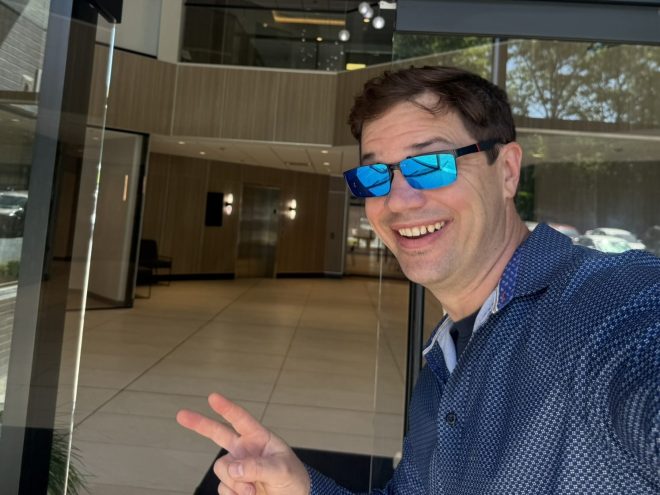
New Office DIGS!

Because those are the same challenges these ideas will face in the real world.

When I listened to Kassy’s episode, I noticed something important.

She didn’t shut down.

She stayed open.

She listened to the perspective, asked questions, and acknowledged that the conversation stretched her—and would likely stretch her audience too.

That’s exactly the point.

Why did both of us approach it this way?

Part of it comes from our backgrounds in theater.

In theatre, listening isn’t passive. You listen with your whole body. You’re not analyzing someone to judge them—you’re trying to feel what they feel and understand their emotional state.

The other part comes from our work as facilitators.

Good facilitators seek first to understand, and then help others understand.

That’s the skill.

You don’t build a meaningful platform by only surrounding yourself with agreement.

You build it by engaging with difference—thoughtfully, intentionally, and with curiosity.

Because the goal isn’t just to find your tribe.

It’s to understand the full landscape of people—especially the ones who challenge you.

GAMELAYER RADIO Launched

Hello! Thank you for reading, and I am sorry I have been a stranger. If you follow any of my social media feeds, you might have seen that I launched a Podcast last Friday. The launch was a success and included more than just a Podcast. I would like to share my experience starting a Podcast with a Newsletter and Marketing plan.

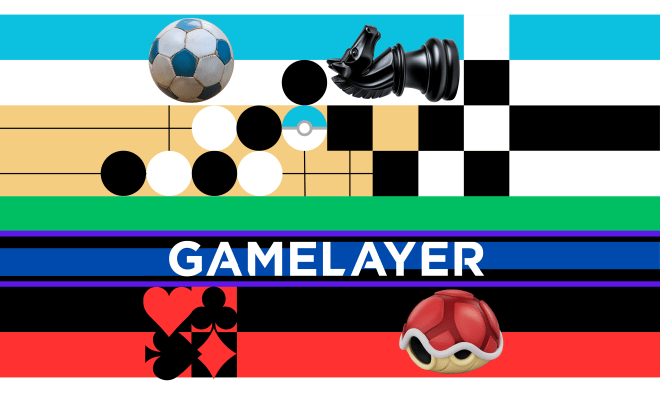
Cover Art for Podcast "GAMELAYER"
WELCOME TO PLAY

Let’s be honest. There are a lot of podcasts out there, and the competition has just raised the bar. Instead of competing against my neighbor like I would have in 2004, I am competing with celebrity superstars from Conan O’Brien to Monica Lewinsky. This has been a slow progression, but the landscape has really changed over the last couple years.

This is why it is so important to really think out what you want your show to be about. It needs to be something you love, but it also needs to be niche and novel. The only way to pull listeners’ attention away from TV actors discussing what it was like to make their sitcom is to discuss something you really know or really like.

Where you host your Podcast is not all that important to your listeners because you can link all the episodes as sound files via RSS to other platforms. That being said, each platform will offer you a unique experience around price, analytics, and storage.

My main criterion was unlimited storage for free. I don’t mind paying a bit to make the show, but I don’t want to pay forever to have it hosted because eventually I would probably end up stopping paying, not to mention I just do not want to spend that much money.

At the end, I had it narrowed down to Red Circle or Spotify. I love Red Circle as a host, and I really think I want to have another show on there soon, but Spotify recently acquired Anchor, and that brand has so much weight to it. At a certain point, I realized I was using my decision on which platform to choose to put off the launch of my show. So I just went with Spotify because it is HUGE, Free, and has unlimited storage. The last piece was that the analytics from Spotify are certified, so it would be easier to accept sponsors if that ever happens… You never know!

I started out using Adobe Podcast, and I really like that platform for recording podcasts. The interface is beautiful and intuitive. Unfortunately, the app crashed a lot, and I even lost some of my recordings. Also, the AI voice enhancer sometimes made me sound like I was someone else, and some of my editors even thought I had a third person on my show. I was shocked that Adobe did not perform, and that really is a first for me. I have grown to respect the Adobe brand, and I love it. Photoshop, Premiere, and Adobe Audition are all environment staples. I even use Adobe Audition to craft the more complex audio for the GAMELAYER show itself. I feel like Adobe Podcast has potential but it has yet to realize it.

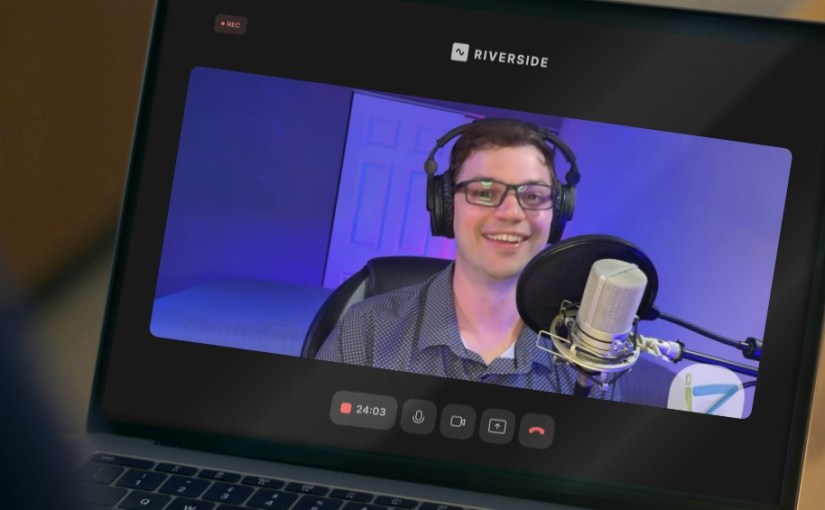
I ended up going with Riverside.fm, and I absolutely love it. I am on the lowest paid tier, and the only thing I wish I had was downloadable transcripts (something I definitely want to have), but I think I have some other ideas on how to get those.

This is a topic that I wanted to streamline on the cheap. I ended up using a free Buffer account, which lets me connect to up to 3 Social Channels. That’s not a lot, but I am thinking about where I want to be anyway. So far, I am at a branded channel at Instagram, Facebook, and LinkedIn. However, I am not that jazzed about being on Facebook, and I might just post links on the top of that page and abandon it for Blue Sky. If you are interested, I would recommend following the Instagram because I am mostly going to produce REELS from the show. (In addition to the Podcast of course, which I share in the next section.)


INSTAGRAM! https://www.instagram.com/gamelayer.fm/
LINKED IN! https://linkedin.com/company/gamelayerfm
YOUTUBE https://www.youtube.com/@GAMELAYERfm
FACEBOOK https://www.facebook.com/gamelayer.fm/

(The most recent reels appear at the bottom of this post.)

Another thing I have done that I need to build out more is look into SubStack. I was going to park all of my transcripts there, but I have found it can do so much more, like generate a newsletter, build a community, and even have paywalls for monetized content. I have hosted that at www.gamelayer.fm

Last but not least, I would like to share the apps that I have chosen to include in the show so far. Please reach out to me on LinkedIn if you want to see this on another app or if you want to be on GAMELAYER!. In this section, I will paste unique versions of how I can share my Podcast using this WordPress web page.

Pocket Cast

Pocket Cast is quickly becoming my favorite Podcast APP, second only to Apple Podcasts.

Apple Podcast

You can never overlook the app that started it all, Apple Podcasts!
(I have not found a way to embed the player on WordPress, but I did get a QR code.)

Apple Podcasts link: https://podcasts.apple.com/us/podcast/gamelayer/id1804386590
QR link to Apple Player:

Spotify Podcast (Formerly Anchor

Next up, we have Spotify, which now owns Anchor and seems to be the largest host for the moment. All the stars are posting their shows there, which really lends itself to longevity. Some features are missing for the small fish like me, but to be honest, I just don’t care.

This last one is just fun. It is an RSS feed developed right in WordPress, so that’s neat! It is not a stand-alone Podcast player, so it only works here on this web page, but I like it because it showcases how easy it is to just paste your RSS feed somewhere and create a Podcast player! So fun!

215 War Games for Humanity: Using Simulation to Understand the Other Side | Eleanor Ross GameLayer Radio

War games can be about more than conflict. They can be laboratories for understanding humanity. In this episode, David Kolmer sits down with Eleanor Ross – Creative Director @ExpertTheory to explore a different side of simulations and war gaming—one centered on people, perspective, empathy, and understanding.Eleanor works in simulation and war-game design, creating immersive role-playing experiences that help participants prepare for complex situations. Unlike traditional war games focused on weapons and battlefield movements, much of her work examines the human side of crisis: diplomacy, economics, information, culture, relationships, and decision-making.At the center of Eleanor's philosophy is a simple idea: people need to talk to each other more.A well-designed simulation can put participants inside perspectives they might normally dismiss or misunderstand. Instead of reducing another country, organization, or group to “the enemy,” players encounter people with motivations, histories, pressures, and beliefs of their own.David and Eleanor discuss how that process can challenge bias, encourage critical thinking, and help people understand why others make the choices they do.They also explore the craft behind making simulations feel real—from creative writing and realistic media to role-playing, facilitation, storytelling, and the suspension of disbelief.Eleanor shares stories from simulations involving Taiwan, agricultural warfare, resilience, diplomacy, government, industry, and national security. She explains why bringing people with very different backgrounds into the same room can be one of the most valuable outcomes of the game.The conversation also gets into an unexpected ingredient in serious learning: fun.Eleanor argues for bringing back “whimsy” and creating experiences people actually want to participate in. Creativity, storytelling, and play can be part of what makes learning memorable.In This EpisodeWhat war games and simulations actually areKinetic vs. non-kinetic war gamingWhy writing and storytelling matter in simulation designHow games can challenge assumptions and biasesHumanizing an adversary instead of demonizing themUsing simulations to prepare for diplomacy and negotiationCreating emotional stakes that make scenarios feel realWhat agricultural warfare simulations teach us about local consequencesWhy bringing diverse stakeholders together mattersThe role of AI in modern simulation designWhy realistic media helps create a suspension of disbeliefThe importance of the after-action review and debriefWhy work should include more fun and whimsyHow games might help us rediscover the humanity of “the other”A Central QuestionCan putting ourselves inside another person's decisions—even temporarily—change the way we understand them?For Eleanor, that's one of the most powerful possibilities of simulation.People on opposing sides rarely see themselves as villains. They have histories, incentives, cultural assumptions, fears, responsibilities, and their own ideas about the right decision.A thoughtfully designed game gives participants an opportunity to encounter that complexity.Perhaps the greatest value of a war game isn't learning how to defeat someone.Perhaps it's learning how to understand them.About Eleanor RossEleanor Ross works in simulation and war-game design with Expert Theory, where she helps develop and facilitate role-playing simulations across government, universities, businesses, and other organizations.Her background in languages, writing, theater, facilitation, civic engagement, and international experience informs an approach built around creativity, human behavior, and engagement.
  1. 215 War Games for Humanity: Using Simulation to Understand the Other Side | Eleanor Ross
  2. 214 Please Stay Human: Writing, AI, and the Magic of the Unscripted | Nicole Papaioannou Lugara, PhD
  3. 213 Be Where Your Feet Are: Outdoor Learning, Leadership, and the Power of the Pause | Mike Dowell of Babler Outdoor Education Center Parkway / Rockwood
  4. 212 Learning Is Play | Dr. Kevin Thorn
  5. 211 Games as Systems | Moe Ash

I would like to close out by saying thanks for reading and post a widget that claims it will continuously update with the most recent Instagram Reels. So if you trust Good Ole’ Improvement Dave more than Social Media (Which I think you should.) you can bookmark this page and come back to it weekly to see what I’m up to. Or, of course, you could go to GAMELAYER.FM, but I am not thinking the Reels will live there at this point.

You got to the end! YOU WIN!

You found the Easter Egg!

Have a Cookie.
🥠

https://www.linkedin.com/in/kolmer/

Introducing GAMELAYER: A New Play-Centric Podcast

I am getting warmed up to start a new project. The project is about play. It is a podcast that celebrates all the ways that we play. It focuses on the science of play and the quest of learning. It is about enjoyment, it is about deep learning, and it is about gamified learning environments. I basically stopped recording VLOG videos at some point. I basically stopped writing on this blog to complete the hall bathroom I was updating, and I plan on outlining that process on this blog.

This is A quick recap video that I captured with my updated Podcasting studio and then posted directly to Linked In with Minimal edits. A “fun Project” is what I called the file. I give thanks to the people who are helping me grow and announce my new show, GAMELAYER. I say that it will launch on Halloween of 2025, but it might launch sooner, maybe even as soon as Spring Break 2025. I also share another side project I have started with my dad around building financial independence through Real Estate. This will start as a video podcast that develops into eLearning coursework. MUSIC: ANI KUNI Polo and Pan

I had just got off an introductory call with a guest on the new show I am piecing together and I was fired up. So I decided to record a VLOG post. The radio show is called GAMELAYER.

I have had fun dipping back into my experience as a sound designer. I am feeling the creative process seeping back up like sap from my roots. It is really revving me up and by the end of the day wearing me out!

I have created iterations of the cover art in the web-based design app canva.com and I’d like to share what I had downloaded of those here:
[Click on the arrow on the right to scroll through the design iterations.]

I might just keep recording these short “Fun Project” videos where I dump out all the emotions and the thoughts I am having around putting together a Radio Show. They have been well received. I will keep posting them here as a means of tracking them. I am going to get busy making a Podcast now and I might be shownig less love to my VLOG newsletter here at Improvementdave.com, but I’ll be around.

Thanks for reading, I really appreciate your time and attention. Please reach out to me if you would like to be on my radio show. We all play and we all have a perspective to share. Leave a comment related to how you play. What do you play? Do you play music? Do you play games? Do you play with artmaking? How do you express yourself?

Dave