CASTIN’ PODS – Step 4: Broadcast

Hosting determines where your podcast lives, but broadcasting determines where people listen. All you do is copy the RSS feed link from your host. Then you can paste it into as many podcast aggregation sites as you want, and they will play your show!

Apps like Apple Podcasts, Pocket Casts, or Amazon Music etc. will offer your show on their platform.

In the image above, the data is sent back to Podbean via RSS feed too.

Spotify will host video, but RSS feeds generally distribute audio only. That’s fine—most podcast listeners expect audio.

If you need to edit an episode after publishing, then upload a new version to your host. The new file will replace the old one across platforms.

Well, you can sit back and relax. Focus on finding your next show topic or person to have on your show.

Get it Out There

Now that you have the show, you can also create some buzz around it. Be sure to mention that you have a Podcast so people know about it. The easiest way to do this is to mention it to potential guests on your show.

REELS

When you use Riverside or Descript, they automatically generate 1-minute reels for you. You can download these and share them on Social Media. While you are at it you can start social media pages for your show. It won’t hurt!

Write About Your Show

Another way to get the news out is to write about your show. A simple way to do this is to use the Newsletter function on LinkedIn. If that is not your vibe, then create a blog on WordPress.com or a Newsletter on something like Substack or Ghost. These are good places to paste your show notes and your transcripts. They also provide a vehicle for releasing paid content after you get the show off the ground.

Speaking of sharing your show, I would like to introduce my Podcast. GAMELAYER is a series of personal interviews. I interview a wide variety of professionals who have used Gamification both inside and outside of the learning industry. Season 1 opens asking, “What is Play?” “What are Games and why do we love them?” Season 2 is widening to the Game of the Entrepreneur.

Check it out! www.GAMELAYER.fm

Go build your Podcast!

CASTIN’ PODS – Step 3: Hosting

You want to select the host with the most. Hosting is a very important decision, but for the most part, it’s a backend function.

I had three perks that I was focused on when I was searching for a host:

  1. Free to use
  2. Unlimited storage
  3. IAB certification, (Interactive Advertising Bureau Tech Lab)

IAB certification is useful for having paid advertisements on your show. It is an independent organization that has set standards around play and download data collection.

I wanted unlimited storage, so I looked at Podbean, RedCircle, and Anchor. RedCircle offered free unlimited storage but lacked strong analytics. Podbean was listed as very easy to use, but unlimited storage was a paid feature. Anchor, however, was free, had unlimited storage and robust analytics—but then I found it had been acquired by Spotify.

Host on Spotify. It’s free, has strong analytics, and integrates seamlessly with podcast distribution. (In April of 2024, Spotify left the IAB Certification. There is speculation that they are so big that they don’t “feel they need it.” This has not helped their image.) The analytics at Spotify are great, and some say they are starting their own standard. If Spotify goes away, we have bigger problems than our Podcasts not playing anymore.

How to Host

  1. Go to https://creators.spotify.com/
  2. Set up a free “Creators” account with an email
  3. Enter basic show information
  4. Click the upload file button

People do not know, and they do not care where you host.

Make sure you pick a host that you are happy with. Try to find one you feel you will remain happy with. It is possible to switch, but you will need a backup of your episodes. You will lose the original post date if you ever switch to a new host.

CASTIN’ PODS – Step 2: Edit

Editing video or audio isn’t fun for most people. Unfortunately, it’s also where you’ll spend most of your time if you want a high-quality podcast. Some podcasts skip editing, relying on the value of the conversation or the novelty of the guests. If there is one optional step, this is it, but these days, it really isn’t optional. Now that celebrities are involved, and the word PODCAST has become a common household word, professional editing has become essential.

Most online platforms will record and then allow you to edit on the web. These web-based editors are always limited by nature. Having all of the options that a computer-based editor will have is not practical for bandwidth reasons. That being said, they have enough for a podcast.

Here are some tips and tricks:

  • Use a dog whistle (or another signal) to mark sections that need cutting. The microphone picks it up, even if listeners don’t hear it. (Dogs will hate your show if you don’t take it out in post-production.)
  • Accept silence—don’t feel the need to fill every moment with talking. Keep it natural.
  • Use AI enhancement. Platforms like Riverside.com offer AI-enhanced audio, remove pauses, analyze content, and even suggest edits.

In fact, now that AI is getting better at thinking on its own, it can:

  • Remove dead air automatically with one click.
  • Adjust sensitivity for removing filler words like “um” or “uh.”
  • Generate transcripts
  • Highlight off-topic sections, letting you decide whether to keep or cut them.

Having a prerecorded introduction and outro (Conclusion) to your show is a huge time saver in editing. An additional benefit is the repeated content forms branding around the show. The listener remembers the opener, and it sets the stage and creates a memorable experience.

Once you’re satisfied, Riverside lets you upload directly to Spotify or other platforms. You can also download the files to add branding or for backup purposes. Direct upload is faster. Spotify will take a video file and host it as a video. Then it “broadcasts” the audio to Podcast apps (which is the next step).

CASTIN’ PODS – Step 1: Record

There is no single best way to create audio for a podcast. Every path has pros and cons. The main difference comes down to your comfort level with cost versus quality. Generally speaking, a higher cost should offer a higher-quality output, but don’t pay for more than you need.

Another topic I want to bring up at the start of creating a podcast is ownership and rights. You don’t want to create a podcast with a song or recording you don’t own. If that podcast gets popular, you will get sued and lose a lot of money. Or even worse, your show would be taken down! 🤣

Here is some free music that is searchable by tempo, mood, genre etc: https://www.sessions.blue/

Phones

The most readily available (and free because you already have it) option is recording a phone conversation. Smartphones now allow you to record audio or even video calls. If you go this route, invest in a quality microphone that connects to your mobile phone. If the person you’re interviewing isn’t with you, they will have a lower-quality microphone, and that’s OK. Filters available on Adobe and iPhone use artificial intelligence to enhance recordings, making them sound more professional. This technology is not perfect, but it does sound better than a thin, condensed sound.

Online Meeting Apps

Another free option for long-distance conversations is letting Zoom, Facebook Messenger, or Google Hangouts record your call. This is convenient because it’s free and widely accessible. However, it comes with quality concerns. If someone has lag or poor internet, Zoom will “bake” that bad audio and video incident directly into the recording. There’s no way to separate or filter it out later. You’d have to cut parts of the conversation or settle for low-resolution footage, which I don’t recommend.

Another take on this idea is something I like. If part of the recording gets damaged, then take it out. That part was not meant to be; the universe didn’t like that part. This will work up to a certain point. As soon as the flow of the conversation is severely damaged, this lovely idea falls apart. Maybe your guest is very proud of a very important point, which gets edited out because of bad audio.

Sound Recording Software

I am just going to say it. I LOVE AUDACITY for sound editing…

https://www.audacityteam.org/

A technical but free option is if everyone records audio locally on their computer using freeware like Audacity. The challenge here is that you’ll end up with separate audio files that aren’t synced. You’ll need to collect the files, align them in Audacity, and mix them down to a single track. This takes more time and effort. There’s frustration with logistics—waiting for files, losing files, or struggling to sync audio correctly. So, this is what quality looks like in the Free space.

This is where I landed, because paying a little bit of money saves time and frustration.

My first attempt was Adobe Podcast. At the time, it was still in testing, and I lost audio due to connection issues. It was frustrating, though I understand the platform has improved since then. Adobe Podcast is audio-only, which is good for low-bandwidth situations. However, in today’s podcasting world, video clips for reels and social media are often expected.

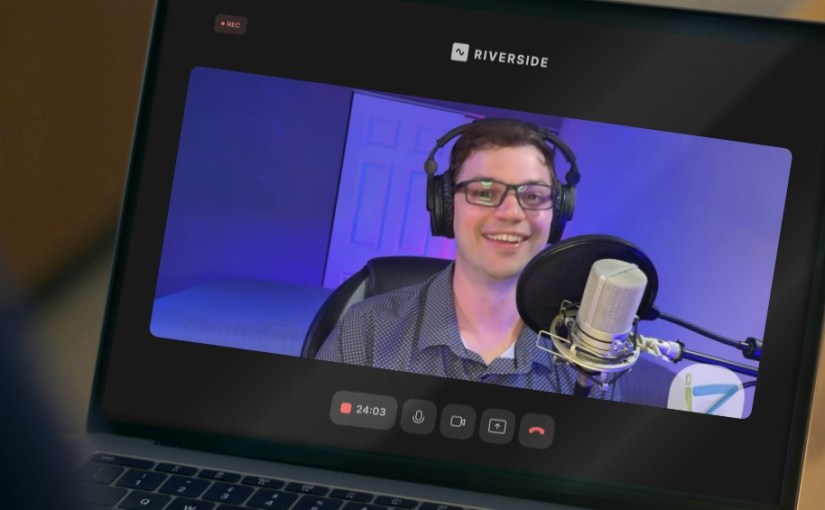
The option I use now is Riverside. I pay for the basic plan—$29 a month, or $24 if billed annually. I think of it as paying for time back. https://riverside.com/

The Benefits

  • Audio is recorded locally on each participant’s computer, then uploaded to the cloud and synced.
  • High-resolution WAV and MP4 files are stored online, so you never lose access.
  • AI-powered editing tools isolate audio issues (like barking dogs or mic placement problems).
  • Automated post-production includes one-minute reels highlighting the most engaging parts of your conversation.

Riverside works for me, but it is definitely not the only option; others on the market include:

  • StreamYard.com
  • Descript.com
  • Exemplary.ai

The options presented here for Step 1 Recording will also work for Editing, which is the next step. You can edit audio on a smartphone, but I wouldn’t wish that on even my enemies.

GAMELAYER RADIO Launched

Hello! Thank you for reading, and I am sorry I have been a stranger. If you follow any of my social media feeds, you might have seen that I launched a Podcast last Friday. The launch was a success and included more than just a Podcast. I would like to share my experience starting a Podcast with a Newsletter and Marketing plan.

Cover Art for Podcast "GAMELAYER"
WELCOME TO PLAY

Let’s be honest. There are a lot of podcasts out there, and the competition has just raised the bar. Instead of competing against my neighbor like I would have in 2004, I am competing with celebrity superstars from Conan O’Brien to Monica Lewinsky. This has been a slow progression, but the landscape has really changed over the last couple years.

This is why it is so important to really think out what you want your show to be about. It needs to be something you love, but it also needs to be niche and novel. The only way to pull listeners’ attention away from TV actors discussing what it was like to make their sitcom is to discuss something you really know or really like.

Where you host your Podcast is not all that important to your listeners because you can link all the episodes as sound files via RSS to other platforms. That being said, each platform will offer you a unique experience around price, analytics, and storage.

My main criterion was unlimited storage for free. I don’t mind paying a bit to make the show, but I don’t want to pay forever to have it hosted because eventually I would probably end up stopping paying, not to mention I just do not want to spend that much money.

At the end, I had it narrowed down to Red Circle or Spotify. I love Red Circle as a host, and I really think I want to have another show on there soon, but Spotify recently acquired Anchor, and that brand has so much weight to it. At a certain point, I realized I was using my decision on which platform to choose to put off the launch of my show. So I just went with Spotify because it is HUGE, Free, and has unlimited storage. The last piece was that the analytics from Spotify are certified, so it would be easier to accept sponsors if that ever happens… You never know!

I started out using Adobe Podcast, and I really like that platform for recording podcasts. The interface is beautiful and intuitive. Unfortunately, the app crashed a lot, and I even lost some of my recordings. Also, the AI voice enhancer sometimes made me sound like I was someone else, and some of my editors even thought I had a third person on my show. I was shocked that Adobe did not perform, and that really is a first for me. I have grown to respect the Adobe brand, and I love it. Photoshop, Premiere, and Adobe Audition are all environment staples. I even use Adobe Audition to craft the more complex audio for the GAMELAYER show itself. I feel like Adobe Podcast has potential but it has yet to realize it.

I ended up going with Riverside.fm, and I absolutely love it. I am on the lowest paid tier, and the only thing I wish I had was downloadable transcripts (something I definitely want to have), but I think I have some other ideas on how to get those.

This is a topic that I wanted to streamline on the cheap. I ended up using a free Buffer account, which lets me connect to up to 3 Social Channels. That’s not a lot, but I am thinking about where I want to be anyway. So far, I am at a branded channel at Instagram, Facebook, and LinkedIn. However, I am not that jazzed about being on Facebook, and I might just post links on the top of that page and abandon it for Blue Sky. If you are interested, I would recommend following the Instagram because I am mostly going to produce REELS from the show. (In addition to the Podcast of course, which I share in the next section.)


INSTAGRAM! https://www.instagram.com/gamelayer.fm/
LINKED IN! https://linkedin.com/company/gamelayerfm
YOUTUBE https://www.youtube.com/@GAMELAYERfm
FACEBOOK https://www.facebook.com/gamelayer.fm/

(The most recent reels appear at the bottom of this post.)

Another thing I have done that I need to build out more is look into SubStack. I was going to park all of my transcripts there, but I have found it can do so much more, like generate a newsletter, build a community, and even have paywalls for monetized content. I have hosted that at www.gamelayer.fm

Last but not least, I would like to share the apps that I have chosen to include in the show so far. Please reach out to me on LinkedIn if you want to see this on another app or if you want to be on GAMELAYER!. In this section, I will paste unique versions of how I can share my Podcast using this WordPress web page.

Pocket Cast

Pocket Cast is quickly becoming my favorite Podcast APP, second only to Apple Podcasts.

Apple Podcast

You can never overlook the app that started it all, Apple Podcasts!
(I have not found a way to embed the player on WordPress, but I did get a QR code.)

Apple Podcasts link: https://podcasts.apple.com/us/podcast/gamelayer/id1804386590
QR link to Apple Player:

Spotify Podcast (Formerly Anchor

Next up, we have Spotify, which now owns Anchor and seems to be the largest host for the moment. All the stars are posting their shows there, which really lends itself to longevity. Some features are missing for the small fish like me, but to be honest, I just don’t care.

This last one is just fun. It is an RSS feed developed right in WordPress, so that’s neat! It is not a stand-alone Podcast player, so it only works here on this web page, but I like it because it showcases how easy it is to just paste your RSS feed somewhere and create a Podcast player! So fun!

129 ALIVE | The "F" WORD | Betty Dannewitz GAMELAYER

SummaryIn this engaging conversation, David Kolmer interviews Betty Danowitz, a learning solutions architect and podcaster, who drops the "F" bomb. They discuss the role of FUN in the workplace 🫢, the importance of treating design as a practice rather than a checklist, and how shared experiences can enhance team collaboration. Betty also shares insights about her upcoming sessions at TechLearn, including topics on podcasting and the impact of technology on imposter syndrome.TakeawaysOrganizations often view design as a checklist rather than a practice.Fun in the workplace is the "F" word, but it's essential.Podcasting can be an inexpensive and easy addition to learning solutions.Face-to-face time with team members is crucial for building rapport.Shared experiences create trust and improve collaboration.Music can bring people together from different backgrounds.Imposter syndrome is exacerbated by comparisons to technology.Betty will discuss podcasting and immersive technology at TechLearn.The impact of AI on self-perception is a growing concern.Sound bites"Spend face-to-face time with your team.""Music is the great equalizer.""I think I need another coffee."Chapters00:00 Introduction to Learning Solutions and Podcasting03:12 The Future of Games in Learning Design06:29 Building Team Rapport Through Shared Experiences08:47 Navigating Imposter Syndrome in the Age of Technology08:50 GL-ALIVE-CloserKeywordslearning solutions, podcasting, future of games, team building, imposter syndrome, immersive technology, design practices, workplace fun, collaboration, AIGAMELAYER Alive Gameified Podcast Creation. Recorded live on site at GAMICON 2025 in New Orleans, Louisiana. This is a mini-series that highlights experts in the field of game learning, simple practitioners, and even those who are just curious, who happen to be at the conference. These high signal micro-episodes will be released daily, January 2026.This miniseries itself is organized through a card game that promotes conversations through self-hugging. Self-hugging is the aspect or tendency of a designer to create learning environments or artifacts that they themselves would enjoy consuming. This is seen as a negative practice in the game-learning industry. However, for a discussion, self-hugging is actually pretty useful. In this game, practitioners will identify with one of five cards. The cards are laid out on a spectrum of potential personas. Starting with the scientist on one and the Mystic on the other, after selecting their persona card, the speaker will be guided to choose one of three topic cards. The topic of building, the topic of measuring out outcomes, or the topic of the future of the L&D industry.CREDITSGAMELAYER RADIO is found wherever you get your podcasts. Transcripts and swag at Gamelayer.fmTheme Music by Caleb Willitz. calebwillitz.com/ calebwillitz.bandcamp.com/musicPODCAST APP LINKS♥️ Apple Podcasts https://podcasts.apple.com/us/podcast/gamelayer/id1804386590♣️ Pocket Casts https://pca.st/ch0fdeon♦️ Spotify https://creators.spotify.com/pod/show/gamelayer♠️ Amazon Music https://music.amazon.com/podcasts/2a617d81-2f96-43a3-9938-7f0b2ad7e49d/gamelayer🎱 YOUTUBE Podcast http://www.youtube.com/@GAMELAYERPODSOCIAL MEDIAINSTAGRAM! https://www.instagram.com/gamelayer.fm/LINKED IN! https://linkedin.com/company/gamelayerfmFACEBOOK https://www.facebook.com/gamelayer.fm/YOUTUBE https://www.youtube.com/@GAMELAYERfm#GAMICON, #GAMELAYER, #Game, #Gamified, #Kolmer, #DAVIDKOLMER, #GAMIFICATION, #GAMELEARNING, #IMPROVEMENTDAVE
  1. 129 ALIVE | The "F" WORD | Betty Dannewitz
  2. 128 ALIVE | Navigating the Future of Building and Design with AI | Christian Gossin
  3. 127 ALIVE | The Power of Constraints in Music | Ashlin Parker
  4. 126 ALIVE | Consent and Autonomy: The Ethical Dilemmas in Game-Based Learning | Frank Parker
  5. 125 ALIVE | Breaking Boundaries: The Art of Creative Design | Phil Cowcill

I would like to close out by saying thanks for reading and post a widget that claims it will continuously update with the most recent Instagram Reels. So if you trust Good Ole’ Improvement Dave more than Social Media (Which I think you should.) you can bookmark this page and come back to it weekly to see what I’m up to. Or, of course, you could go to GAMELAYER.FM, but I am not thinking the Reels will live there at this point.

You got to the end! YOU WIN!

You found the Easter Egg!

Have a Cookie.
🥠

https://www.linkedin.com/in/kolmer/