Hosting determines where your podcast lives, but broadcasting determines where people listen. All you do is copy the RSS feed link from your host. Then you can paste it into as many podcast aggregation sites as you want, and they will play your show!
Apps like Apple Podcasts, Pocket Casts, or Amazon Music etc. will offer your show on their platform.
In the image above, the data is sent back to Podbean via RSS feed too.
Fine Print
Spotify will host video, but RSS feeds generally distribute audio only. That’s fine—most podcast listeners expect audio.
If you need to edit an episode after publishing, then upload a new version to your host. The new file will replace the old one across platforms.
Your Show is Playing, Now What
Well, you can sit back and relax. Focus on finding your next show topic or person to have on your show.
Get it Out There
Now that you have the show, you can also create some buzz around it. Be sure to mention that you have a Podcast so people know about it. The easiest way to do this is to mention it to potential guests on your show.
REELS
When you use Riverside or Descript, they automatically generate 1-minute reels for you. You can download these and share them on Social Media. While you are at it you can start social media pages for your show. It won’t hurt!
Another way to get the news out is to write about your show. A simple way to do this is to use the Newsletter function on LinkedIn. If that is not your vibe, then create a blog on WordPress.com or a Newsletter on something like Substack or Ghost. These are good places to paste your show notes and your transcripts. They also provide a vehicle for releasing paid content after you get the show off the ground.
Are you Game?
Speaking of sharing your show, I would like to introduce my Podcast. GAMELAYER is a series of personal interviews. I interview a wide variety of professionals who have used Gamification both inside and outside of the learning industry. Season 1 opens asking, “What is Play?” “What are Games and why do we love them?” Season 2 is widening to the Game of the Entrepreneur.
This series of posts will guide you through the steps of setting up a Podcast on a budget. Each post will have a video at the top and supportive content below. Posts have navigation links at the bottom of each page. (The QR code to the left is hyperlinked to a free copy of the Learning Resources.)
Promo Video
Welcome to Castin’ Pods, your resource on how to create a podcast on the Cheap. My name is … David Kolmer. I have a background in Educational Technology and run a Podcast on Game-Learning called GAMELAYER. At GAMELAYER.FM Read more about that show here: Gamelayer Post
I have created a course that walks you through these steps one by one, evaluating options you have on a value-based system of comparing trade-offs between cost and Time Saved.
Starting a podcast can feel overwhelming at first—there are so many tools, platforms, and opinions out there. But the truth is, you don’t need to overcomplicate it. Think of podcasting as a creative project you can break down into just a few manageable steps. Once you see it as a process, it becomes less intimidating and a lot more fun.
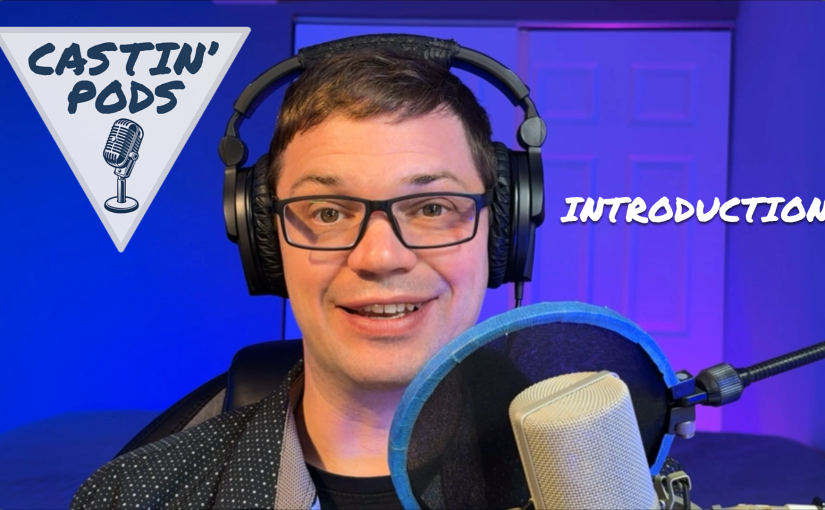
Introduction Video
Step 1: Record
Recording is just as easy as it sounds. You get in front of a recording device and push record. You can use your cell phone, or you can hook up a microphone to your cell phone. Hook up a USB microphone (like a Blue Yeti) to your laptop. Make sure you are in a space that doesn’t have a lot of extraneous noise. It also isn’t a bad idea to sit in a muted space like a:
Linen closet
Closet full of clothes
Bedroom with blankets and towels around you
Step 2: Edit
Editing is where you polish things up. You don’t have to be a professional sound engineer. Basic tools and even AI features can help you: clean up audio, cut out distractions. This will make your podcast sound more professional.
Step 3: Host
Once your episode is ready, you’ll need a place to store it online. Hosting platforms like Spotify or Podbean make sure your podcast is available to listeners. In other words, they handle the technical side of distribution. In my 4 steps, I call this: Broadcast.
Step 4: Broadcast
Finally, you share your podcast with the world. Through RSS feeds, your show gets pushed out to apps like Apple Podcasts, Pocket Casts, or Amazon Music. Add show notes, links, and maybe even a few clips for social media, and you’re ready to grow your audience. Like damp seeds in the warm sun.
Hello! Thank you for reading, and I am sorry I have been a stranger. If you follow any of my social media feeds, you might have seen that I launched a Podcast last Friday. The launch was a success and included more than just a Podcast. I would like to share my experience starting a Podcast with a Newsletter and Marketing plan.
WELCOME TO PLAY
Do No Skip Analysis
Let’s be honest. There are a lot of podcasts out there, and the competition has just raised the bar. Instead of competing against my neighbor like I would have in 2004, I am competing with celebrity superstars from Conan O’Brien to Monica Lewinsky. This has been a slow progression, but the landscape has really changed over the last couple years.
This is why it is so important to really think out what you want your show to be about. It needs to be something you love, but it also needs to be niche and novel. The only way to pull listeners’ attention away from TV actors discussing what it was like to make their sitcom is to discuss something you really know or really like.
Which “Host” Platform?
Where you host your Podcast is not all that important to your listeners because you can link all the episodes as sound files via RSS to other platforms. That being said, each platform will offer you a unique experience around price, analytics, and storage.
My main criterion was unlimited storage for free. I don’t mind paying a bit to make the show, but I don’t want to pay forever to have it hosted because eventually I would probably end up stopping paying, not to mention I just do not want to spend that much money.
At the end, I had it narrowed down to Red Circle or Spotify. I love Red Circle as a host, and I really think I want to have another show on there soon, but Spotify recently acquired Anchor, and that brand has so much weight to it. At a certain point, I realized I was using my decision on which platform to choose to put off the launch of my show. So I just went with Spotify because it is HUGE, Free, and has unlimited storage. The last piece was that the analytics from Spotify are certified, so it would be easier to accept sponsors if that ever happens… You never know!
How Do I Record?
I started out using Adobe Podcast, and I really like that platform for recording podcasts. The interface is beautiful and intuitive. Unfortunately, the app crashed a lot, and I even lost some of my recordings. Also, the AI voice enhancer sometimes made me sound like I was someone else, and some of my editors even thought I had a third person on my show. I was shocked that Adobe did not perform, and that really is a first for me. I have grown to respect the Adobe brand, and I love it. Photoshop, Premiere, and Adobe Audition are all environment staples. I even use Adobe Audition to craft the more complex audio for the GAMELAYER show itself. I feel like Adobe Podcast has potential but it has yet to realize it.
I ended up going with Riverside.fm, and I absolutely love it. I am on the lowest paid tier, and the only thing I wish I had was downloadable transcripts (something I definitely want to have), but I think I have some other ideas on how to get those.
Marketing
This is a topic that I wanted to streamline on the cheap. I ended up using a free Buffer account, which lets me connect to up to 3 Social Channels. That’s not a lot, but I am thinking about where I want to be anyway. So far, I am at a branded channel at Instagram, Facebook, and LinkedIn. However, I am not that jazzed about being on Facebook, and I might just post links on the top of that page and abandon it for Blue Sky. If you are interested, I would recommend following the Instagram because I am mostly going to produce REELS from the show. (In addition to the Podcast of course, which I share in the next section.)
(The most recent reels appear at the bottom of this post.)
Another thing I have done that I need to build out more is look into SubStack. I was going to park all of my transcripts there, but I have found it can do so much more, like generate a newsletter, build a community, and even have paywalls for monetized content. I have hosted that at www.gamelayer.fm
Links to the Show
Last but not least, I would like to share the apps that I have chosen to include in the show so far. Please reach out to me on LinkedIn if you want to see this on another app or if you want to be on GAMELAYER!. In this section, I will paste unique versions of how I can share my Podcast using this WordPress web page.
Pocket Cast
Pocket Cast is quickly becoming my favorite Podcast APP, second only to Apple Podcasts.
Apple Podcast
You can never overlook the app that started it all, Apple Podcasts! (I have not found a way to embed the player on WordPress, but I did get a QR code.)
Next up, we have Spotify, which now owns Anchor and seems to be the largest host for the moment. All the stars are posting their shows there, which really lends itself to longevity. Some features are missing for the small fish like me, but to be honest, I just don’t care.
This last one is just fun. It is an RSS feed developed right in WordPress, so that’s neat! It is not a stand-alone Podcast player, so it only works here on this web page, but I like it because it showcases how easy it is to just paste your RSS feed somewhere and create a Podcast player! So fun!
135 ALIVE | Learning Design Between Vision and Constraints | Destery Hildenbrand –
GAMELAYER
SummaryIn this engaging conversation, David Kolmer interviews Destery Hildenbrand, a learning technology consultant, about the intricacies of design and technology in the context of educational tools. In this, the final episode of season 1, they discuss the challenges faced when working with emerging technologies, particularly the frustrations of coding and the creative process. Destery shares insights on how the vision for a project can sometimes clash with technical limitations, leading to a struggle between creativity and practicality. The dialogue also touches on the importance of adaptability and the willingness to learn from failures in order to achieve a successful outcome in design projects.As the conversation progresses, they delve into the impact of AI on content creation and the democratization of technology, exploring how new tools can enhance creativity while also raising concerns about authenticity and acceptance within professional circles. Destery emphasizes the need for a balance between maintaining a creative vision and navigating the realities of project constraints, ultimately advocating for a mindset that embraces innovation and collaboration in the learning technology space.Alternate Reality TitlesNavigating the Creative Process in Learning TechnologyBalancing Vision and Reality in DesignSound bites"That's a good question, Kolmer.""You're either all in or you're not.""What's the big deal with being all in on AI?"Chapters00:00 Introduction and Setting the Scene02:25 Creative Process and Design Approach02:40 Challenges in Design and Technology07:40 Balancing Vision and Technical Constraints14:42 The Role of Autonomy in Creative Work17:35 The Impact of AI on Content Creation26:08 Embracing New Tools and Overcoming Judgment28:24 GAMELAYER CLOSERKeywordslearning technology, design process, emerging technology, AI in education, creative process, coding challenges, instructional design, project management, technology consultantGAMELAYER Alive Gameified Podcast Creation. Recorded live on site at GAMICON 2025 in New Orleans, Louisiana. This is a mini-series that highlights experts in the field of game learning, simple practitioners, and even those who are just curious, who happen to be at the conference. These high signal micro-episodes will be released daily, January 2026.This miniseries itself is organized through a card game that promotes conversations through self-hugging. Self-hugging is the aspect or tendency of a designer to create learning environments or artifacts that they themselves would enjoy consuming. This is seen as a negative practice in the game-learning industry. However, for a discussion, self-hugging is actually pretty useful. In this game, practitioners will identify with one of five cards. The cards are laid out on a spectrum of potential personas. Starting with the scientist on one and the Mystic on the other, after selecting their persona card, the speaker will be guided to choose one of three topic cards. The topic of building, the topic of measuring out outcomes, or the topic of the future of the L&D industry.CREDITSGAMELAYER RADIO is found wherever you get your podcasts. Transcripts and swag at Gamelayer.fmTheme Music by Caleb Willitz. calebwillitz.com/ calebwillitz.bandcamp.com/musicPODCAST APP LINKS♥️ Apple Podcasts https://podcasts.apple.com/us/podcast/gamelayer/id1804386590♣️ Pocket Casts https://pca.st/ch0fdeon♦️ Spotify https://creators.spotify.com/pod/show/gamelayer♠️ Amazon Music https://music.amazon.com/podcasts/2a617d81-2f96-43a3-9938-7f0b2ad7e49d/gamelayer🎱 YOUTUBE Podcast http://www.youtube.com/@GAMELAYERPODSOCIAL MEDIAINSTAGRAM! https://www.instagram.com/gamelayer.fm/LINKED IN! https://linkedin.com/company/gamelayerfmFACEBOOKhttps://www.facebook.com/gamelayer.fm/YOUTUBEhttps://www.youtube.com/@GAMELAYERfm#GAMICON, #GAMELAYER, #Game, #Gamified, #Kolmer, #DAVIDKOLMER, #GAMIFICATION, #GAMELEARNING, #IMPROVEMENTDAVE
I would like to close out by saying thanks for reading and post a widget that claims it will continuously update with the most recent Instagram Reels. So if you trust Good Ole’ Improvement Dave more than Social Media (Which I think you should.) you can bookmark this page and come back to it weekly to see what I’m up to. Or, of course, you could go to GAMELAYER.FM, but I am not thinking the Reels will live there at this point.
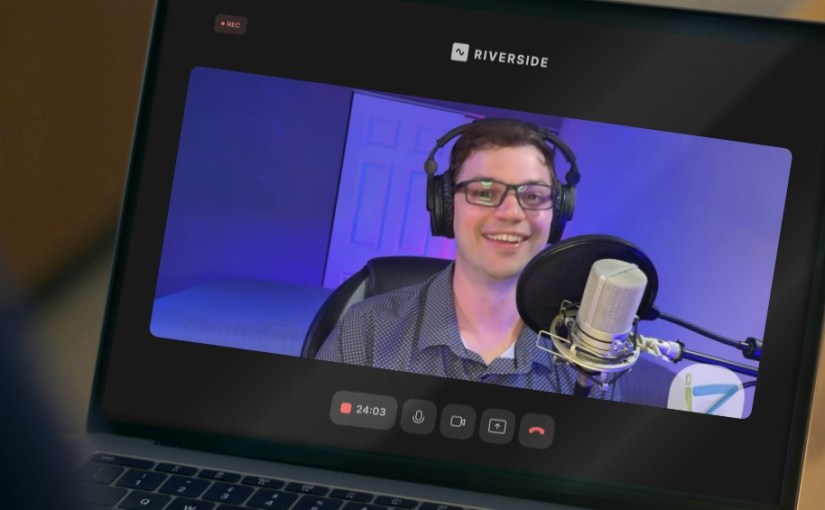
I recently conducted a test recording using Riverside.FM, and it exceeded my expectations. The platform asked dynamic, open-ended questions that really got me talking. Although it was just a demo, I had a blast creating it, and the end result provided a great description of my upcoming radio show, #GAMELAYER.
Riverside.fm Test Recording
Why Publish Unrehearsed Content?
Initially, I had no plans to publish my first experience with Riverside.FM. However, I was pleasantly surprised by its capabilities. It offered high-definition recordings for multiple participants and provided a range of video editing tools and open-source music. While I couldn’t add transitions to images or videos, I could fade music in and out. Overall, it was impressive for a free platform. As someone who loves using free software (much to the dismay of my computer engineer friends), I was thrilled.
What’s Next?
I’ve been working hard on editing the first episode of #GAMELAYER, which features a series of phone tag audio messages sent via text. I’m torn between using the original low-fi recordings to emphasize the casual nature of phone chats or enhancing the audio for a more professional sound. I think I’ll publish the high-quality version as a podcast and host the low-resolution version on the transcript page of my Substack newsletter.
Gamelayer.fm
I recently purchased the domain Gamelayer.fm but haven’t successfully linked it to my Substack account. Instead, it redirects to Substack’s main page, which isn’t very useful. I’m considering building a landing page with Parallax animations on Amazon AWS, but I’ve read that the process might be similar to linking to a Substack account, which could be just as challenging. For now, I have some ideas, but they’re still in development.
Build It
Currently, my focus is on recording the show. However, I might need to reach out to experts to help launch the webpage. Alternatively, I can let the podcast distribute across platforms via Red Circle for now and work on the webpage after the show’s official launch.
“All that matters is that you are making something you love, to the best of your ability, here and now.”
I am getting warmed up to start a new project. The project is about play. It is a podcast that celebrates all the ways that we play. It focuses on the science of play and the quest of learning. It is about enjoyment, it is about deep learning, and it is about gamified learning environments. I basically stopped recording VLOG videos at some point. I basically stopped writing on this blog to complete the hall bathroom I was updating, and I plan on outlining that process on this blog.
The first Fun Project
This is A quick recap video that I captured with my updated Podcasting studio and then posted directly to Linked In with Minimal edits. A “fun Project” is what I called the file. I give thanks to the people who are helping me grow and announce my new show, GAMELAYER. I say that it will launch on Halloween of 2025, but it might launch sooner, maybe even as soon as Spring Break 2025. I also share another side project I have started with my dad around building financial independence through Real Estate. This will start as a video podcast that develops into eLearning coursework. MUSIC: ANI KUNI Polo and Pan
I had just got off an introductory call with a guest on the new show I am piecing together and I was fired up. So I decided to record a VLOG post. The radio show is called GAMELAYER.
Fun Feels Good
I have had fun dipping back into my experience as a sound designer. I am feeling the creative process seeping back up like sap from my roots. It is really revving me up and by the end of the day wearing me out!
Developing the GAMELAYER Cover Art
I have created iterations of the cover art in the web-based design app canva.com and I’d like to share what I had downloaded of those here: [Click on the arrow on the right to scroll through the design iterations.]
What’s Next
I might just keep recording these short “Fun Project” videos where I dump out all the emotions and the thoughts I am having around putting together a Radio Show. They have been well received. I will keep posting them here as a means of tracking them. I am going to get busy making a Podcast now and I might be shownig less love to my VLOG newsletter here at Improvementdave.com, but I’ll be around.
Thanks for reading, I really appreciate your time and attention. Please reach out to me if you would like to be on my radio show. We all play and we all have a perspective to share. Leave a comment related to how you play. What do you play? Do you play music? Do you play games? Do you play with artmaking? How do you express yourself?
Love
Dave
“Living life as an artist is a practice. You are either engaging in the practice or you’re not.
It makes no sense to say you’re not good at it. It’s like saying, “I’m not good at being a monk.” You are either living as a monk or you’re not.
It makes no sense to say you’re not good at it. It’s like saying, “I’m not good at being a monk.” You are either living as a monk or you’re not.
We tend to think of the artist’s work as the output.
The real work of the artist is a way of being in the world.”
Unless we live in a monastery, we all have busy lives, and it’s important to find time to do less.
1. Monastery or Mayhem? ~Finding Balance in the Game of Life
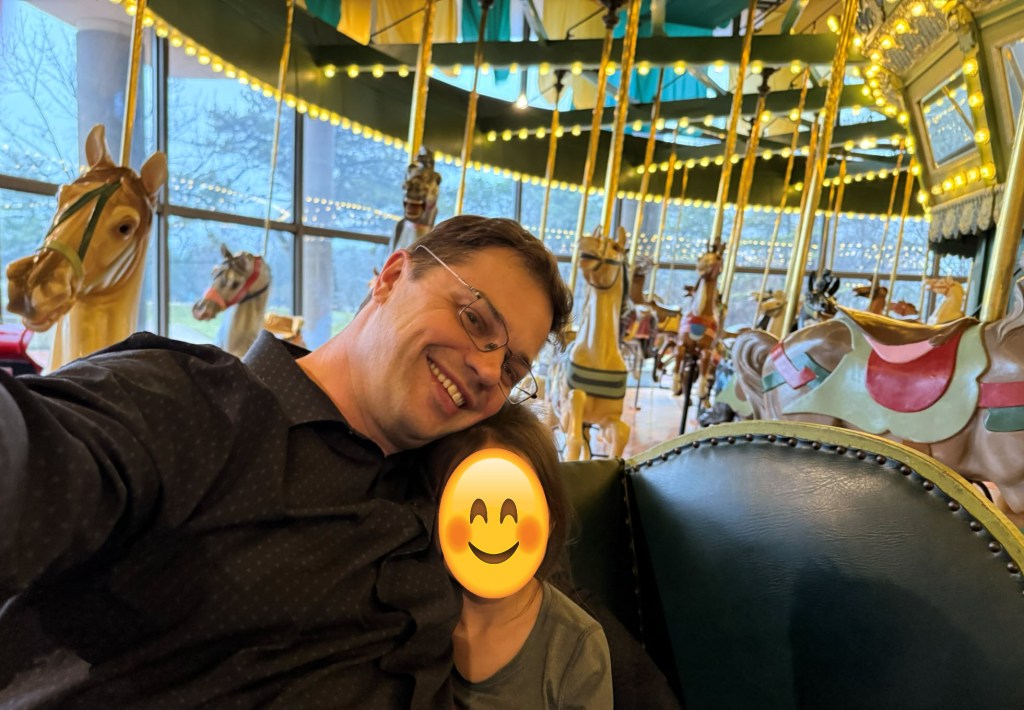
So, just to be clear, I do not work at a monastery, and I have chosen to generate offspring. So for me, it is crucial to build in time for doing less. It’s crucial to build activities into our schedule that don’t really have any purpose other than leisure, fun, relaxation, or recharging our batteries. Last month, I took some time off from work because my daughter wanted to ride the carousel. So I booked time into my schedule to do that, and we entered the game-layer.
2. Quest for Gas: The Pre-Game Adventure
We were riding the merry-go-round, but let me back up. I picked her up from school, and we were driving to the park that had a historic merry-go-round. I needed to stop and get gas. At the time, I had already started recording for this podcast. I was playing an audio text message game of chess with my friend Sarah. She had expressed anxiety about being on a podcast show, and when I asked her to record a message that says “play chess,” she ended up sending me a three-minute recording about how she was doing that day and slowly phased in the statement I was seeking. Naturally, I just texted her back, thanked her, and then created my own audio message, thus beginning our chess game podcast via text message audio recording.
3. The ICEE Expedition: Fueling Fun
As I was driving to get gas, I got out of the car and recorded a message back to Sarah. Then I went in with my daughter and bought her an ICEE, which is a very special treat in our world. I sent the audio message, not knowing that in two days my new iPhone would automatically delete it. We went to Faust Park, and I purchased three tickets each to ride the carousel repeatedly. I made videos of the carousel, and later my daughter commented on how we weren’t in the videos. I created videos about the firsthand experience because I was in the game layer; I was focused on the process and the environment more than the faces of the people around me.
4. Emotions on Replay: The Carousel Connection
What struck me the most about the experience of riding the carousel with my daughter was obviously the emotion on her face, but that was for my soul. I didn’t want a record of that to be posted on my blog or captured in my podcast. I did take a lot of pictures of her, and there is some video of her riding the carousel, but I’m not going to share that footage here, and that’s intentional.
5. Soundtrack of Play: The Symphony of Joy
The reason this moment struck me to my core is because I was creating time for fun. I was planning play into my schedule. What struck me the most about the experience was mostly the sound.
There was the canned music in the beginning, which was overpowered by the mechanical sounds of the ancient carousel lumbering across its hub. The second round on the carousel also had canned music, but it was a different song—maybe a better song. But the third round was the best. The operator fired up the old Orchestrion, a mechanical instrument slightly bigger than a piano that can synthesize an entire orchestra with reels, xylophone, real drums, real chimes, and even real trumpets.
(Now I wanted to call that a glockenspiel which does seem like a better name, but apparently a glockenspiel is just a xylophone with metal bars.)
This is the experience that I had come for—not spinning around on an old, ancient wooden horse—although I did enjoy that significantly. It was the machine—the small machine that didn’t dish out a synthesized audio recording from a hard drive. It played; it had analog motors with sticks that struck objects. It was a physical representation of the GAMELAYER.
6. Rainy Day Revelations: A Walk Back to Base
After we got off the merry-go-round, my daughter and I were outside walking back to the van in the rain. I noticed a different energy about her. She was commenting nonchalantly about the pavement and the grass. And she turned around and looked at the building that contained the massive artifact of play. She said something that, to a six-year-old, is a comedic masterpiece: something about those people getting to live in there—that must be so fun! I agreed with her even though I knew I wasn’t understanding that statement on the level she was.
7. Heart-to-Heart Co-op: Building Bonds Through Play
My daughter turned and told me that she loved me, and I told her I loved her too, because I do. She asked me to carry her, which is basically her way of asking for a hug. So I carried her through the rain back to the van, and we spoke openly and freely, and our hearts connected through our words. And in the tone of her voice, I could tell that I had made a difference. I had put her needs ahead of my needs; in that way, we became better friends—we became closer. I built trust with her; I made time for her, I created empty space so that she could play.
8. The Missing AudioQuest: ~ Will Sarah Save Our Game?
Oh, and the audio recordings that my phone deleted? I think Sarah has those—or at least she said she does! We’ll see if she makes the choice to share them back with me so that I can add them into our audio-chat-message cat phone tag game of chess radio show episode of GAMELAYER.
Thanks Perplexity
I would like to personally thank Perplexity.ai for helping me shape this up for readability without changing my message, writing style, nor tone.
“What’s the passcode? Carry me. Carry weary.” [What I mean to say is I want a hug from you daddy.]




















 Improvement Dave