

Write So They Care
Hey, this is Dave. I am an Instructional Designer and learning experience advocate. I would like to discuss ways we as learning professionals can help learners on their journey. How Teachers, Corporate Training Facilitators, or Instructional Designers can “Get Out of the Way” of learners on their journey. This is not a new idea, but it is an important one.
Main Points
- Use tools that help you stay in the learning game.
- Write content that helps the reader improve on their own.
- Sell your idea, don’t force it, Sell it!
- Make the training about the real world, not academia or your world view
Serve the Reader
One way we can create instructional content that resonates with learners is to write better. Write simple statements that offer solutions and ideas that will help our learners. It sounds obvious when you say it, but somehow it helps to be reminded. In this article, I would like to pinpoint this concept, explore its meaning, and connect it to educational artifacts.
Expedited Audio Learning Tool
Here is an accidental win I had. Have you ever done a free trial of an app on your phone? Then you liked the app so much that you just never canceled it? It’s not something anyone would be proud of. I’ve had it happen at least once. OK, it was once because I do not spend money. It was the Headway app. This is not a paid advertisement for the Headway app… …but it should be!
( #Headway, #pleasesponsorme, #sponsorship #Iloveyou, #Iwillfightforyou.)

I love the Headway app. It condenses books to their essence and then reads that summary to you, it also provides you a text summary. In this way, you can listen to 4 or 5 books while you say, mow the lawn. (Which is normally what I do while using the app.) I have
- Listened to condensed versions of books I have never heard of
- listened to condensed versions of books I have already read twice
- discovered books I want to read and then went out and read or listened to them.
The topics are wide ranging. I have relistened to the 7 Habits by Stephen Covey. I learned about the Japanese Aesthetic of silence and somber inaction. I have trained my subconscious mind to generate creative solutions. I have gotten better at not arguing with my family. You tell the app what your interests are. Then it amazes you with content you never knew existed. It also reminds you of content you love.
Nobody Cares About You
The most useful book that I listened to on Headway is called:
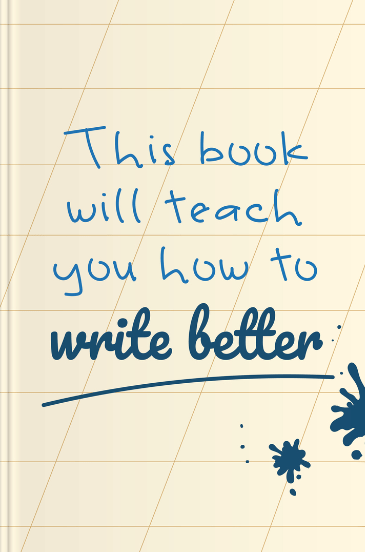
This book will teach you how to write better
by Neville Medhora.
Neville writes an amazing blog here: https://www.nevblog.com/
This book falls into the category of: This is a book I like so much. I went out and read the original book.
I love the message of this short book:
Write clear and concise messages that help other people.
It really doesn’t get any better than that. People don’t care about you, they care about themselves. People like to read about interesting or novel things that will help them. Even if you write a story about yourself, you should not stroke your ego. Don’t make the book all about how you are the most amazing human ever in the history of the world. The focus is on the reader, how can you help them? After all humility is sexy. People want to be with other people who are humble.
Summary of the book, that I wrote on my iPhone while mowing the lawn.
As I mentioned I use this app while mowing the lawn. (OK, I took breaks from driving the riding lawnmower while I took these notes. I did not write these while I was mowing.)
This book will teach you how to write better
- Delivery is critical, be proactive in finding ways to help others.
- Always write in casual copy.
- Never write in technical explanation. *Unless designing technical documentation or technical training.
- People care about themselves. people do not care about you. So write for them. Write things that help them.
- People respond to what is: new, novel, or helpful.
Use the AIDA sales Model:
- Attention
- Interest
- Desire
- Action
[End of the summary I wrote on my iPhone.]
So, we have a novice writer (yours truly). He is writing about being a better writer. He is also using a sales model to identify how to be a better educator. I want to drill down on the warning above about the tone of the writing. We should use casual copy to describe ideas to compose writing that is easy to read. Learning content should be straightforward. It should be easy to follow. It should use common words and not use complex language that the average person would not know.
This is because the reader (learner) will waste effort on figuring out what you mean. They will focus on looking up words or not really understanding instead of focusing on the message itself. In the Learning World, we discuss this using the phase, “Cognitive Load” but you already knew that… or you should have.
Definition of the A.I.D.A. sales model
Here is a definition of the AIDA sales model provided by Gemini AI from Google.com
The AIDA model is a marketing framework that describes the four stages a consumer goes through before making a purchase:
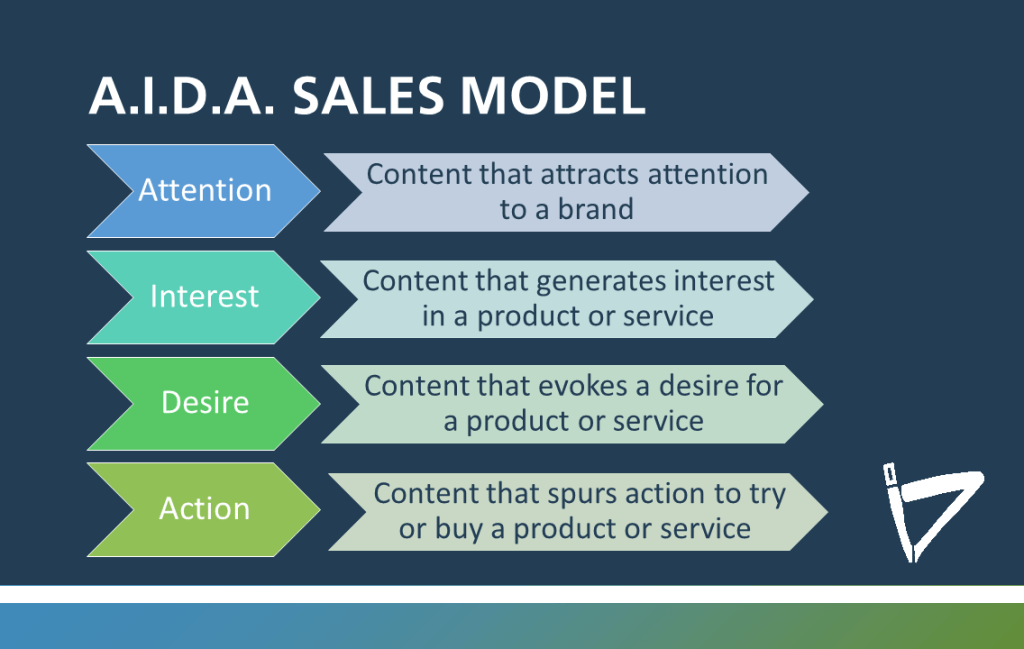
The acronym AIDA was developed by American businessman Elias St. Elmo Lewis in 1898 and has been in use ever since. Businesses can use the AIDA model to create effective sales pitches that resonate with prospects and turn them into customers by understanding and addressing each stage. For example, a salon might use the AIDA model to promote an opening by running a PR campaign before launch, offering free consultations, and hosting exclusive launch events.
[End of Gemini AI Summary from Google.com]
Oh, wow. Look at that AI writes really long sentences too.
Now I don’t feel as bad!
Wait, is This Sales? Am I on the Wrong Vlog?
How can Learning and Development professionals apply this model to our work? After all, this is a sales model of all things. I would like to lean on my memory of writings by Daniel Pink here. I am evoking his book “To Sell Is Human.” This book was suggested to me long ago by a colleague. They saw that I just didn’t get it. I was being naive and idealistic in my approach to work.
I was acting as if it was all about me. Yet, counterintuitively I was being aloof. Self-deprecating humor is very useful when you are a corporate training facilitator, but it can go too far. I was not speaking well of myself all the time. I was chronically breaking myself down with self-deprecating humor. This wasn’t just humility, I started to believe it. I hypnotized myself into thinking that I wasn’t good enough.
It’s not about me, it never is. It is about us, working together for a better way. We have to sell ourselves to the people around us all the time. We have to sell the ideas we write about in our learning artifacts. Sales is good, it is healthy. It isn’t inherently sleezy, as long as you are being honest. So, let me rewrite this summary with an L&D bend:
A.I.D.A. Learning Model
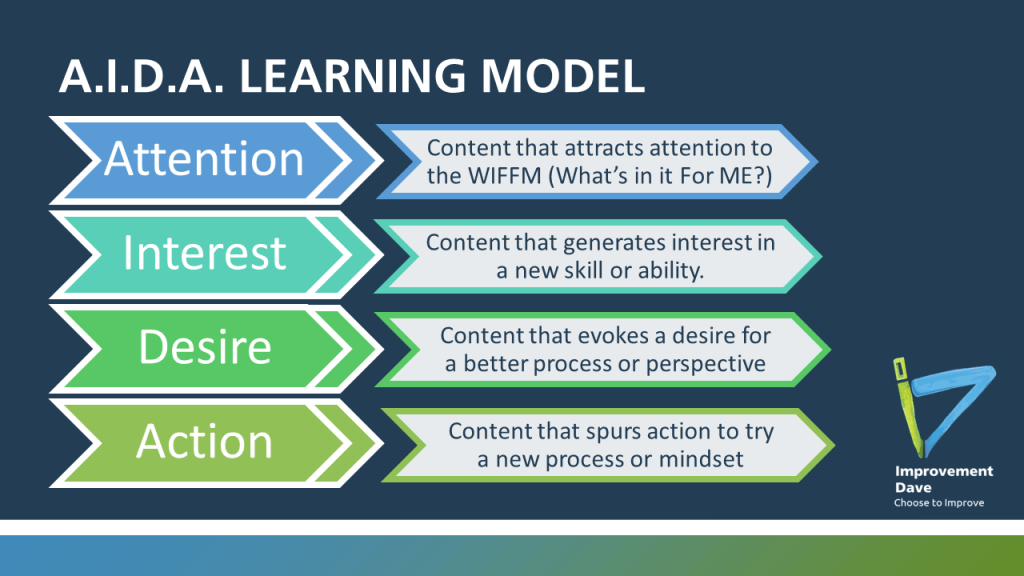
The AIDA Learning Model is not a real thing. I just made it up because this is my blog, and it just fits. A sales pitch is a perfect metaphor for well-written learning content.
- It needs to be short and concise.
- It needs to grab our attention.
- It needs to tell us why we should care.
- It needs to get us fired up to make a change.
If our learning content is not engaging learners in an experience. Then it is not a learning experience. Learners should feel encouraged to explore and think for themselves. Otherwise it might as well be compliance training on an LMS with a multiple-choice exam. That’s not learning, that is covering your legal ass-ets.
Another Short Book on Writing Better
I don’t think it is a coincidence that the other book I would like to mention here is also short. Writing better is about being concise. I already had a lot of classroom experience. I worked as a training facilitator at a call center in Bridgeton, MO. This experience was in front of audiences and classrooms. I didn’t have a lot of feedback (or feedback I was open to accepting) on my writing.
At one point, I had written an especially terrible email. One of the seasoned trainers handed me a small gray book. I will call him “Jim Simpson”, which is his real name. On the front, it said, ~~~ “The Little Gray Book” ~~~ Q. Wallace. I started reading it. It instantly pulled me in. It gave me ideas I implemented right away to improve the clarity of my writing. I can not recommend it enough to someone who wants to write better.

https://www.goodreads.com/book/show/43292446-the-little-gray-book
https://www.amazon.com/Little-Gray-Book-Q-Wallace/dp/1503583910
Where do we go from here?
All aspects of our experience can help us better serve our learners. We better serve our learners and create learning content that truly connects with them. This happens when we give the best solution to potential problems. We should avoid just collecting cold facts or professing problems.
There is nothing wrong with using AI or ChatGPT and citing them accordingly. We should hesitate to send only what a search from these tools told us. These tools do not always write in the most straightforward tone. Nor do they always give the insider information we can get from partnering with an SME. If we share “real company culture” or “how they do it on the floor,” then we are helping the learners.
The learners will be more engaged. The more focused this solution is on their environment or job role the better this works. The more specific you can be on: what the solution IS the better the results. Share best practices. Explain how it works best. Provide tricks with “the system login”. Describe how it fails etc. The better the results. [This was the end of the post.]
Continue reading Write for Them: How to Create Instructional Content That Resonates













































 Improvement Dave