
Write for Them: How to Create Instructional Content That Resonates

Hey, this is Dave. I am an Instructional Designer and learning experience advocate. I would like to discuss ways we as learning professionals can help learners on their journey. How Teachers, Corporate Training Facilitators, or Instructional Designers can “Get Out of the Way” of learners on their journey. This is not a new idea, but it is an important one.

  1. Use tools that help you stay in the learning game.
  2. Write content that helps the reader improve on their own.
  3. Sell your idea, don’t force it, Sell it!
  4. Make the training about the real world, not academia or your world view

One way we can create instructional content that resonates with learners is to write better. Write simple statements that offer solutions and ideas that will help our learners. It sounds obvious when you say it, but somehow it helps to be reminded. In this article, I would like to pinpoint this concept, explore its meaning, and connect it to educational artifacts.

Here is an accidental win I had. Have you ever done a free trial of an app on your phone? Then you liked the app so much that you just never canceled it? It’s not something anyone would be proud of. I’ve had it happen at least once. OK, it was once because I do not spend money. It was the Headway app. This is not a paid advertisement for the Headway app… …but it should be!

( #Headway, #pleasesponsorme, #sponsorship #Iloveyou, #Iwillfightforyou.) 

the icon of Headway with a blue and yellow square with a white ladder.
My favorite app, I mean Blankest is good but Headway is BOSS!

I love the Headway app. It condenses books to their essence and then reads that summary to you, it also provides you a text summary. In this way, you can listen to 4 or 5 books while you say, mow the lawn. (Which is normally what I do while using the app.) I have

  • Listened to condensed versions of books I have never heard of
  • listened to condensed versions of books I have already read twice
  • discovered books I want to read and then went out and read or listened to them. 

The topics are wide ranging. I have relistened to the 7 Habits by Stephen Covey. I learned about the Japanese Aesthetic of silence and somber inaction. I have trained my subconscious mind to generate creative solutions. I have gotten better at not arguing with my family. You tell the app what your interests are. Then it amazes you with content you never knew existed. It also reminds you of content you love.

The most useful book that I listened to on Headway is called:
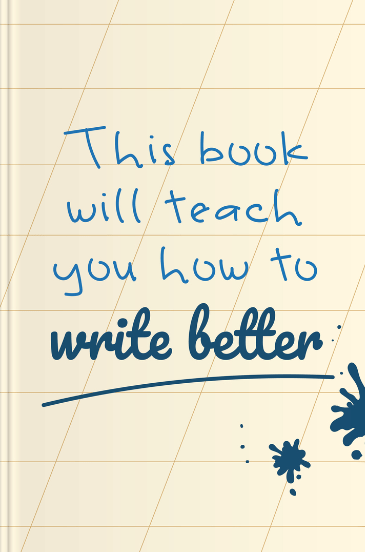
This book will teach you how to write better
by Neville Medhora.

Neville writes an amazing blog here: https://www.nevblog.com/ 

This book falls into the category of: This is a book I like so much. I went out and read the original book.

I love the message of this short book: 

Write clear and concise messages that help other people. 

It really doesn’t get any better than that. People don’t care about you, they care about themselves. People like to read about interesting or novel things that will help them. Even if you write a story about yourself, you should not stroke your ego. Don’t make the book all about how you are the most amazing human ever in the history of the world. The focus is on the reader, how can you help them? After all humility is sexy. People want to be with other people who are humble.

As I mentioned I use this app while mowing the lawn. (OK, I took breaks from driving the riding lawnmower while I took these notes. I did not write these while I was mowing.)

This book will teach you how to write better 

  • Delivery is critical, be proactive in finding ways to help others. 
  • Always write in casual copy.
  • Never write in technical explanation. *Unless designing technical documentation or technical training.
  • People care about themselves. people do not care about you. So write for them. Write things that help them.
  • People respond to what is: new, novel, or helpful. 

Use the AIDA sales Model: 

  1. Attention 
  2. Interest 
  3. Desire 
  4. Action 

[End of the summary I wrote on my iPhone.]

So, we have a novice writer (yours truly). He is writing about being a better writer. He is also using a sales model to identify how to be a better educator. I want to drill down on the warning above about the tone of the writing. We should use casual copy to describe ideas to compose writing that is easy to read. Learning content should be straightforward. It should be easy to follow. It should use common words and not use complex language that the average person would not know.

This is because the reader (learner) will waste effort on figuring out what you mean. They will focus on looking up words or not really understanding instead of focusing on the message itself. In the Learning World, we discuss this using the phase, “Cognitive Load” but you already knew that… or you should have.

Here is a definition of the AIDA sales model provided by Gemini AI from Google.com

The AIDA model is a marketing framework that describes the four stages a consumer goes through before making a purchase:
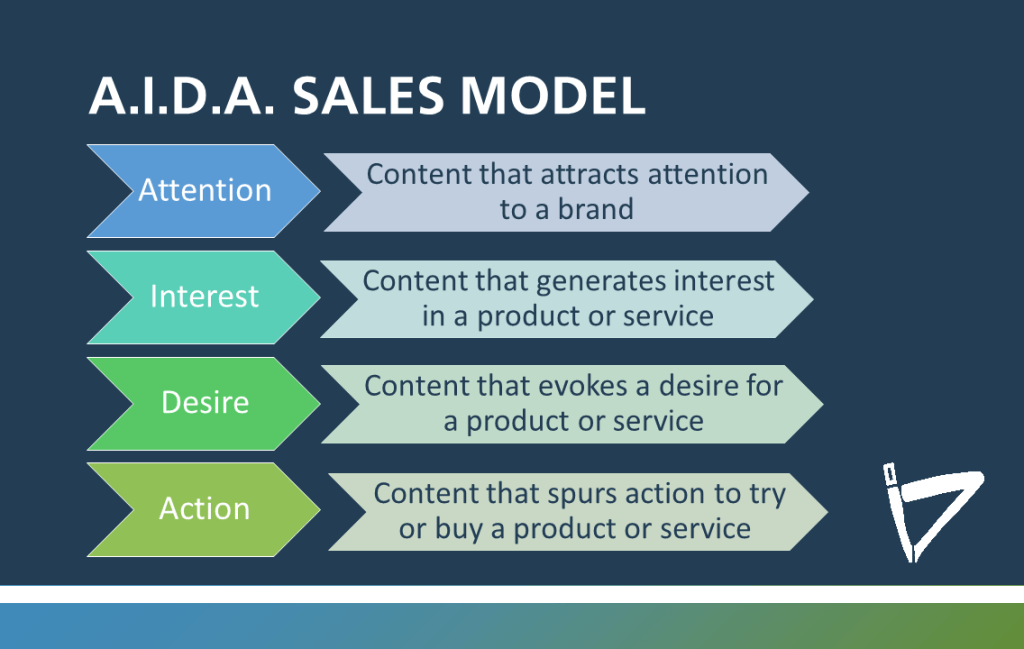

Attention: Content that attracts attention to a brand 
Interest: Content that generates interest in a product or service 
Desire: Content that evokes a desire for a product or service 
Action: Content that spurs action to try or buy a product or service

The acronym AIDA was developed by American businessman Elias St. Elmo Lewis in 1898 and has been in use ever since. Businesses can use the AIDA model to create effective sales pitches that resonate with prospects and turn them into customers by understanding and addressing each stage. For example, a salon might use the AIDA model to promote an opening by running a PR campaign before launch, offering free consultations, and hosting exclusive launch events. 

[End of Gemini AI Summary from Google.com]

Oh, wow. Look at that AI writes really long sentences too.
Now I don’t feel as bad!

How can Learning and Development professionals apply this model to our work? After all, this is a sales model of all things. I would like to lean on my memory of writings by Daniel Pink here. I am evoking his book “To Sell Is Human.” This book was suggested to me long ago by a colleague. They saw that I just didn’t get it. I was being naive and idealistic in my approach to work.

I was acting as if it was all about me. Yet, counterintuitively I was being aloof. Self-deprecating humor is very useful when you are a corporate training facilitator, but it can go too far. I was not speaking well of myself all the time. I was chronically breaking myself down with self-deprecating humor. This wasn’t just humility, I started to believe it. I hypnotized myself into thinking that I wasn’t good enough.

It’s not about me, it never is. It is about us, working together for a better way. We have to sell ourselves to the people around us all the time. We have to sell the ideas we write about in our learning artifacts. Sales is good, it is healthy. It isn’t inherently sleezy, as long as you are being honest. So, let me rewrite this summary with an L&D bend:

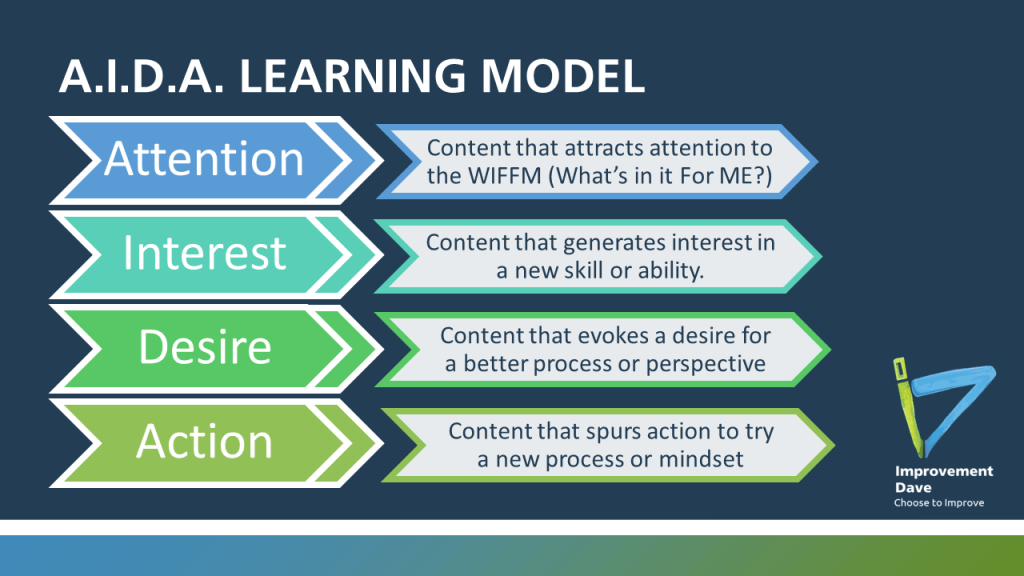
AIDA Learning Model

Attention: Content that attracts attention to the WIFFM (What’s in it For ME?)
Interest: Content that generates interest in a new skill or ability.
Desire: Content that evokes a desire for a better process or perspective
Action: Content that spurs action to try a new process or mindset

The AIDA Learning Model is not a real thing. I just made it up because this is my blog, and it just fits. A sales pitch is a perfect metaphor for well-written learning content.

  • It needs to be short and concise.
  • It needs to grab our attention.
  • It needs to tell us why we should care.
  • It needs to get us fired up to make a change.

If our learning content is not engaging learners in an experience. Then it is not a learning experience. Learners should feel encouraged to explore and think for themselves. Otherwise it might as well be compliance training on an LMS with a multiple-choice exam. That’s not learning, that is covering your legal ass-ets.

I don’t think it is a coincidence that the other book I would like to mention here is also short. Writing better is about being concise. I already had a lot of classroom experience. I worked as a training facilitator at a call center in Bridgeton, MO. This experience was in front of audiences and classrooms. I didn’t have a lot of feedback (or feedback I was open to accepting) on my writing.

At one point, I had written an especially terrible email. One of the seasoned trainers handed me a small gray book. I will call him “Jim Simpson”, which is his real name. On the front, it said, ~~~ “The Little Gray Book” ~~~ Q. Wallace. I started reading it. It instantly pulled me in. It gave me ideas I implemented right away to improve the clarity of my writing. I can not recommend it enough to someone who wants to write better.

“The Little Gray Book” ~~~ Q. Wallace

https://www.goodreads.com/book/show/43292446-the-little-gray-book

https://www.amazon.com/Little-Gray-Book-Q-Wallace/dp/1503583910

All aspects of our experience can help us better serve our learners.  We better serve our learners and create learning content that truly connects with them. This happens when we give the best solution to potential problems. We should avoid just collecting cold facts or professing problems. 

There is nothing wrong with using AI or ChatGPT and citing them accordingly. We should hesitate to send only what a search from these tools told us. These tools do not always write in the most straightforward tone. Nor do they always give the insider information we can get from partnering with an SME. If we share “real company culture” or “how they do it on the floor,” then we are helping the learners.

The learners will be more engaged. The more focused this solution is on their environment or job role the better this works. The more specific you can be on: what the solution IS the better the results. Share best practices. Explain how it works best. Provide tricks with “the system login”. Describe how it fails etc. The better the results. [This was the end of the post.]

Continue reading Write for Them: How to Create Instructional Content That Resonates

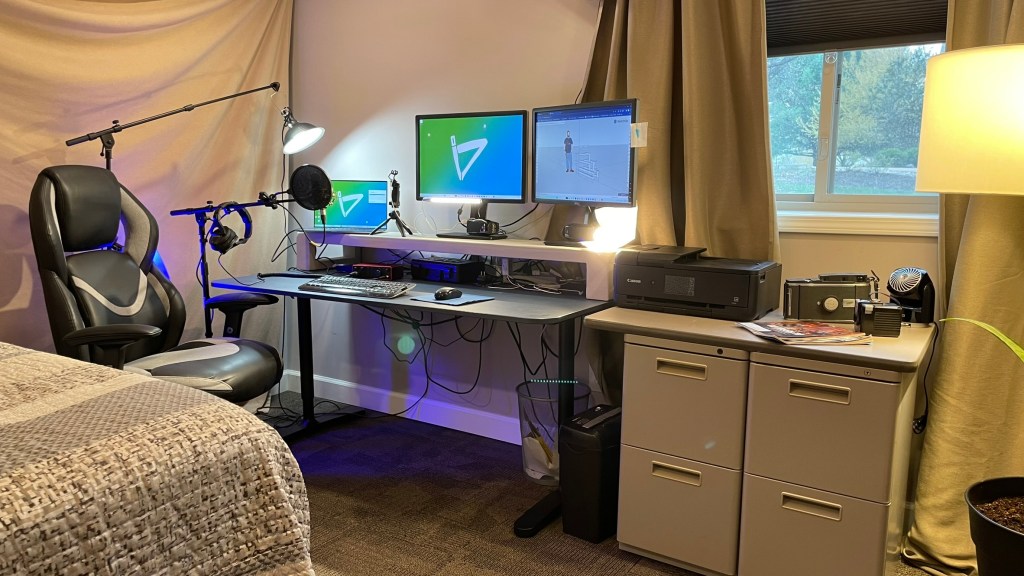
Building My Sound Booth

Improvement is something that always sounds good up front. The concept is wonderful, you will end up with something better than what you started with…
Who wouldn’t want something better than what they already have?

The flip side is that nothing worth obtaining is easy to come by.
Value is determined by the scarcity of a resource or the difficulty of learning. Improvement without real work does not add real value.

This post started with a simple video I created about fixing an issue I was having with my new Scarlet 4i4 audio interface recording into only one ear, (which is still how the post ends.)

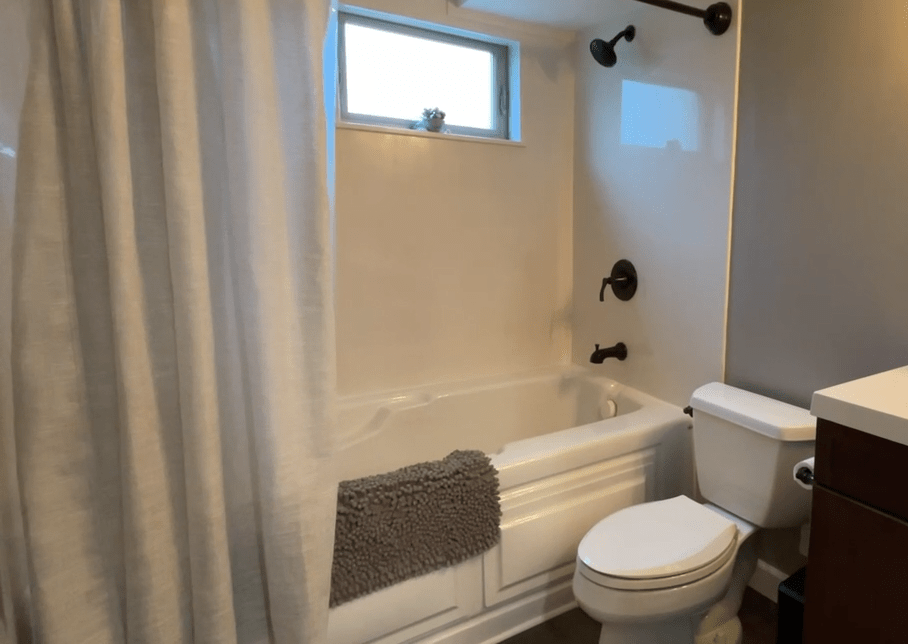
As I told this story it caused me to work backward into describing all the work I did to build the sound booth I put in my basement. So, to integrate the process I took my time and told more of the story. This increased the quality of this post and I hope it adds more value to the reader. The pictures of me building my sound booth included the work on the bathroom adjacent to the home office/sound booth/guest room, so I included that work because it is part of the same story.

As I worked backward from making iterations on my sound stage I realized I hadn’t shared all the work I did on that room to get it where it is today. So I developed this second video as a retro-montage. I cover the steps in this video in more detail in the rest of the Blog post below.

This video covers cutting cement with gas saws, adding an egress window, leveling the floor, adding a jetted tub, and finishing the project. Content on sound-proofing is below.

Adding Value

When I put in the muted office space in my basement I did three things:

  1. I added an egress window.
  2. I “soundproofed” the walls with Mineral Wool & decoupling pads.
  3. Hung a suspended ceiling.

I could have saved some time hiring someone else to put in an egress window but I saved a lot of money leveraging the knowledge, skill, and power of my dad, Mike Kolmer, and my friend (and CPA) Jon Carns.

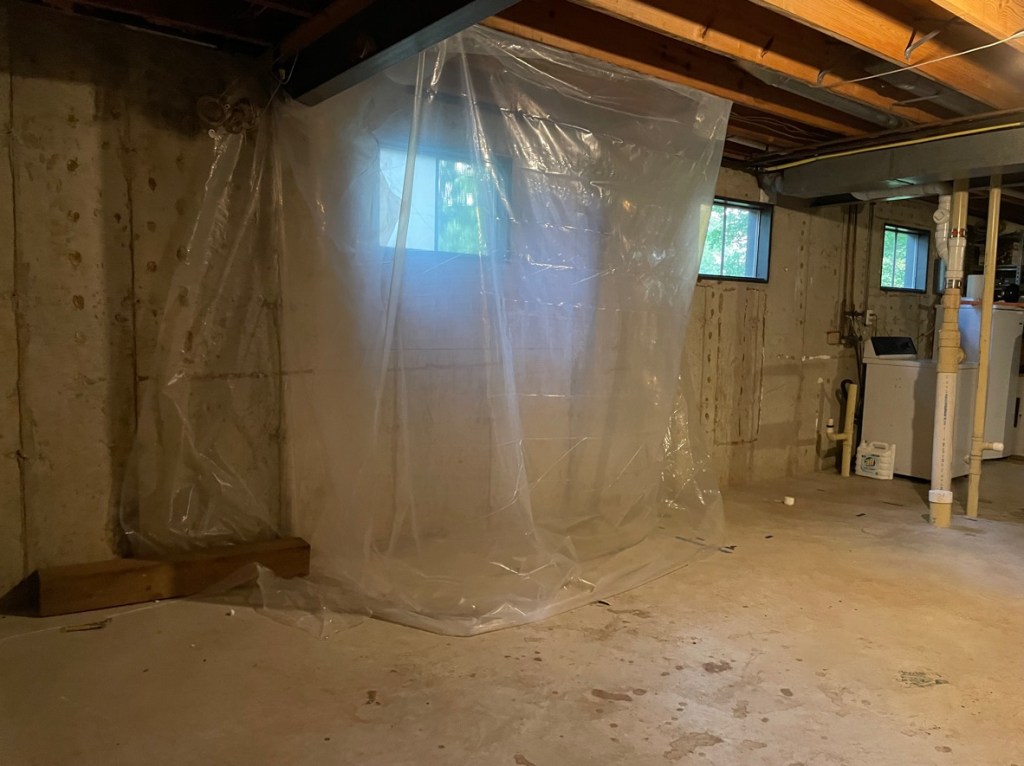
This is what we had when we started:

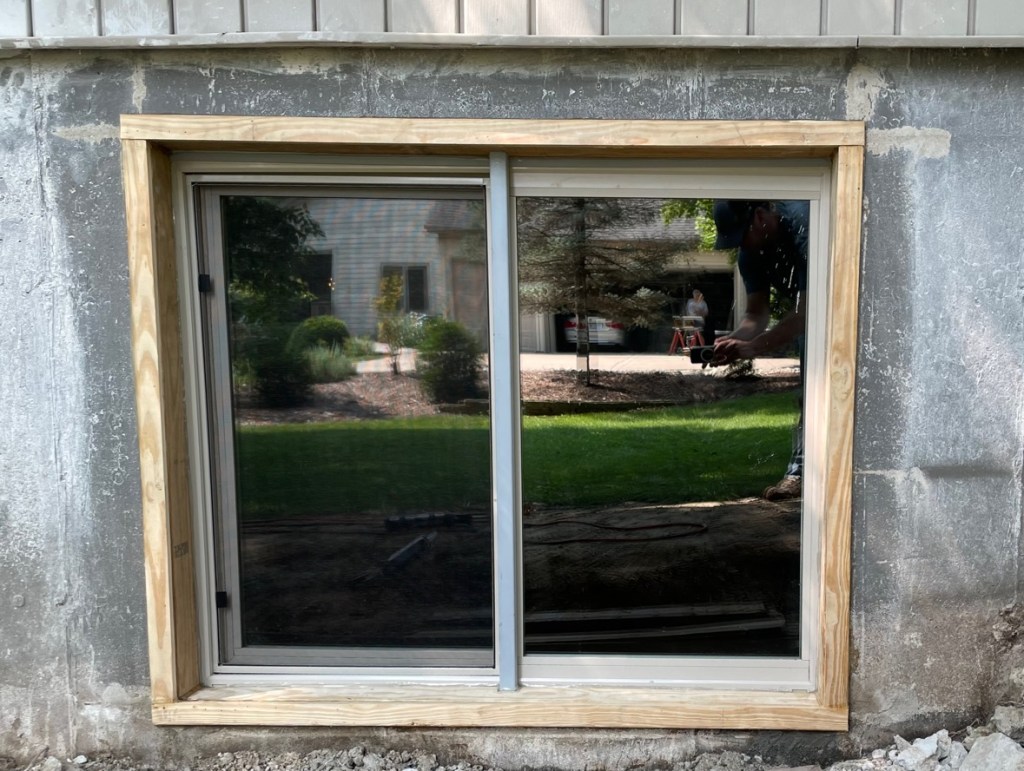
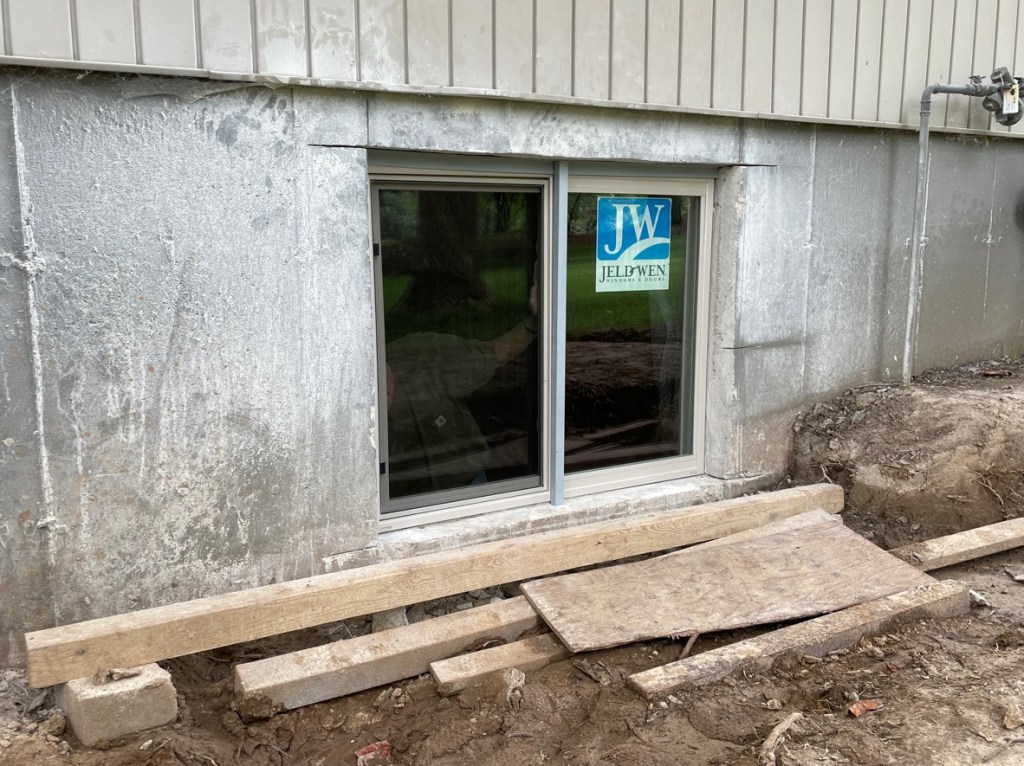
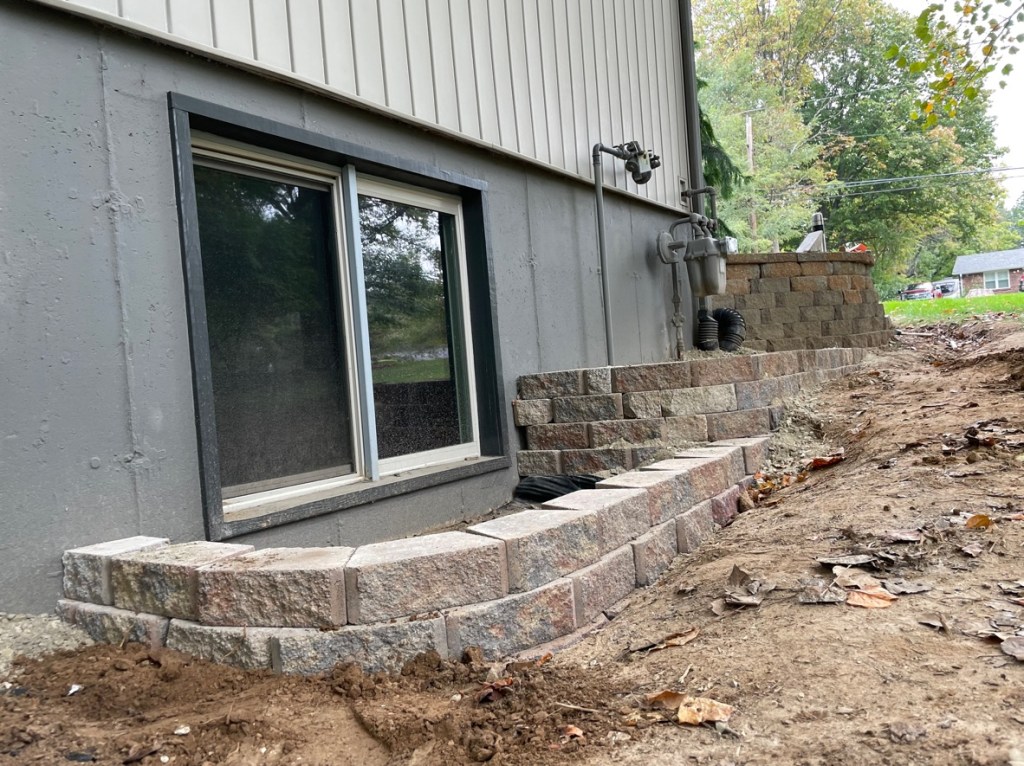
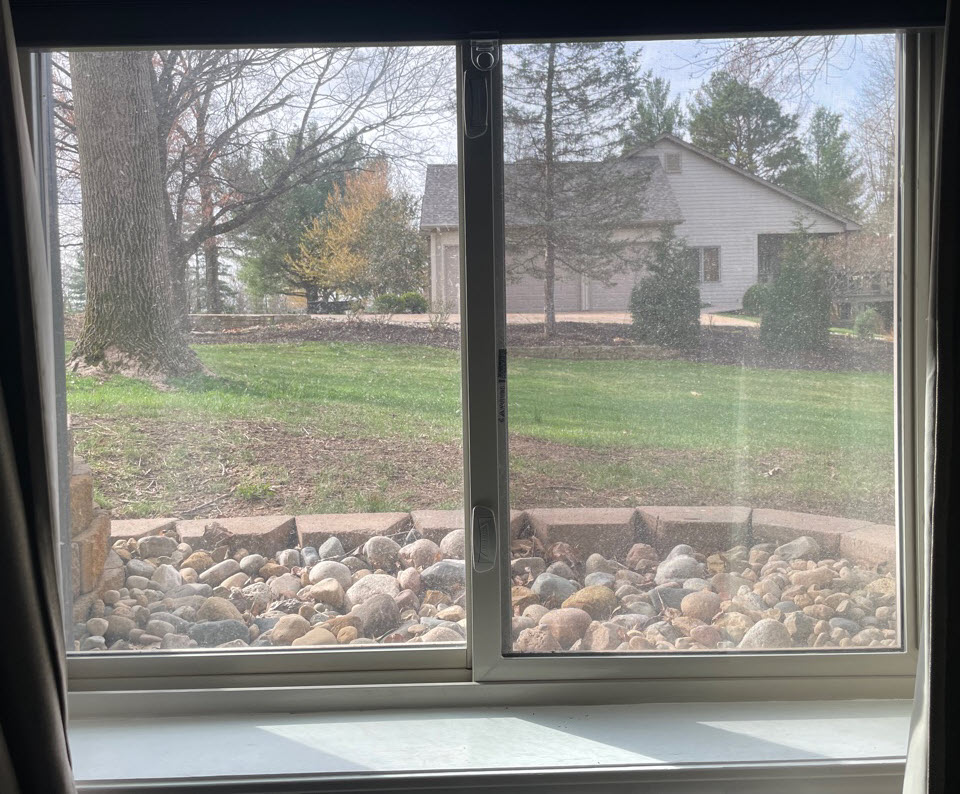
I rented a gas-powered circular saw with a massive diamond-crusted blade and made cuts from inside and outside. Unfortunately, the cuts didn’t allow the block to fall outward so we had to knock it out with sledgehammers. Below is what we did ending with the updated egress window.

Why Add an Egress Window?

There are many benefits to adding an egress window into a basement, they are beauty, safety, and, income.

Beauty

It is very nice to have a big window in a basement room because it lets plenty of natural light into the room and makes it feel much less like a basement.

Safety

There is also the safety concern of a fire where people could escape from the window if there was a fire.

Income

This is related to the law around listing a room as a bedroom when renting or selling the property. If you have an egress window that meets local code requirements (a certain height from the floor, a big enough opening to crawl out of, and a certain size based on the size of the room,) then you can call it a bedroom! That will raise the monthly rent you can charge and or the selling price of the property.

What I learned

…is that if I do this again I will pay more for a cement saw with a mount that cuts at a perfect 90-degree angle. They also have lasers on them, so I would also require that it has lasers, not because that is very important but because it is amazing.

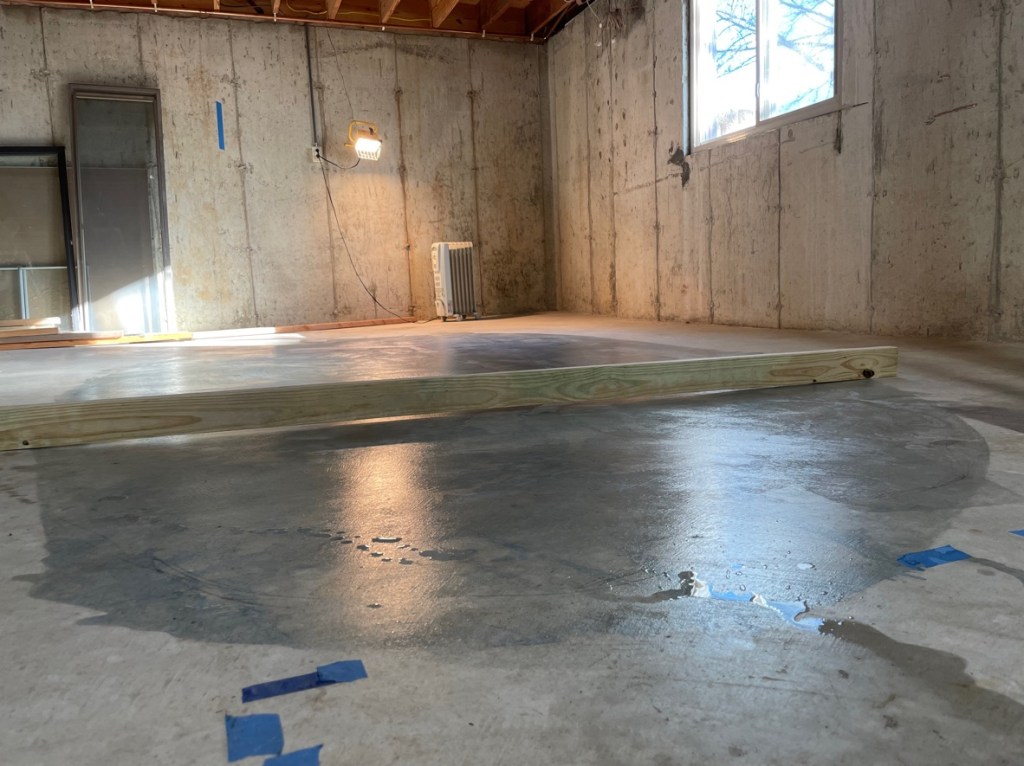
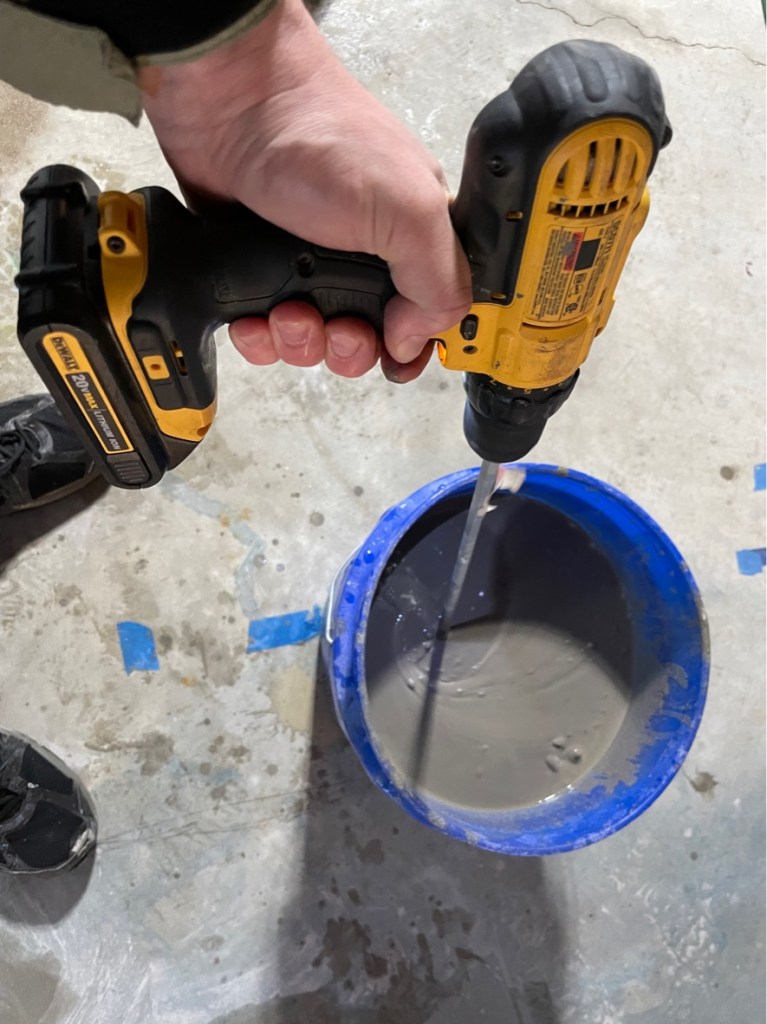
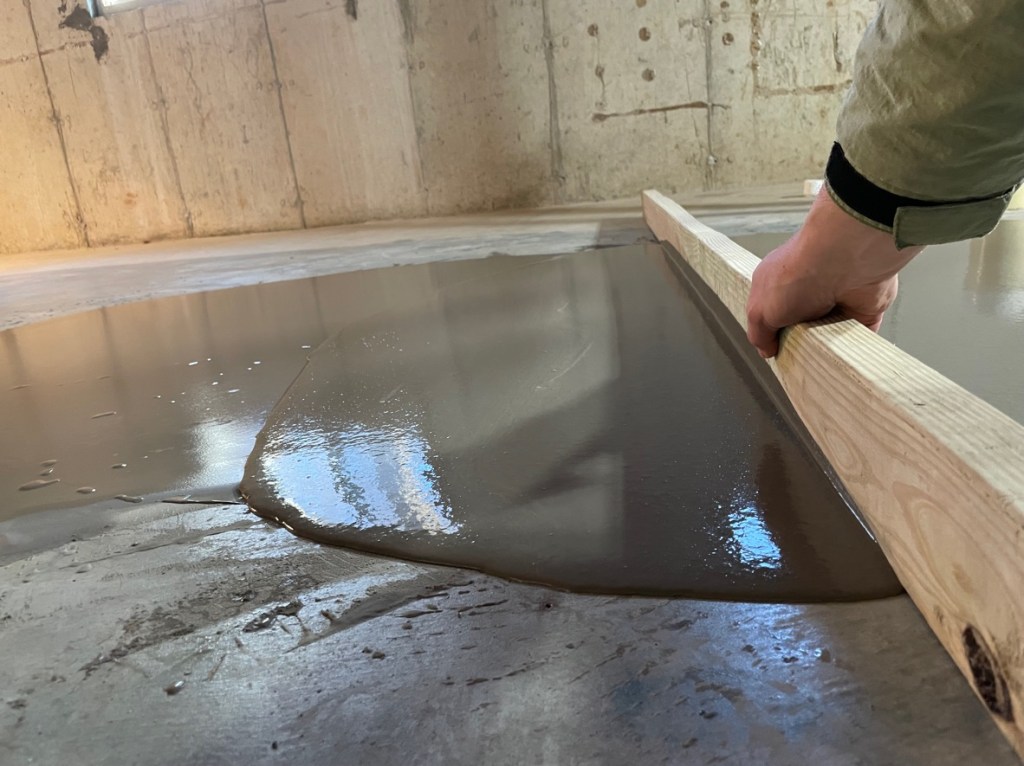
After putting in the window I leveled the floor with some self-leveling cement. The first step is to paint down some primer rated for self-leveling cement. (Left below) Then mix the cement. (Center below) Lastly, pour and spread with a board. (Right, below)

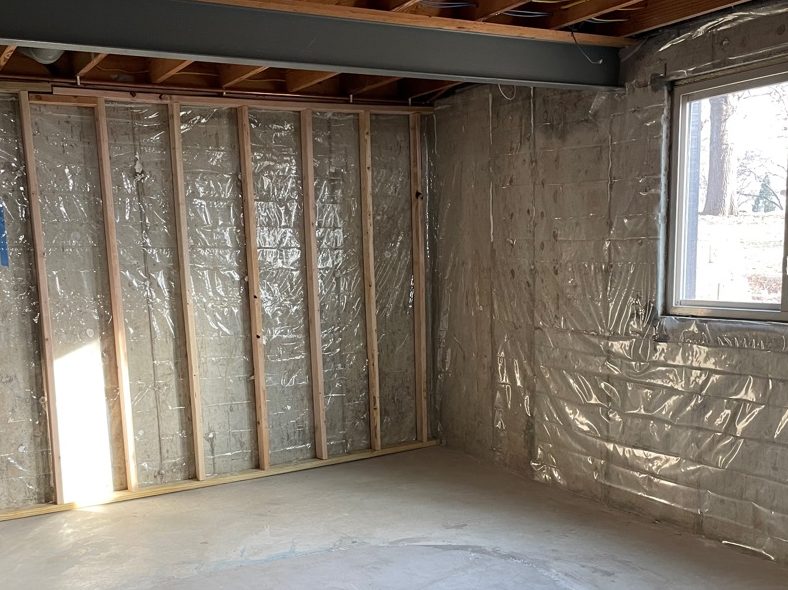
After the Egress window was in and I felt better about the dip in the floor, I hung some 10 mil sheet plastic as a moisture barrier with “liquid nails” industrial caulk.

Instagram post of my progress

The next step was to put up some stud walls with pine 2″X4″ lumber. I used pressure-treated lumber on the bottom board because those hold up to moisture better than the cheaper untreated boards I used for the studs and the top plate.

So, I am using the term sound-proofed lightly here. I merely dampened the sound entering and reverberating within the room. If I had “soundproofed” my office that would have cost several tens of thousands of dollars, but I will say that my office is quiet and mute, and there are still things I could do to reduce the noise floor of the space.

Rockwool Insulation and Wool Pads

I also filled the walls and ceiling with Rockwool insulation. This fiber made from minerals adds additional sound absorption.

If you look closely at the pictures on the right, above, I also added wool strips between the gypsum drywall sheets and the studs in the whole room, and across the hall on the wall in front of the HVAC. All this was done to make the room mute and dampen sounds from outside.

There are definitely more complicated and much more expensive ways to decouple the drywall from the wooden stud, however, these wool pads worked and I purchased them at a clearance price at Menards. Whenever I upgrade a house I always look for the option with a good value. It’s not the fanciest system, but it did the job well and cost me almost nothing to implement.

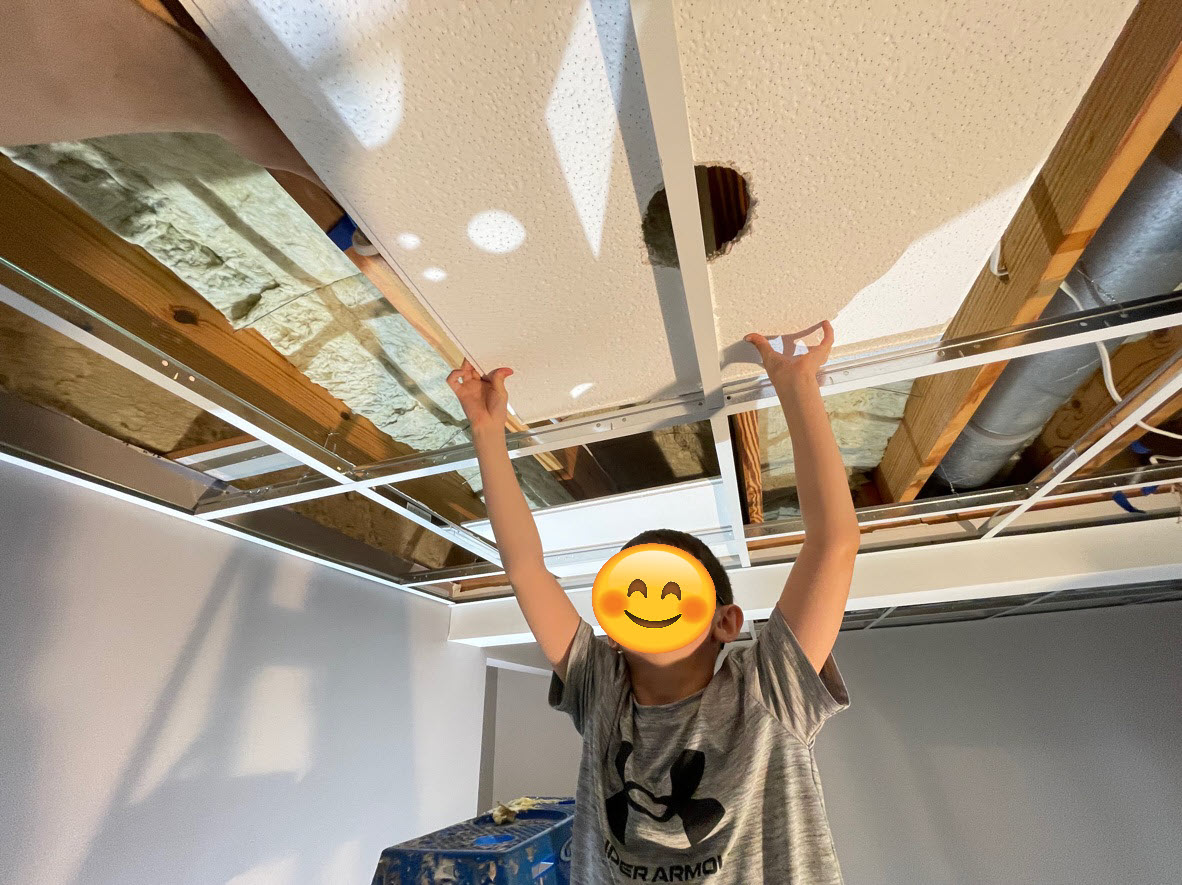
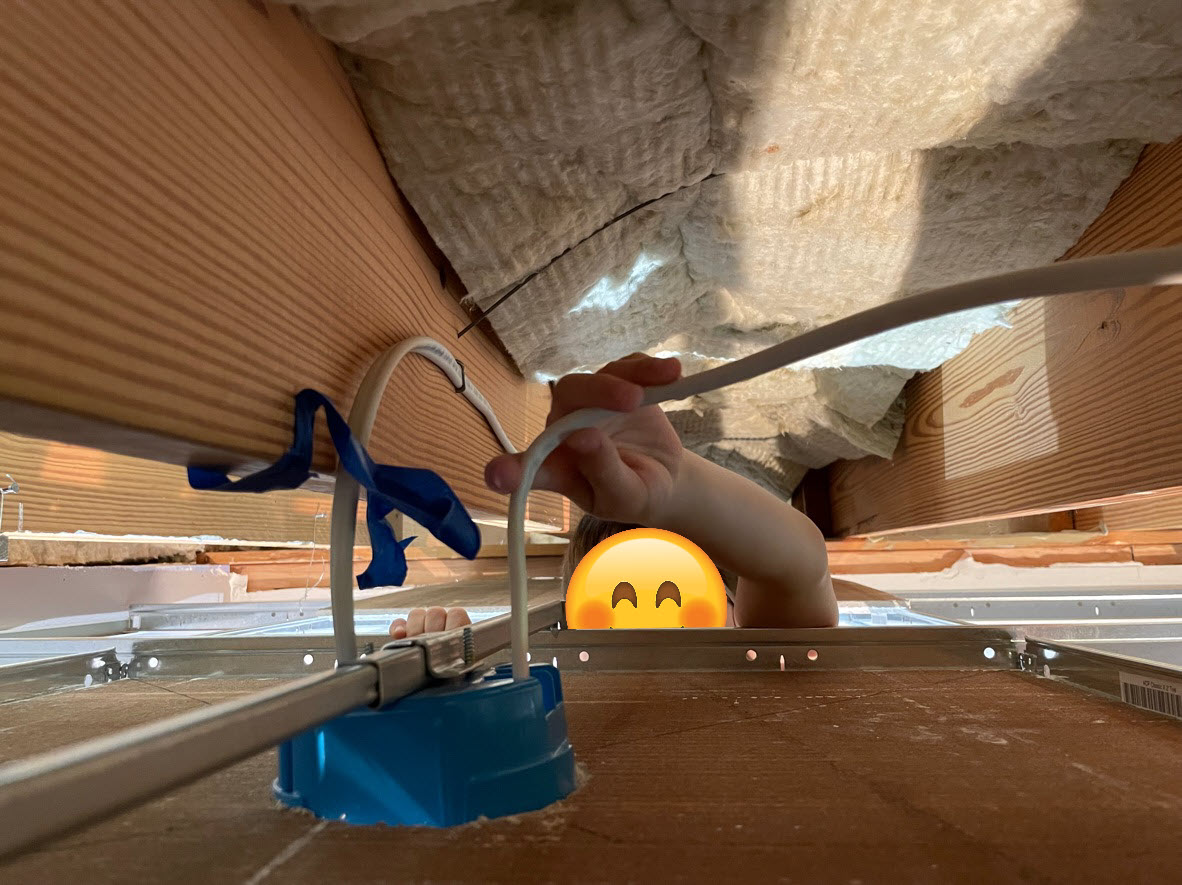
Then, after hanging the drywall over the studs we hung a suspended ceiling. Luckily my (then) 5-year-old son had experience with this. He had also wired a few houses by then, which was helpful.

Yes, I am joking, this was his first experience hanging suspended ceilings and wiring LED light fixtures, but it’s never too early to learn how to build sweat equity in real estate, especially in an owner-occupied property!

That brings us up to 2014, and a lot has happened in the room where I am currently sitting, writing this blog post. For starters, I work from home in this room.

We installed a jetted tub! So, this has nothing to do with building my sound booth, but the work happened alongside the sound booth work, so it ended up in the retro montage video I opened this post with. This addition was less substantial overall but it is something that I use all the time to unwind and relax.

I have used this tub to take hot Epsom Salt baths, but it has also come in handy for ice water baths for muscle recovery, and a fun bath for the kids!

Sound in One Ear Using Camo Studio Pro with Focusrite Scarlet 4i4

in the original Video, I shot for this post, I looked further into a complication with my sound setup. It took me quite a bit of time to solve this issue. I wasn’t sure which sound setting was causing my audio to record into only the left channel.

At first, I thought this issue was with the Focusrite Scarlet 4i4 digital sound input. So I was looking at the audio settings in the app interface for that device, and they were not fixing the issue. in the end, I discovered a setting in the Camo Studio application (which I’m using to implement my cell phone as an HD camera), that caused the single audio channel in the final recording.

In this video, you can see me explaining this issue in detail, and I start with how I solved this issue, then I include all of the tests I ran while I was trying to understand why I was having this error. I ended the video with a humorous project I completed for work where I had to quickly put together a video that had sound in only one channel. At the end of this video, the movement of my lips is not synced with the sound, and it is disorienting. Unfortunately, this video was already published to the members of our organization before I realized I had made this error. this clarifies why it was so vital for me to solve this opportunity. #CamoStudioPro #FocusriteScarlet4i4 #focusritescarlett #Focusrite #Scarlet4i4 #Camostudio

This year I am focused on integrating the separate parts of my life. I have many interests and often do not have enough time to allocate to all of them adequately. Integration has become about clearly identifying the things I like to do and spending more time on them, so I can do them well. My interests in sound design, video, learning content, real estate, art, landscaping, and spending time with my family have all contributed to the success of this sound stage that I have built. There will always be ways to make it even quieter and find better ways to increase the quality of my videos. I must not let the idea of those things that I still plan to do demotivate or distract me from things I am doing today.

Close the Loop

There are loops all around us. Cycles that gain power when they are closed loops. All of these loops are connected to other loops and if a loop is changed it has downstream effects. Life itself depends on these loops, and our lives are enriched when we identify these loops and make efforts to close them. A sentence that is only started does not carry a message, but a completed sentence can effectively transfer a thought from my brain into your brain.

My mom started a hobby a long time ago of planting the milkweed plant that attracts Monarch butterflies. Every year she purchased more plants and planted them on the path in the backyard. After we had children, I started collecting the seeds of these plants. When I planted these seeds, I completed a loop and now have an endless supply of seeds that attract Monarch butterflies.

In turn, these plants support the procreation of Monarch butterflies and increase the number of these amazing creatures on our planet. This in turn increases the number of pollinating insects on our planet, which I should not have to tell you is a good thing.

Minecraft Prelude

My son loves Minecraft, just like most 8-year-olds in 2024. I had heard about the game but didn’t understand how great it was until I went back to school to study Instructional Design. The power of Minecraft is that no matter what mode you are in, be it creative or survival, the game is based on you creating items from raw materials.

The Threat of Death Creates a Loop
Creative mode is much more open and the options are endless, but as my son has shared with me, survival mode is more challenging and proves you know how to play the game. You can’t die in creative mode, but in survival mode, you can.

When your character dies and is born again in a game you have closed a loop. Without that loop, the game is less interesting and less challenging, and as my son explained playing in creative is less impressive. It is more impressive to see a player do something amazing in survival mode because it displays that they really know how to play the game.

Minecraft as More than a Game

Now, for the uninitiated who do not live around children or who have never entered the Minecraft world, I want to open this up a bit. Yes, Minecraft is a video game that can be played alone or socially online. Yes, you can play in survival mode where you have to gather all of your resources and can be killed by “mobs” (that is what you call enemies in the Minecraft Universe).

Here is the part you might not be aware of. The new generation watches others play Minecraft on YouTube more than they play the game themselves. My 5-year-old and 8-year-old know more about Minecraft than I knew about anything when I was that age. Creators are now using Modified versions of Minecraft to create Television Shows. When my daughter was 4 years old she said, “I like that show (Mikey and JJ), I like watching that more than Disney.” This was completely unprompted and it really caught my attention. I mean, better than Disney? really?

Yes, because it is interactive. The players in this show are doing things that the audience can do because the audience is made up of users! Instead of watching your older sister play the game, you can curate playlists on YouTube of your favorite designer crafting things that interest you.

The Metaverse Has Arrived

Many people think that the Metaverse is a string theory abstraction that only high-level mathematicians believe in. If you are thinking of the Metaverse proposed by comic books and action movies then those people are maybe right, possibly. There is, however, another way to perceive the metaverse, a way where it definitely exits, and that is the worlds that we create in online games. We often reserve statements about the metaverse to augmented reality (think Pokemon Go) or even virtual reality (see image below), but on-screen games can be included as well because they are worlds rendered in a virtual “3D” space.

Bust of Apollo equipped with VR headset. Metaverse concept with copy space. 3D rendering

The network of online worlds created by the Minecraft community alone is nearly unimaginable, and that is just on the Minecraft platform. (I tried looking this up but only found that a block in Minecraft is equivalent to a meter, so if you find this let me know!) As interesting as the metaverse is, it is not a place in the real world, and I do not want my kids to live in a mental space where all that they know and love is based on imaginary objects. When you close a loop in the metaverse it does not connect to a loop in the real world. This imaginary universe of unbridled creation and design is beautiful, and part of me wishes I had something like that instead of the locked-down side scrollers of the 8-bit Nintendo Entertainment System (NES). There is another part of me that is very glad I did not grow up in the age of Meta-connection.

Pre-Metaverse Games

SAO PAULO, SAO PAULO – BRAZIL – AUGUST 13, 2023: Old NES Nintendo video game, with two-button control Nintendo Entertainment System 1985, 80’s, joystick gamepad console Black Studio Background

I had Super Mario Bros., Metroid, and Megaman, and these were fun games, and they were hard games. It was their difficulty that made them compelling. When you died you didn’t just lose items and go back to the building, you had to start the game over. There was no save and this made the gaming experience different. Indeed, they were not connected to the internet so the term Metaverse might not apply to them.

What makes Minecraft compelling is not as much of the difficulty but the novelty of creation, the beauty of the design, and the sublime ways we can interact with these worlds almost seamlessly. I want my children to benefit from these mind-enhancing experiences, but I also want them to have a solid grasp of the real world. So, when I had a hands-on project in the back yard I told my son, “This will be like Minecraft, but in the real world.”

One way of looking at what I did here is that I was closing the loop. I connected the design ideas of Minecraft with playing with dirt in the backyard. They are very different in many ways, but one could argue that they are more similar than different. Closing the loop is about integrating all the aspects of our lives and effectively transferring skills from one part of ourselves to another. Digging in real dirt has different challenges than digging in the Minecraft Metaverse. You can’t dig straight down to solid bedrock in several minutes no matter what your shovel is made of. (Not even an enchanted diamond shovel will help you in the real world.)
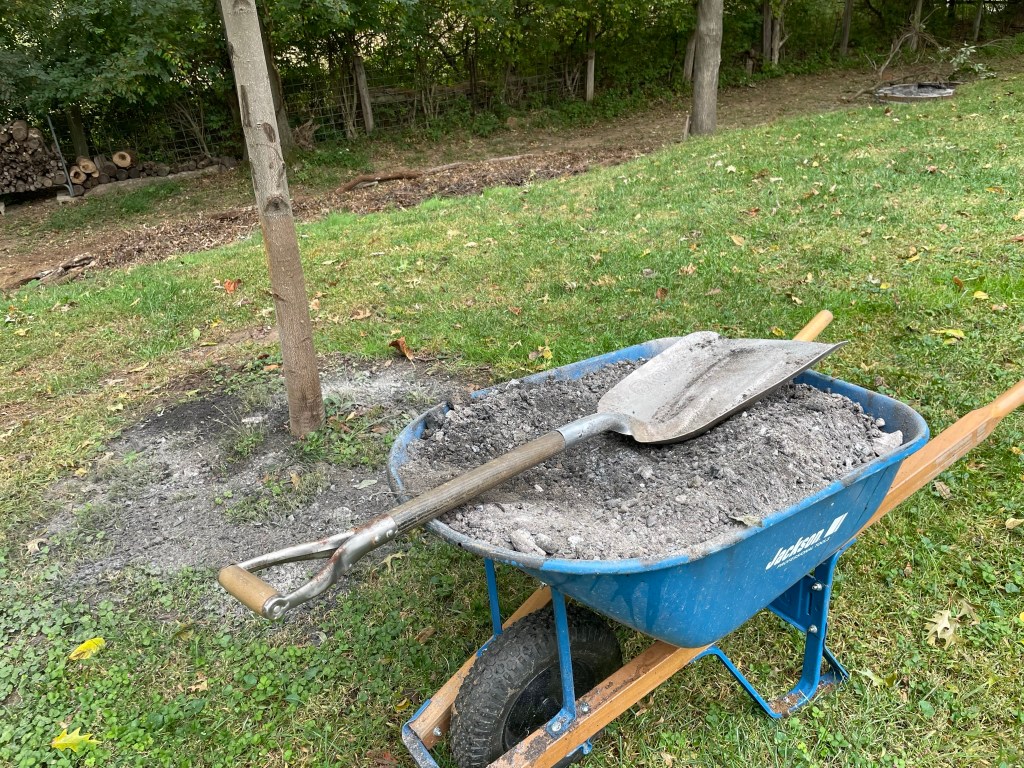
I was still digging around in the backyard, and my kids had completely lost interest because somehow digging real dirt is more difficult and less rewarding in terms of instant gratification than in Minecraft.

My first idea was to dig out the area of our backyard in the far back. We have a rough makeshift firepit that I threw together with blocks that I found digging around our various beds and gardens of our 1-acre lot. My plan was originally to dig out a half-circle from the berm right next to the fire pit so that people could effectively sit on all sides of the pit. (I soon realized that this plan would not work because I had the current make-shift pit on an easement and I don’t want a permanent firepit in a space where the sewer company may dig, but that is a story for another post.)


Where to Throw the Extra Dirt?

The original question was where should I place the dirt I have removed? The answer was to place the dirt on another part of the berm that stretches across the back property line of our yard to make a ramp that we could ride bikes on. This idea of taking dirt from one project and placing it in a way that benefits another project was to me “CLOSING THE LOOP”. Instead of placing the dirt where it did not benefit another project I was benefiting two projects with minimal additional work.

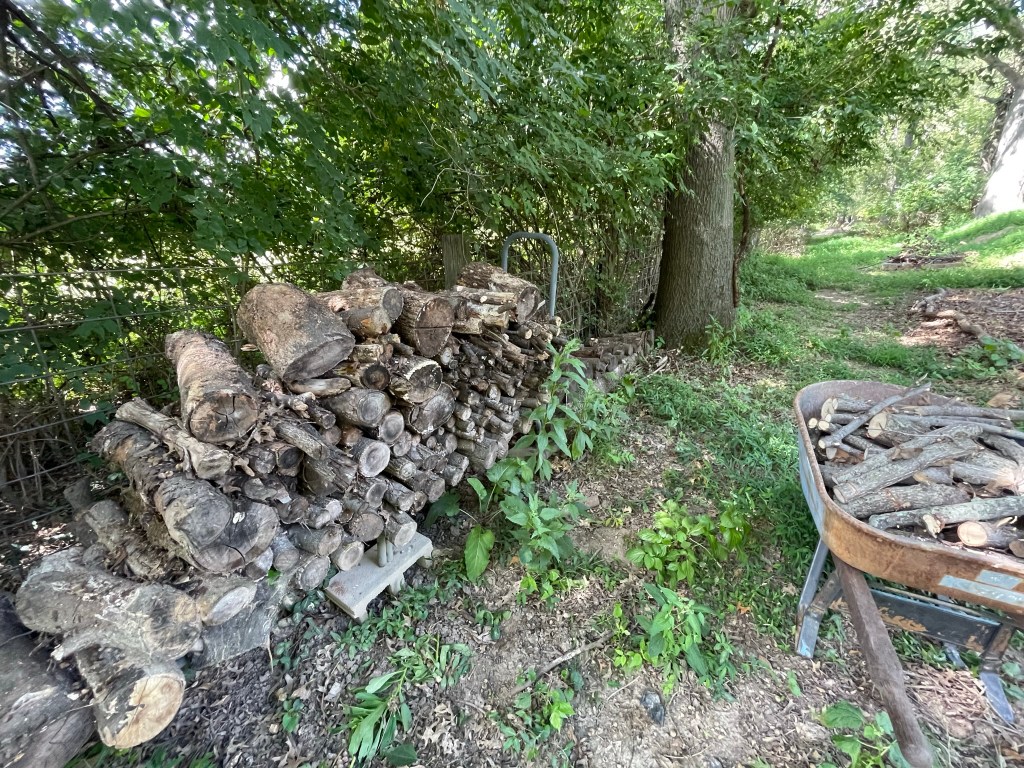
The fact that this project is for a fire pit offers another example of closing the loop. We purchased the house right next door to my parents, so between the two families, we have roughly 2 acres of land, with a LOT of trees. So there is a limited supply of good hardwood for our indoor fireplaces, but an almost endless supply of wood to burn.

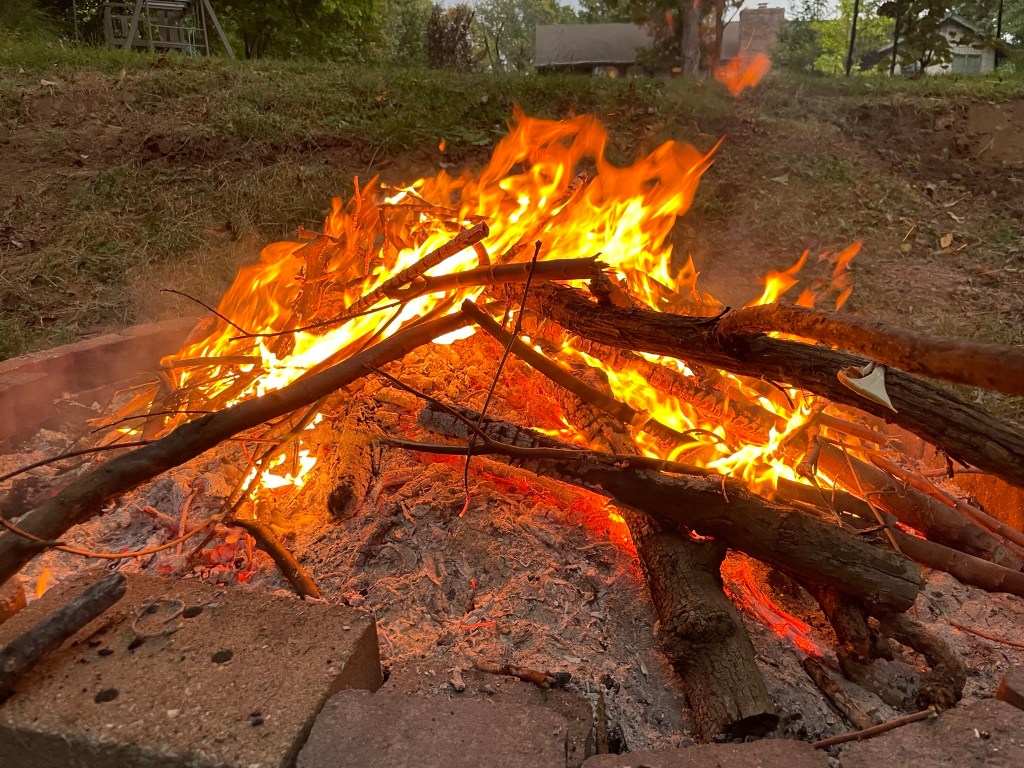
This is why I cobbled together this rough fire pit, to burn off the extra wood. We could pay someone to haul away the wood, but instead, we burn the wood off ourselves. This gives us a nice place to sit in the backyard (and pretend we are camping), but it also gives us free fertilizer for the yard.

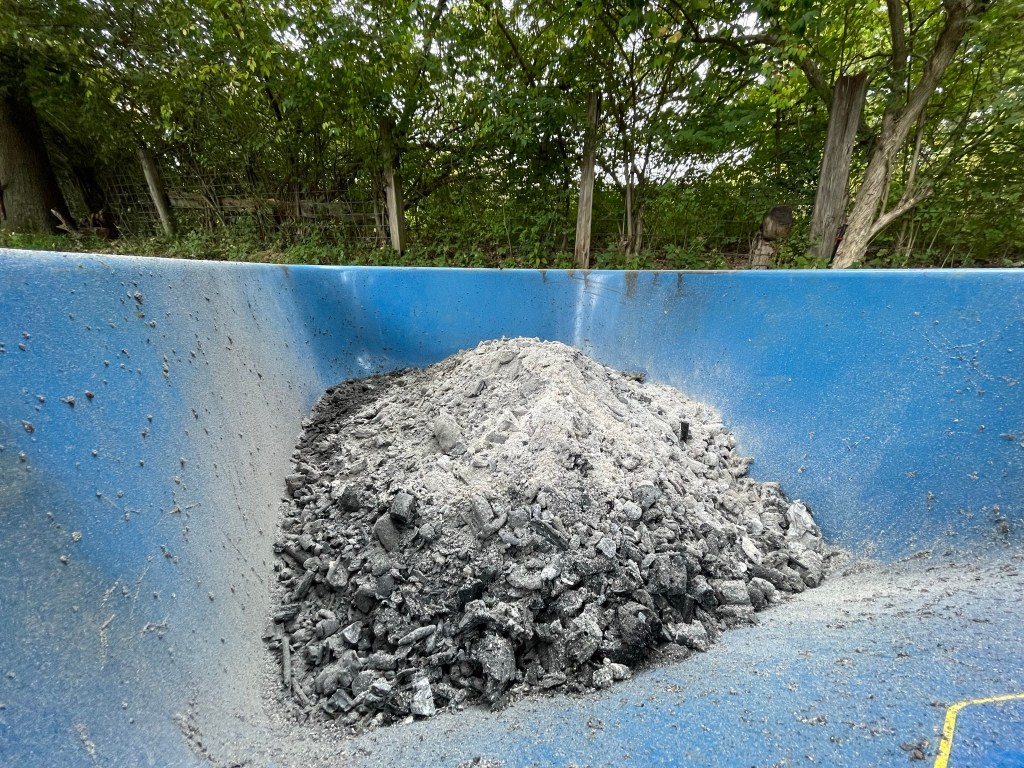
The ashes from the fire, also called “pot ash”, are very rich in phosphorus, which is a vital nutrient for the roots of all plants. So keeping the wood, burning it, and laying it in my yard completes that cycle, it closes the loop.

The events of this post happened at the end of October of 2023. During that Halloween season, I went to the pop-up Halloween Spirit store and bought a lifesize skeleton to hang on the spiderweb in our front yard. I named this plastic replica “Dicey Bones”. The skeleton is a universal symbol of death.

Improvement dave looking away while the plastic skeleton looks at him. Then in the second picture when Improvement Dave looks at the plastic skeleton it looks away. IMAGE TEXT: Trying UBER, this dead beat better pay his fare.
This was October when I was gearing up for No Shave November.

Death is our final destination and death is the final loop we will close in our lives. We can choose to dwell on the negative aspects of our mortal existence, we can focus on how our days are numbered. Or we can celebrate the days we still have. We can seize the day, suck the sweet marrow out of life and live our lives to the fullest. To do that this year I am focusing on integration, I am closing as many loops as I can to integrate all of my selves into a single unified drive forward. As the Japanese say “Zen Roku Wosusogu” or Focus your energies. Less I fall victim to a non-eventful life. To laying on my death bead and thinking “I would feel content if I would have…”

Skeleton hanging on spider web with spider on its hip in dramatic blue and green lighting.

Conclusion

So, to summarize, this post explores the concept of “closing loops” in various aspects of life, and how the closed loops benefit from other closed loops. Trying new things is great, but closing the loop is about completing tasks that you have already started. By recognizing and completing these loops, we enrich our lives and create meaningful connections. Through examples like planting milkweed to support butterflies, playing and integrating Minecraft concepts to enhance our understanding of design thinking, and repurposing dirt efficiently for simultaneous backyard projects, I have attempted to shed light on the interconnectedness of our actions and downstream effects. Embracing the concept of closing loops becomes a way to celebrate life, recall the importance of seizing the day, and integrate all aspects of ourselves.

Being Integrated

I am choosing a word for each year and this is my post for 2024.

The ending of 2022 was about Honesty, mostly with myself but also with other people.

Then 2023 was about Consistency. I spent the year building up the consistency in my visual brand, teaching myself to model in 3D, and posting what I learned while I learned it in a 30-day 3D Model Challenge. In August I consistently posted for St. Jude charity with my Push-Ups for St. Jude where I did 50 pushups a day and they were not always pretty, but I posted all the videos anyway and raised over $537 US. Then in September, I went cycling as frequently as I could and posted as many videos as I could for my Consistently Cycling More often in September 2023 series. I received feedback from my English-speaking friends from the UK that biking is not used for the act of cycling in proper English so as to not confuse my English friends and colleagues I changed the title of those halfway through, so the early ones have “Biking” in the title. That was not very consistent of me!

Sprinkled around the year I posted about my health journey and even summarized the whole thing in my final post of 2023 Consistently Well.

Throughout the year I learned a lot about consistency. About what it meant to post to my blog consistently. How to consistently show up for my kids and my family. The main thing I learned was that consistency was less about a 30-day challenge, or posting every day on a blog. Consistency was about finding my true self and being that authentic person all the time. It is funny how it just tied back to my first annual word of honesty in that way.

And at the end of 2024, I knew I wanted a word about being complete… Something about completing things, Completing the cycle, or Closing the Loop. However, the word complete itself implies too much desire to finish a specific task. It implied so much around the idea that things are not just complete the way they are, that I am not complete as I am. That is not where I wanted to take this discussion. So, later I came up with the word connection or connected and I liked that word. That is until I remembered we are building an intranet at work and probably calling it Connect or Connections, so I wondered if my subconscious had just picked up that language from that project, and wanted this project to be separate from that. …So, it was New Year’s Eve and I still didn’t have a word I liked.

Then on New Year’s Day, I did some YouTube Yoga with my wife. We like to practice 30-day Yoga challenges with Yoga with Yoga With Adriene. While doing yoga Adriene called out the word of being integrated. Having the movement, the breath, and the mind all integrated, and at once I knew that was my word for 2024.

May 2024 be my year of integration.

Improving my process

Improving the equipment I use

Connecting with my family, friends, and colleagues on a deeper and more meaningful level

Connect with my craft, my interests, and my Dad by creating learning content around real estate and not only why you should get involved in it, but how you can get started.

Complete posts I started on in 2023 that I wasn’t ready to create. Posts that belonged in the year of integration, not the year of consistency. Posts about the process, about art, about creation.

Complete art:

― Rick Rubin, The Creative Act: A Way of Being