

I would like to start this with a comparison or analogy from my personal life.
This is a comparison of the theatrical stage to the classroom, neither of which are where true learning takes place.
I Studied Acting
I started my Bachelor of Fine Arts in Acting. I soon realized that I love acting but I was not crazy about acting for the rest of my life to support a family. There is a good chance you will never make any real money and there is a better chance that you will have to go full-out crazy. Let that sink in…
I literally read an article in one of my classes that stated to be successful at acting you first need to snap and be crazy. While in school this sounded perfect. Just what I wanted as a 20-something artist with a need for wild abandon… but the more I thought about it and the more I read about philosophy and world religion the crazy sounded like a path I might not enjoy forever.

(I mean I have kids, and I still celebrate Halloween. The jester is not dead, but the aimless dreamer has left the building. Enter the motivated, directed dreamer with training in adult learning theory and educational technology…)
My point here is that if you go to study acting at anything less than a high-level conservatory, there is a good chance that the acting lessons are diminishing your ability to act well on stage. Meaning, that you no longer go on stage being believable but you go on stage and “Act” like you are living the role on stage. In other words, you just go through the motions, pick up tricks, and play off of television tropes instead of creating art. (To be fair this is more the result of a poor theatrical education and some of the training I received at Millikin University even discussed this and acknowledged the danger of mediocre acting training.)
This is a widely debated concept and I know there are modern reactions against Konstantin Stanislavski’s “method acting” or “living the part” approach… To be honest, those crazy method performers who commit to living the part fully are my favorite. Jim Carrey, Heath Ledger, Natalie Portman, Forest Whitaker, Leonardo DiCaprio, Jamie Foxx, Val Kilmer, Meryl Streep, Philip Seymour Hoffman not to mention the classics, Marlon Brando, Robert De Niro, and Dustin Hoffman; these are by far my favorite performers to watch on screen.
Either way, life as an actor demands a certain detachment from the real world. You are always on the hunt for the next gig, you have to keep on the move.
So, the more you study acting in school the worse you get at acting, or the less believable you are on stage. Needless to say, part way through my BFA in acting I switched to a BA in Theater so I could broaden my horizons and take technical theater, language, art, and philosophy classes.
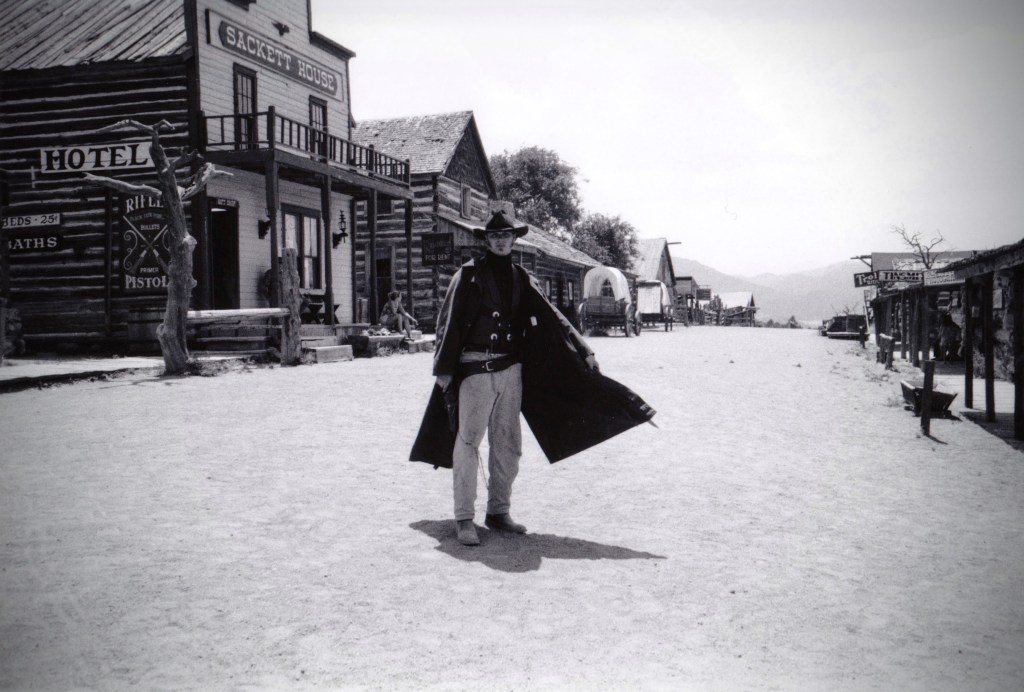
After theater school, I did some stunt work and stage acting in Colorado at Buckskin Joe in Canon City City, Colorado. It was hard work and I gave it my all. It was exhausting.
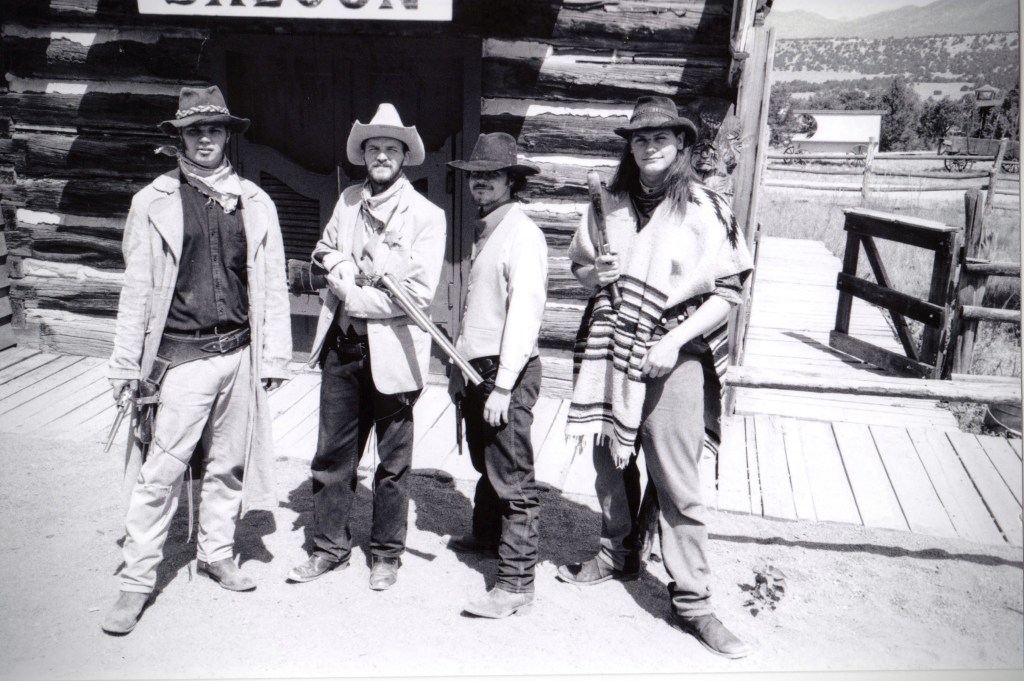
It was a fun job for $6 an hour, but it reinforced the concept that maybe acting was not my path.
Next, I would like to draw a parallel between acting and teaching.
I Became a Teacher Without Training
In 2004, I ended up finding a job teaching English as a Second Language in Thailand and I loved it. It was kind of like acting but you were just standing there talking to the audience face to face. It was the same thing, but instead of the focus being on entertainment and then learning, the focus was on learning and then I could add in entertainment to motivate the learners.



So, you could say that I used my Theater experience in the classroom, but I was never officially trained in how to teach for the first five of my seven years teaching in Thailand. You could ask any of my students and they would probably tell you I was not a typical teacher. I encouraged my students to teach me the Thai language and we discussed art, food, music, and whatever else we found interesting. So, learning was happening even though I was not teaching at them. I would say more of the exchange of ideas happened in the hallways of the school, at lunch, or grabbing a coffee out front of the school.
When I finally went back to get TEFL certified I just received formalized actions to do that resembled what I had been doing previously through experimentation and honest reaction. To be honest, my students gave me good feedback on my classes for the most part before I was certified. I was present in the room. I wasn’t “TEACHING” I was in the room with them as a learner. After I was certified and became a “Real Teacher” something changed. I just fell back on following the actions and the whole thing became more of a job than an experience. I actually stopped enjoying the work at a certain level and I would guess I was less effective overall.



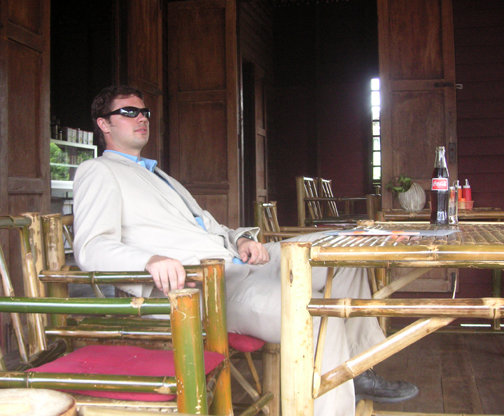

While in Thailand, I wasn’t spending my time seeking out Western culture and where to get Western food. I spent time driving my motorcycle up mountains to grab handfuls of green tea from the field, and to learn from the nomadic hill tribe people. I worked on learning the Thai language, cooking Thai food, and finding ways to think more like a Thai person. I didn’t seek out Christian churches, I went on Buddhist meditation retreats. I didn’t go to Webster University in Bangkok, and take classes on Thai culture, I went to Turtle Island (Koh Tao) and went SCUBA diving off a wooden squid fishing boat with a Native Thai SCUBA Master.

You can’t “do” learning. You have to live it. You have to experience it firsthand.
Training is Not Always the Answer
When we have an issue at an organization we often hear from those at the top of leadership, “We should have a training.” What we often end up with is a canned eLearning that has some learning objectives somewhat related to the “opportunity.” I am not advocating against eLearning, but what I am saying is often times we have training because say, “The workplace culture is in the toilet.” and then when it goes from bad to worse we point the finger back at the training.

Often times what needs to happen instead of a PDF sent out in the LMS, an eLearning purchased from a leading content developer, or even a custom eLearning developed by local staff who really understand the issue; is the culture needs to change. We are looking for a paradigm shift. We are looking for a behavioral change. That doesn’t happen in a classroom, that happens in daily exchanges with other people.
Learning Doesn’t Happen in a Class
We often jump to the conclusion that learning happens in a classroom with a teacher. Where the teacher tells the “learners” in the room what to think and then they think that thing. This is not how real learning works. We might get an idea in the classroom. We might gain a new perspective from a video or an eLearning. However, we do not internally learn something on a deeper level that promotes behavior change until we witness the same conclusion in the real world.
If the training is very similar to the real world and then the conclusion aligns with our worldview and our experiences in the real world then training can move the needle and cause change. If the training is not relevant, we can’t relate to it or it does not align with the learner’s experience then it will not change the way we behave. Learning happens while talking to friends. Learning happens on the sales call. Learning happens when talking to a stranger in the elevator.

In other words, if you want the culture of your organization to be one of a growth mindset or a culture of learning then you have to build that culture. Assigning 10 compliance eLearnings about how learning is good will not get the organization to the next level. If you want a new culture, you have to live the culture. If you want a culture of learning, you have to live it.
So, what are you doing to promote a culture of learning in your organization? Are you living the role of a learner, or are you just going through the motions hoping nobody will notice?
! David Kolmer !
 Improvement Dave
Good discussion about how we learn.
Reminds me of when I show someone how to make a repair they don’t really “learn” until they do it themselves.
LikeLike